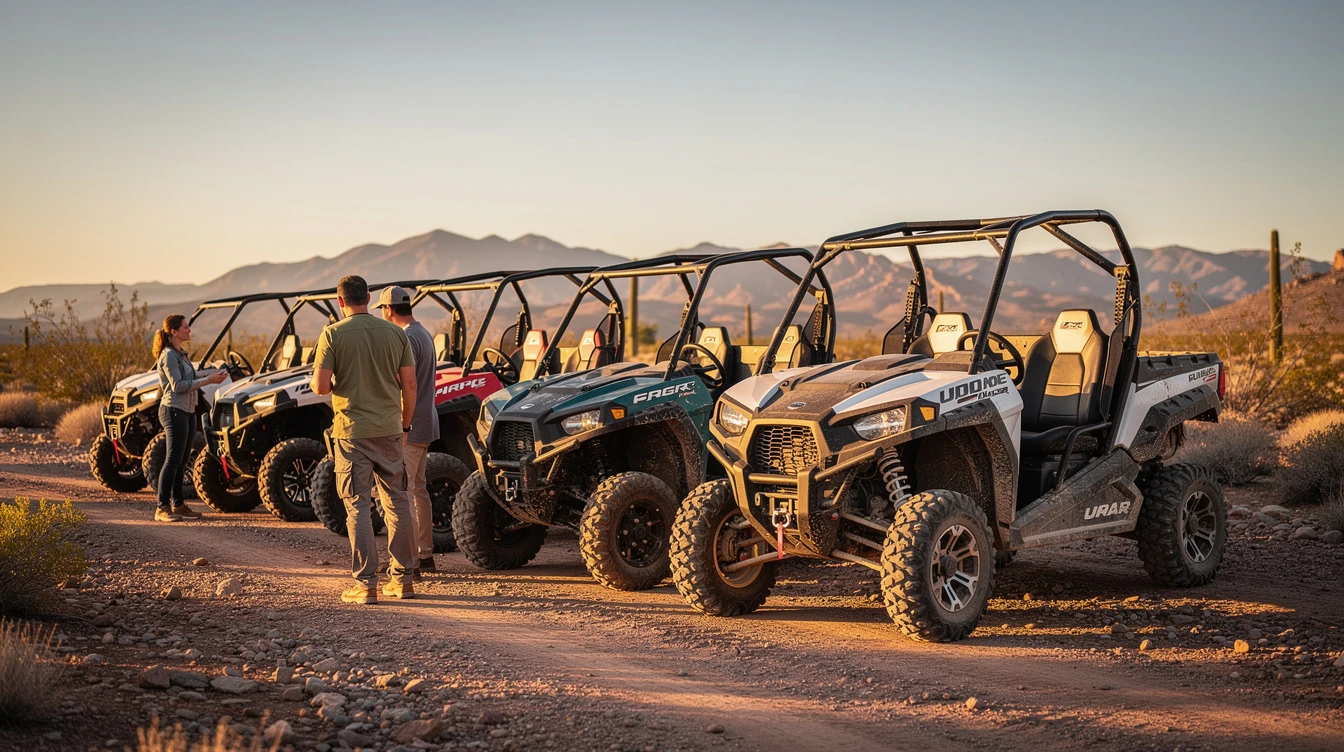
The honest answer: a well-maintained UTV can last 5,000 to 10,000+ miles or 10 to 15+ years. Some owners on forums report 15,000 miles on original engines. Others grenade transmissions at 2,000 miles. The difference is almost always maintenance, riding conditions, and whether the owner treats the machine like a tool or like a toy they are trying to destroy. Here is what actually determines how long your side-by-side will last.
UTV Lifespan by the Numbers
UTV lifespan is measured in both miles and hours. Hours matter more because a UTV spends a lot of time running at high RPM and low speed — crawling through mud at 3 mph puts more stress on the engine and drivetrain per mile than cruising a dirt road at 30 mph.
| Usage Level | Hours | Miles (approx) | What to Expect |
|---|---|---|---|
| Low use | Under 500 | Under 3,000 | Original components should all be solid |
| Moderate use | 500 – 1,500 | 3,000 – 8,000 | Belt replacements, suspension wear, possible fuel pump |
| High use | 1,500 – 3,000 | 8,000 – 15,000 | Major component rebuilds likely (clutch, shocks, bearings) |
| Very high use | 3,000+ | 15,000+ | Engine/transmission rebuild territory on some machines |
What Kills UTVs: The Big Five
1. Skipped Oil Changes
This is the number one killer of UTV engines. Period. UTV oil change intervals are short — typically every 50 to 100 hours or every 500 to 1,000 miles, depending on the manufacturer. These are not car engines with 10,000-mile oil change intervals. UTV engines run hotter, rev higher, and operate in dustier conditions. Old oil loses its ability to protect bearings, cylinder walls, and cam lobes. Once metal-on-metal wear starts, it accelerates exponentially.
Check your owner's manual for the exact interval and follow it religiously. Our UTV maintenance checklist covers all the intervals you need to track.
2. Water and Mud Damage
UTVs are marketed for mud riding, but water is the enemy of every mechanical and electrical system on the machine. Water intrusion causes:
- Corroded electrical connectors (the #1 cause of UTV electrical problems)
- Contaminated differential fluid — water in the diff destroys gears and bearings
- Rust on exposed steel components — frame, suspension, exhaust
- Clogged radiators that lead to overheating
- CVT belt degradation from moisture in the clutch housing
If you ride in mud and water regularly, your machine needs more frequent maintenance. Check differential fluid after every deep-water ride. Clean the radiator after every muddy ride. Apply dielectric grease to electrical connectors. These extra steps add 20 minutes per ride and add years to the machine's life.
3. CVT Belt Neglect
The CVT belt is a wear item — it is designed to be replaced, not to last forever. Most belts run 1,500 to 3,000 miles. Running a belt past its service life risks a catastrophic failure that can damage the clutch sheaves (primary and secondary clutches), which turns a $100 belt replacement into a $500+ clutch rebuild. Check belt condition regularly and replace before it fails. For symptoms of a worn belt, see our guide on common UTV problems.
4. Suspension Abuse Without Inspection
Every jump, rock hit, and washboard trail beats on ball joints, tie rod ends, bushings, and wheel bearings. These components wear gradually, and the UTV still runs fine — until a ball joint separates at speed and the wheel folds under the machine. This is a real safety issue, not just a maintenance concern.
Inspect suspension components every 500 miles or at the start of every season. Jack up each corner and check for play in the ball joints and tie rod ends. Replace anything with noticeable slop — these parts are cheap ($20 to $60 each) and the labor is straightforward.
5. Running Hot
Chronic overheating cooks engines from the inside. Each overheating event warps cylinder heads, damages head gaskets, and accelerates oil breakdown. A machine that overheats regularly will have a significantly shorter engine life than one that stays at normal operating temperature. Address cooling issues immediately — do not ride through overheating warnings. See our overheating section in the common UTV problems guide for fixes.
Lifespan by Brand
Not all UTVs are built to the same standard. Brand and model significantly affect how long the machine lasts:
| Brand | Known For | Typical Lifespan | Common Weak Points |
|---|---|---|---|
| Honda Pioneer | Bulletproof reliability | 10,000+ miles | Lower power output; fewer aftermarket parts |
| Kawasaki Mule/Teryx | Work-horse durability | 8,000 – 12,000 miles | Dated design on some models; lower ground clearance |
| Yamaha Wolverine/Viking | Engine reliability | 8,000 – 10,000 miles | EPS issues on early models; limited sport capability |
| Polaris RZR/Ranger | Performance and features | 5,000 – 8,000 miles | CVT belt wear; electrical issues; some engine recalls |
| Can-Am Maverick/Defender | Power and technology | 5,000 – 8,000 miles | CVT and clutch wear; higher maintenance costs |
| CFMOTO | Budget pricing | 3,000 – 6,000 miles | Build quality inconsistencies; limited dealer network |
These are generalizations based on owner reports, forum data, and industry trends. Individual machines vary widely based on maintenance and use. A well-maintained RZR can easily outlast a neglected Honda Pioneer.
Planning to make your UTV street-legal?
Whether your machine is new or has some miles on it, we can help with registration and titling.
Check My Eligibility →How to Maximize Your UTV's Lifespan
- Follow the maintenance schedule exactly. Oil changes, filter replacements, fluid checks, belt inspections — on time, every time. Not "when I get around to it."
- Wash the machine after muddy rides. Mud holds moisture against metal and packs into cooling fins, bearings, and electrical connectors.
- Check fluids before every ride. Engine oil, coolant, brake fluid, and differential fluid. Takes 5 minutes. Catches problems before they become failures.
- Carry a spare CVT belt. A belt change on the trail takes 15 to 30 minutes. Being stranded without one takes all day.
- Address problems immediately. A small coolant leak becomes an overheating event. A worn ball joint becomes a wheel separation. A clicking CV joint becomes a broken axle. Fix problems when they are small and cheap.
- Store it properly in the off-season. Winter storage without prep causes more damage than riding. Follow our UTV winter storage guide to protect your investment.
Frequently Asked Questions
How many miles can a UTV last?
A well-maintained UTV can last 5,000 to 10,000+ miles. Some owners report 15,000+ miles on original engines. The key variables are maintenance consistency, riding conditions (mud and water are harder on machines than dry trails), and whether the machine is used for recreation or daily work.
What is the most reliable UTV brand?
Honda Pioneer and Kawasaki Mule/Teryx consistently rank highest for reliability and longevity. They use simpler, proven powertrains that prioritize durability over peak performance. Polaris and Can-Am offer more power and features but have historically had more warranty claims, particularly around CVT and electrical systems.
When should I replace my UTV instead of repairing it?
Consider replacement when: the frame is cracked or bent, the engine has internal damage (cracked block, spun bearings), or the total cost of accumulated needed repairs exceeds 50% of the machine's current value. Most individual component failures — belt, shocks, ball joints, electrical — are economical to repair. See our new vs. used UTV guide for the full cost analysis.
Do UTVs hold their value?
UTVs depreciate roughly 15-25% in the first year and 8-12% per year after that. Sport models (RZR, Maverick) depreciate faster than utility models (Ranger, Pioneer). Well-maintained machines with documented service history and low hours hold value significantly better than neglected ones. Keeping registration current also helps resale — buyers want a machine they can ride home, not one they have to title and register from scratch.
How many hours is a lot on a UTV?
Under 500 hours is considered low use. 500 to 1,500 hours is moderate. Over 1,500 hours is high — expect to have replaced or rebuilt several major components at this point. Hours matter more than miles because UTVs spend significant time at low speed and high RPM, which puts disproportionate stress on the engine and drivetrain compared to highway miles in a car.
Ready to get your UTV on the road? Check your eligibility →