What Actually Makes a Dirt Bike Street Legal?
I rode my KLX300 off dirt trails and onto public roads the first time thinking I'd just figure it out as I went. Bad move. A cop flagged me down about six blocks from the trailhead. No horn, no mirrors, one headlight that wasn't DOT-rated. My bike was off the road until I got the right equipment sorted.
Here's what most riders get wrong: "street legal" isn't one single standard set by some national rulebook. Each state writes its own equipment list. That said, there's a core set of components that almost every state requires, headlight, taillight, brake light, horn, mirrors, turn signals, and tires rated for pavement. Nail those and you'll be road-legal in the vast majority of states.
This guide breaks down the three most commonly missed requirements: headlights, horns, and mirrors. Get these wrong and your registration won't matter much, because an officer can still pull you over and write you up for equipment violations. For a broader overview, check out the dirt bike street legal guide, how to make a dirt bike street legal in any state, which covers the full equipment list and registration path.
Street Legal Dirt Bike Headlight Requirements
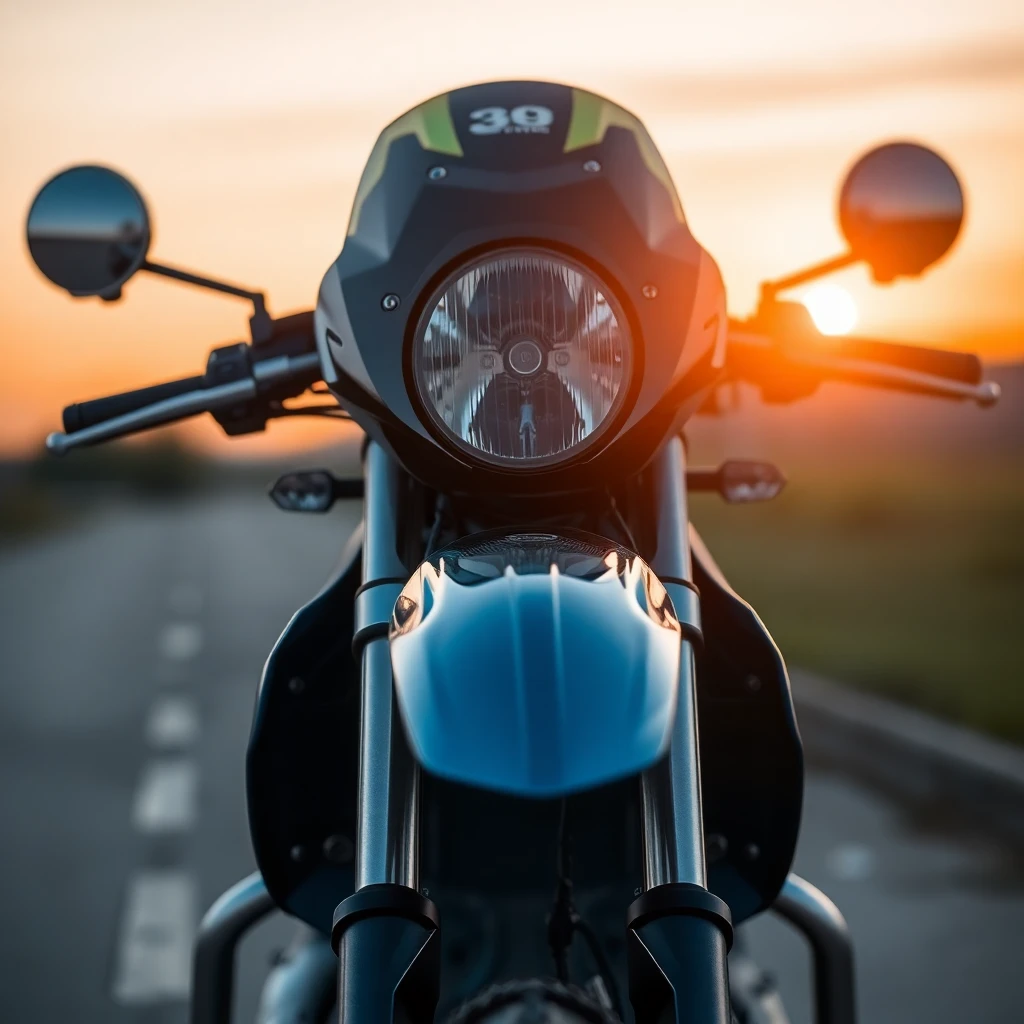
A DOT-approved headlight is required in all 50 states for any motorcycle or motorcycle-class vehicle operated on public roads. "DOT-approved" means the lens and housing meet Federal Motor Vehicle Safety Standard (FMVSS) 108, which covers brightness, beam pattern, and durability. Most stock dirt bike headlights do not meet this standard, they're designed for trail visibility, not oncoming traffic safety.
Ready to register your vehicle?
Join thousands of vehicle owners who use Street Legal Hookup to handle their registration quickly.
Get Street Legal →What to Look For in a Street-Legal Headlight
- DOT or ECE marking: The lens or housing must be stamped with "DOT" (U.S. standard) or "ECE" (European standard, accepted in most U.S. states). No marking, no compliance.
- High/low beam: Most states require a functioning high and low beam. Single-mode lights typically won't pass a DOT inspection.
- Wattage: A minimum output of 50 watts on high beam is the general benchmark, though some states specify higher minimums. Check your state's motor vehicle code.
- Mounting height: The headlight must typically be mounted between 24 and 54 inches from the ground, measured at the center of the lens.
LED headlight kits designed specifically for dirt bike conversions are widely available and usually run $80, $200. They draw less power from your stator than halogen equivalents and mount cleanly on most enduro-style frames. Just confirm the kit is DOT-stamped before you buy, "bright" doesn't mean compliant.
California has additional requirements, including a separate headlight modulator rule for daytime visibility. If you're converting in California, the how to make a dirt bike street legal in California, equipment, DMV, registration guide covers those specifics in detail.
Street Legal Dirt Bike Horn Requirements
A working horn is required in every U.S. state for street-legal motorcycles. The federal minimum standard (FMVSS 107) sets the sound output at 93 decibels at 50 feet. Most aftermarket motorcycle horns meet or exceed this, but the tiny piezo horns often marketed as "motorcycle horns" on cheap accessory sites frequently fall short.
Choosing the Right Horn
Spend the extra $15 here. A Stebel Nautilus Compact or similar dual-tone horn puts out 115, 130 dB and mounts cleanly on almost any frame. It runs off your 12V system, which means your dirt bike needs a functional electrical system capable of supporting street gear, battery, charging circuit, and a proper fuse block.
Stock off-road bikes often have a barely functional AC-only lighting circuit. If yours does, you may need a DC rectifier-regulator upgrade before adding a horn, headlight, and turn signals. This is a real consideration and adds to your conversion cost. Budget $50, $150 for the electrical upgrade depending on your bike's starting point.
Street Legal Dirt Bike Mirror Requirements
Mirror requirements vary more by state than any other street legal equipment item. Here's the short version:
| Mirror Requirement | States |
|---|---|
| One mirror (left/driver side) minimum | Most states including Texas, Florida, Georgia |
| Two mirrors required (both sides) | California, New York, Pennsylvania, and others |
| No specific mirror law for motorcycles | Very few states, don't count on it |
Honest advice: just run two mirrors. The hardware costs $20, $40, installs in 20 minutes, and removes any ambiguity regardless of what state you're riding through. Bolt-on bar-end mirrors and frame-mounted convex mirrors both work. Make sure the mounting hardware is rated for vibration, cheap mirrors rattle loose on trail bikes.
If you're converting a UTV or side-by-side, mirror requirements work differently since those vehicles are wider. The complete UTV street legal guide, how to make your UTV street legal nationwide has the details on UTV mirror and equipment rules by state.
Full Street Legal Equipment Checklist
Beyond headlights, horns, and mirrors, here's what most states require before a dirt bike can be titled and registered as a street-legal motorcycle:
- DOT-rated headlight with high and low beam
- Taillight and brake light (brake light must activate from both front and rear brake inputs)
- Turn signals (front and rear, both sides, required in most states)
- Horn audible from 200 feet
- Rearview mirror(s), one minimum, two recommended
- DOT-rated tires (knobby off-road tires typically do not Eligible)
- Speedometer (required in most states)
- Muffler / EPA-compliant exhaust
- License plate bracket and light
A bike that meets all of the above in most states can be titled as a street motorcycle, which is exactly what you need to get a plate. The motorcycle registration checklist goes deeper, the motorcycle registration checklist, everything you need to register a motorcycle is worth bookmarking before you start your conversion.
Cost and Timeline for a Dirt Bike Street Legal Conversion
Here's a realistic breakdown of what a full conversion typically runs, assuming your dirt bike already has a working electrical system:
| Item | Estimated Cost |
|---|---|
| DOT headlight kit (LED) | $80, $200 |
| Horn (quality dual-tone) | $25, $50 |
| Mirrors (pair) | $20, $60 |
| Turn signal kit (front + rear) | $30, $80 |
| DOT tires (pair) | $100, $300 |
| Speedometer | $30, $100 |
| Electrical upgrades (if needed) | $50, $150 |
| Total Equipment Estimate | $335, $940 |
Timeline depends mostly on parts sourcing. If you order a conversion kit designed for your specific bike, most riders get everything installed in a weekend. Custom wiring or electrical overhauls add a week or two if you're doing it yourself, or a few days at a shop.
Registration timeline after the conversion is a separate question. If you're going through your home state, plan for 4, 12 weeks depending on inspection scheduling and title processing. Montana registration through an LLC typically runs 3, 6 weeks from document submission. Sales tax rates vary by state, and some states charge several hundred to several thousand dollars on motorcycle transactions, Montana has no sales tax on vehicle purchases, which is why many riders choose to register their converted bikes there.
For a full look at what registration fees look like across the country, the motorcycle registration fees by state in the USA, complete fee comparison breaks down what you'll pay in all 50 states.
Frequently Asked Questions
Does my dirt bike need turn signals to be street legal?
In most states, yes. Turn signals are required equipment for any motorcycle registered for street use. A handful of states still allow hand signals as an alternative, but if you're going through a formal title and registration process, installing turn signals is the right move. Front and rear, both sides, amber lens. The full list of state requirements is in your state's motor vehicle equipment code, search "[your state] motorcycle equipment requirements" to find the exact statute.
Can I keep my knobby off-road tires after converting?
Typically not for full street registration. DOT-rated tires carry an "DOT" stamp on the sidewall and meet FMVSS 119 standards for load, speed, and tread depth. Most full knobby dirt tires don't carry this stamp. That said, dual-sport tires, tires designed to work both on and off pavement, are available in DOT-rated versions for most common dirt bike sizes. Michelin Anakee Wild, Shinko 705, and Kenda Big Block are popular options that hold up well on trails and pass DOT inspection.
What if my dirt bike doesn't have a title?
A missing title is a common problem with used off-road bikes. The path forward depends on your state. Some states allow a bonded title process, which involves purchasing a surety bond for the vehicle's value and applying for a new title after a waiting period. Others accept a bill of sale plus a VIN inspection. If you're in this situation, the bonded title for a motorcycle guide walks through the process state by state. Getting a title sorted first is non-negotiable, no title means no registration, no matter how much equipment you add.
Does Montana registration cover street legal equipment requirements?
Montana registration through an LLC handles the title and plate side of things. It does not change your state's equipment requirements for operating a motorcycle on public roads. If you ride in California, California's equipment rules still apply to you on the road. What Montana registration does is allow you to title and plate your bike without paying your home state's sales tax, which can be significant. After registering in Montana, you still need to meet your operating state's street-legal equipment standards before riding on public roads. The how to make motorcycle street legal Texas and how to make motorcycle street legal New York guides are good examples of how equipment rules differ between states.
Is my ATV or UTV subject to the same equipment requirements?
ATVs and UTVs follow different equipment rules than motorcycles in most states, though the core items overlap: lighting, horn, and mirrors are typically required for both. UTVs often have additional requirements around roll cages, safety nets, and seatbelts. Florida is a good example of a state with detailed ATV-specific rules, the how to make an ATV street legal in Florida, equipment, registration, FLHSMV article covers what Florida requires specifically.
Ready to Get Your Dirt Bike Street Legal?
Getting the equipment right is step one. Step two is getting the title and plate sorted so you can actually ride legally without worrying about getting flagged. Street Legal Hookup provides private registration assistance for dirt bikes, motorcycles, ATVs, and other off-road vehicles, including title support and Montana LLC guidance for riders who want to register without paying sales tax back home.
Submit your vehicle details and get next-step guidance from a specialist. The whole process starts with a short quiz that takes about two minutes.
Get Street Legal, Start Your Registration Today
Street Legal Hookup is a private third-party service and is not affiliated with any DMV, state agency, or government office. Services involve assistance and guidance with vehicle paperwork, Montana LLC filings, title support, and related registration processes.