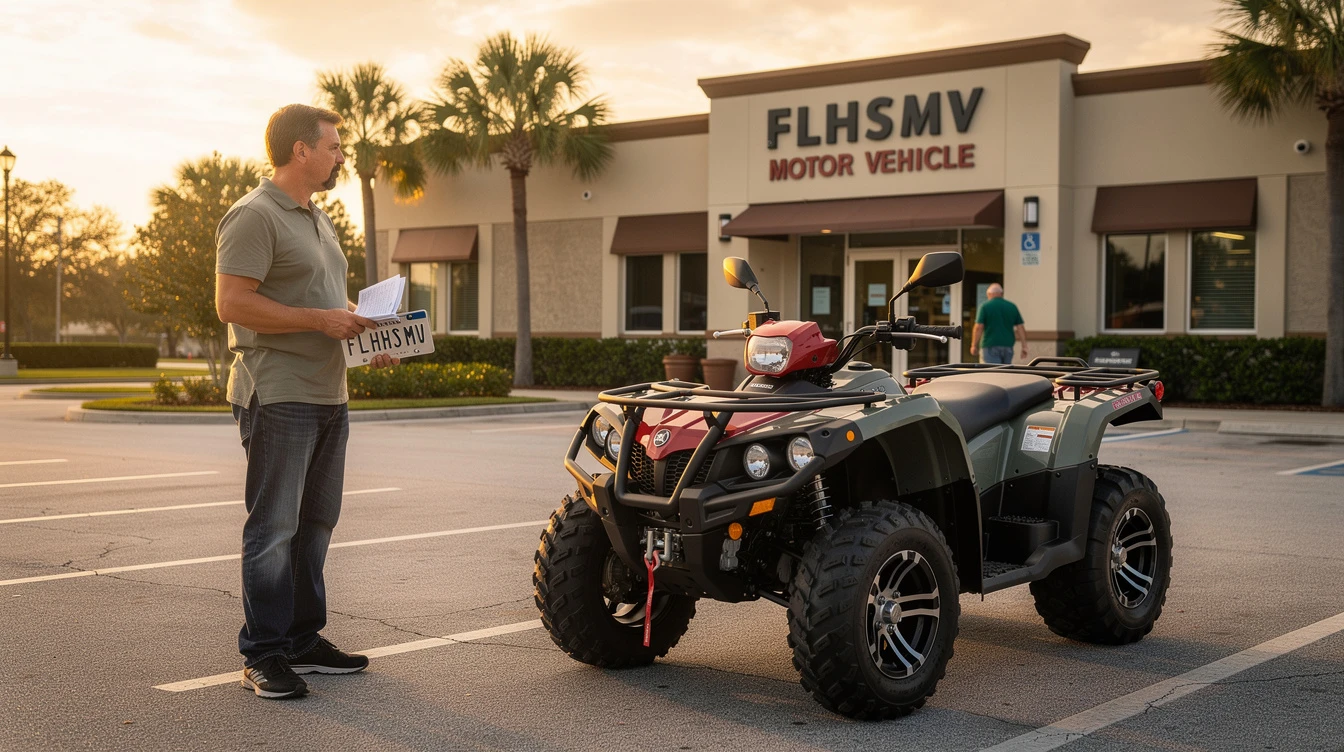
Florida ATVs and the Street-Legal Question
Florida riders ask this question constantly: can you make an ATV street legal in Florida? The short answer is yes, but with serious conditions attached. Florida law does not treat ATVs the same way it treats motorcycles or passenger vehicles. Getting your quad or four-wheeler on public roads requires meeting specific equipment standards, working through FLHSMV (the Florida Highway Safety and Motor Vehicles agency), and understanding where you can actually ride.
Most ATVs rolling off the factory floor don't meet Florida's road requirements. They're built for trails and tracks, not traffic. That means you'll need to add equipment, get an inspection, and title the machine before you can ride it on public roads without risking a citation or impound.
Honestly, the process is doable, but it takes time and money. This guide breaks it down step by step so you know exactly what's ahead.
What You Need to Know About Florida ATV Laws
Florida Statutes Chapter 316 and Chapter 320 govern how ATVs can operate on public roads. By default, ATVs are classified as off-highway vehicles, which means they're not street-legal from the factory. To change that classification and get a title and tag from FLHSMV, your ATV must meet the same basic equipment requirements as a motorcycle.
A few important points before you get started:
- ATVs are generally not permitted on interstate highways or limited-access roads regardless of registration status.
- Some Florida counties have local ordinances that restrict ATV street use further, so check your county rules.
- You'll need a valid Florida driver's license to operate a titled ATV on public roads.
- Riders under 16 must wear a helmet. Adults are strongly advised to as well.
Florida does not have a formal "ATV street-legal conversion kit" approval process the way some states do. Instead, FLHSMV inspectors evaluate whether the vehicle meets motorcycle-equivalent safety standards. Pass the inspection and you can title it. Fail, and you're back to the trail.
If you own a side-by-side UTV rather than a traditional ATV, the rules are slightly different. Check out our street legal UTV guide in Florida, laws, tags, required equipment for the full breakdown specific to side-by-sides.
Required Equipment: What Your ATV Needs
This is where most riders underestimate the job. Florida requires ATVs to carry the same basic safety equipment as a motorcycle before FLHSMV will title them for road use. Here's what you'll need installed and working:
| Equipment Item | Required? | Notes |
|---|---|---|
| Headlight (DOT-compliant) | Yes | Must clarify at least 200 feet ahead on low beam |
| Taillight and brake light | Yes | Visible from 500 feet to the rear |
| Turn signals (front and rear) | Yes | Required on both sides, fore and aft |
| Horn | Yes | Audible from at least 200 feet |
| Mirrors (left side minimum) | Yes | Rearview visibility required |
| Speedometer | Yes | Must be functional |
| DOT-rated tires | Yes | Knobby off-road tires typically don't qualify |
| Working brakes (front and rear) | Yes | Both systems must be functional |
| Spark arrestor/exhaust | Yes | Noise and emissions requirements apply |
DOT-rated tires are a common sticking point. Most stock ATV tires are not DOT-approved for highway use. Budget for a tire swap when you're pricing out the project.
If you're also working on a dirt bike conversion, the equipment list is similar. Our dirt bike street legal guide, how to make a dirt bike street legal in any state covers the nationwide requirements in detail.
How the FLHSMV Registration Process Works
Once your ATV has the required equipment installed, here's how to work through the FLHSMV process to get it titled and registered in Florida.
- Get a VIN inspection. A Florida law enforcement officer or licensed dealer must verify your ATV's VIN. This confirms the vehicle isn't stolen and establishes its identity in the state system.
- Gather your paperwork. You'll need the existing title or manufacturer's certificate of origin, a completed Florida title application (HSMV 82040), proof of insurance, and your valid ID.
- Obtain a safety inspection. A Florida-licensed vehicle inspector evaluates whether your ATV meets the motorcycle-equivalent equipment standards listed above. All items must pass.
- Submit to your local county tax collector. Florida vehicle title and registration transactions run through county tax collector offices, not FLHSMV directly. Bring all documents and fees.
- Pay applicable fees and taxes. Title fees, registration fees, and sales tax on the vehicle's value apply at this step. Sales tax rates vary by state and county, so confirm the current Florida rate with your county office.
- Receive your title and registration. Once approved, FLHSMV issues a Florida certificate of title and you'll receive a license plate for road use.
The whole process typically takes two to four weeks from inspection to plates in hand, assuming no paperwork issues.
Questions about title transfers in general? Our guide on how to avoid car title troubles, common title problems and how to prevent them covers the most common snags people hit.
Cost and Timeline: What to Budget
Costs vary depending on how much equipment your ATV already has and the current value of the machine. Here's a realistic breakdown:
| Cost Item | Estimated Range |
|---|---|
| Street-legal equipment kit (lights, signals, horn, mirrors) | $150, $500 |
| DOT-rated tire swap (if needed) | $200, $600 |
| Speedometer installation | $50, $150 |
| Florida title application fee | ~$75 |
| Registration fee (annual) | $25, $50 |
| Florida sales tax on vehicle value | Varies by county |
| VIN and safety inspection fees | $20, $75 |
Total out-of-pocket for equipment plus registration typically lands between $500 and $1,400 depending on your ATV's starting point. If you're buying a new-to-you ATV with no prior title, add time for resolving that paperwork too.
The Montana Registration Alternative
Some ATV owners in Florida and other high-tax states choose a different path: registering through a Montana LLC instead. Montana has no sales tax, no emissions testing, and no safety inspection requirement for vehicle registration. For a high-value ATV, the tax savings alone can easily cover the cost of setting up the LLC and getting Montana plates.
This is a well-established, compliant registration method used by vehicle enthusiasts across the country. It's not a workaround, just a Montana registration method available to anyone willing to form a Montana LLC and title the vehicle through it.
Our post on zero tax car registration explained walks through exactly how this works and who it makes sense for. Also worth reading: Montana LLC for vehicle owners gives you the full picture on the LLC setup process.
Want Montana plates sent to you? Our guide on how to get Montana plates for my vehicle covers the steps from start to finish.
For the official Montana fee schedule, you can check the Montana Vehicle Title and Registration Fees page directly.
Frequently Asked Questions
Can any ATV be made street legal in Florida?
In most cases, yes, if it can physically accept the required safety equipment and pass inspection. Some older or very small ATVs may not have the wiring capacity or frame geometry to support all required components. A pre-purchase equipment check by a mechanic familiar with conversions can save you wasted time.
Do I need insurance to register an ATV for road use in Florida?
Yes. Florida requires proof of insurance before FLHSMV will issue a title and registration for road-use vehicles. Standard ATV off-road insurance doesn't cover on-road use, so you'll need a policy that specifically includes public road coverage.
Can I ride my Florida-registered ATV on any public road?
No. Even with a valid title and registration, ATVs are typically restricted to roads with posted speed limits of 35 mph or less in Florida. They're not permitted on highways or interstates. Local county ordinances may add further restrictions, so check before you ride.
Is Montana registration a compliant option for ATV owners in Florida?
Yes. Forming a Montana LLC and registering your ATV through it is a compliant registration method available to any U.S. resident. The vehicle would carry Montana plates and title. Whether you also need a Florida registration depends on how and where you use the vehicle. Many owners consult with a tax professional before going this route, which is a smart move.
How long does the Florida ATV street-legal conversion process take?
Typically two to six weeks from the time you have all equipment installed to the time you receive your title and plates. The inspection and county office processing are usually the longest steps. Complex paperwork situations, like missing titles or out-of-state transfers, can add more time.
What if my ATV doesn't have a title?
You'll need to resolve that before FLHSMV will register it for road use. Options include tracking down the prior owner for a title transfer, applying for a bonded title, or using a surety bond process. Our guide on how to avoid car title troubles covers title problem scenarios in detail.
How does the Florida ATV process compare to other states?
Florida is moderately difficult compared to other states. Some states, like Arizona, have clearer ATV registration pathways. Others are more restrictive. If you're curious how Florida stacks up, check our state-specific guides: street legal UTV guide in Arizona and street legal UTV guide in California are good comparisons.
What's the difference between an ATV and a UTV for Florida street-legal purposes?
ATVs (four-wheelers) and UTVs (side-by-sides) are treated differently under Florida law. UTVs have more enclosed cab configurations and may qualify for different registration pathways. The equipment requirements overlap but aren't identical. See our dedicated street legal UTV guide in Florida for the side-by-side specifics.
Ready to Get Your ATV Street Legal?
Whether you're going through the Florida FLHSMV process or considering a Montana registration path to cut costs, Street Legal Hookup has you covered. We provide registration assistance for off-road vehicles across the country, and our team knows the paperwork inside out.
Take two minutes to answer a few questions about your ATV and find out exactly which path works best for your situation.