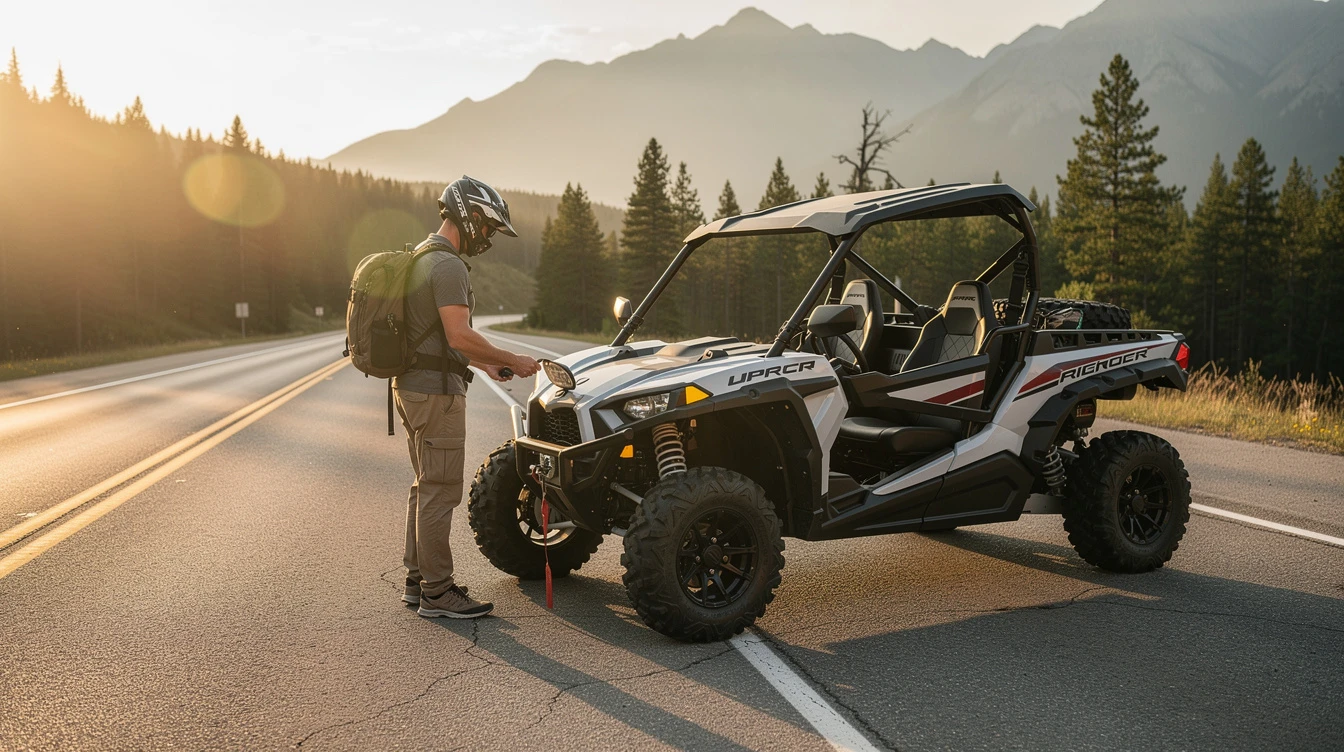
Why Making Your UTV Street Legal Is Worth the Effort
Your UTV can haul gear, tear up trails, and handle terrain that most vehicles can't touch. But the minute you try to cross a road or ride into town, you're operating in a gray area, unless you've gone through the proper steps to make it street legal. That's what this guide is for.
Getting your UTV street legal opens up real access. You can ride between trail systems without loading into a truck. You can use county roads, cross highways, and in some states, ride on city streets. That's not a minor upgrade, it changes how and where you ride entirely.
This complete UTV street legal guide covers what equipment you'll need, how state laws differ, what registration actually costs, and why Montana registration is a smart move for a lot of owners. Honest info. No filler.
What You Need to Know Before You Start
There's no single national standard for street-legal UTVs. Every state sets its own rules. Some are straightforward, add mirrors, lights, and a horn, then register. Others require a full safety inspection or specific equipment certifications. A few states are genuinely restrictive.
That said, most states follow a similar framework. Here's what's almost always required:
- Headlights and tail lights (DOT-approved in many states)
- Turn signals (front and rear)
- Rearview mirror (one or two, depending on state)
- Horn
- Windshield or eye protection
- Seatbelts
- Speedometer
- Spark arrestor (in states with fire risk concerns)
- Valid registration and a title in your name
Speed ratings matter too. Most states cap street-legal UTV operation at 35, 45 mph. If your machine tops out below that threshold, some states won't allow road use at all. Check your state's low-speed vehicle (LSV) laws if your UTV is on the slower end.
If you're in a specific state and want the local breakdown, we've done that work already. Check out the street legal UTV guide in Florida, the street legal UTV guide in Arizona, or the street legal UTV guide in California for state-specific rules on laws, registration, and DMV requirements.
State-by-State UTV Street Legal Rules: What to Expect
Some states are rider-friendly. Others aren't. Here's a quick comparison of how a handful of common states handle street-legal UTVs:
| State | Street Legal UTVs Allowed? | Key Requirements | Registration Required? |
|---|---|---|---|
| Arizona | Yes | Lights, mirrors, horn, seatbelts | Yes |
| Florida | Limited (county roads) | LSV compliance required | Yes |
| California | Limited | Full DMV registration, smog check may apply | Yes |
| Idaho | Yes | Lights, mirrors, horn, insurance | Yes |
| Colorado | Yes (local option) | County or city permits may be needed | Yes |
| Illinois | Limited | Specific road types only, equipment required | Yes |
| Connecticut | Limited | Safety requirements enforced strictly | Yes |
States like Arizona and Idaho tend to be the most permissive. California and Connecticut are stricter. And even in states where UTVs are technically allowed on roads, local ordinances can restrict where you ride.
For a deeper look at specific states, the street legal UTV guide in Idaho and the can you make a UTV street legal in Colorado guide are solid starting points with the rules and requirements covered in full.
How the Street Legal Conversion Process Works
Getting your UTV street legal is a multi-step process, but it's manageable when you take it one piece at a time.
- Check your state's requirements. Start with your state's DMV website or our state-specific guides. Know exactly what equipment is required before you buy anything.
- Install the required equipment. This usually means lights, turn signals, mirrors, and a horn at minimum. Buy DOT-rated parts where your state requires it, generic off-brand gear can get you failed at inspection.
- Get a title in your name. You can't register a vehicle you don't have a title for. If yours is missing or there's a lien, get that sorted first. Our guide on how to avoid car title troubles covers common title problems and how to prevent them.
- Pass any required inspection. Some states require a safety inspection before they'll issue tags. Others don't. Know which camp your state is in.
- Register the vehicle. Submit your paperwork, pay the fees, and get your plate. In some states this means visiting a DMV in person. With Montana registration, it can often be done remotely.
- Get insurance. Most states require liability insurance for street-legal UTVs. Get a quote before you need it, coverage is typically cheap for low-speed vehicles.
If you're converting a dirt bike or motorcycle to street use instead, the process has overlap but some key differences. See the dirt bike street legal guide for a full breakdown of how to make a dirt bike street legal in any state.
Montana Registration: Why UTV Owners Use It
Montana has no sales tax. No emissions testing. And no requirement that you live there to register a vehicle through a Montana LLC. That combination makes it one of the most popular registration methods for UTV owners nationwide.
Here's how it works. You form a Montana LLC, a real business entity registered with the Montana Secretary of State. The LLC buys and owns the UTV. The vehicle is then registered in Montana in the LLC's name. Because the LLC is the buyer, and Montana doesn't charge sales tax, you don't pay sales tax on the purchase. Sales tax rates vary by state, but on a $25,000, $40,000 UTV, that's typically a significant savings.
Honest note: this is a Montana registration method, not a workaround. It's used by collectors, enthusiasts, and fleet operators across the country. You'll still need to follow your home state's road use rules, Montana registration doesn't override local street-legal equipment requirements.
Want the full picture? The Montana LLC for vehicle owners guide explains the structure, costs, and what to expect. And for Montana's fee schedule, the Montana Vehicle Title and Registration Fees page on the Montana DOJ site is the direct source.
For UTV and powersport registration through Montana specifically, Ride Legal handles Montana registration for motorcycles, ATVs, UTVs, and powersports.
Cost and Timeline: What to Budget
Costs vary depending on your state, your UTV model, and whether you're doing Montana registration or registering in your home state. Here's a realistic breakdown:
| Item | Estimated Cost |
|---|---|
| Street legal equipment kit (lights, mirrors, turn signals, horn) | $150, $600 |
| Installation (DIY vs. shop) | $0, $300 |
| Montana LLC formation | $49, $149 (one-time) |
| Montana registration fees (per Montana DOJ fee schedule) | $150, $300/year depending on vehicle age and weight |
| Home state registration (if registering locally) | $50, $300+ depending on state |
| Sales tax avoided via Montana LLC (varies by state) | $1,000, $4,000+ on a typical UTV purchase |
| Insurance (annual) | $100, $400 |
Timeline: most Montana LLC registrations process in 3, 7 business days with remote paperwork support. Home state registration timelines vary widely, some states turn it around in a week, others take 4, 6 weeks.
If you're curious how California specifically calculates DMV fees and taxes, the California car registration costs guide breaks down every fee line by line.
Frequently Asked Questions
Can any UTV be made street legal?
In most cases, yes, but it depends on your state and your machine. UTVs that max out below your state's minimum road speed (typically 25, 35 mph) may not qualify for full street-Montana registration. Most modern side-by-sides with 50cc or larger engines can typically meet the requirements with the right equipment added.
Do I need a driver's license to ride a street-legal UTV?
Yes. Once your UTV is registered for road use, you need a valid driver's license to operate it on public roads. Some states also require proof of insurance before they'll issue tags.
Does Montana registration work in all 50 states?
Montana registration is a widely used method for vehicle owners nationwide. You'll still need to follow your home state's road use and equipment requirements. Montana registration doesn't change local riding rules, it addresses the registration and title side, not local road laws. In most cases it works without issue, but you should consult a professional about your specific situation.
What's the difference between a UTV and an ATV for registration purposes?
Most states treat them differently. ATVs are typically single-rider or tandem machines with straddle seating. UTVs (side-by-sides) have side-by-side seating and a roll cage, which usually puts them in a separate vehicle classification. Registration requirements, equipment rules, and road access rules often differ between the two. Check your state's specific classifications before starting the process.
Is New York good for UTV street Montana registration?
New York has its own specific process. The New York UTV registration guide covers how registration works in that state and what owners should expect.
Where can I find state-specific UTV laws for Hawaii, Connecticut, or Alabama?
We've published state-specific guides for several states. Start with the street legal UTV guide in Hawaii, the street legal UTV guide in Connecticut, or the street legal UTV guide in Alabama for laws, equipment requirements, and registration info specific to each state.
What about Illinois UTV registration?
Illinois has specific road-use restrictions for UTVs. The street legal UTV guide in Illinois covers what roads are allowed, what equipment you need, and how to get registered.
Can I get zero sales tax on my UTV purchase?
Montana has no sales tax, which means UTV purchases registered through a Montana LLC typically avoid sales tax entirely. Sales tax rates vary by state, so the actual savings depend on where you live. The zero tax car registration explained guide breaks down how this works and who it makes sense for.
Ready to Get Your UTV Street Legal?
You've got the info. Now it's time to move. Street Legal Hookup provides registration assistance for off-road vehicles, UTVs, dirt bikes, ATVs, side-by-sides, and more. Our team helps with the paperwork side so you can focus on the riding side.
Find out what your UTV qualifies for and get the process started today.