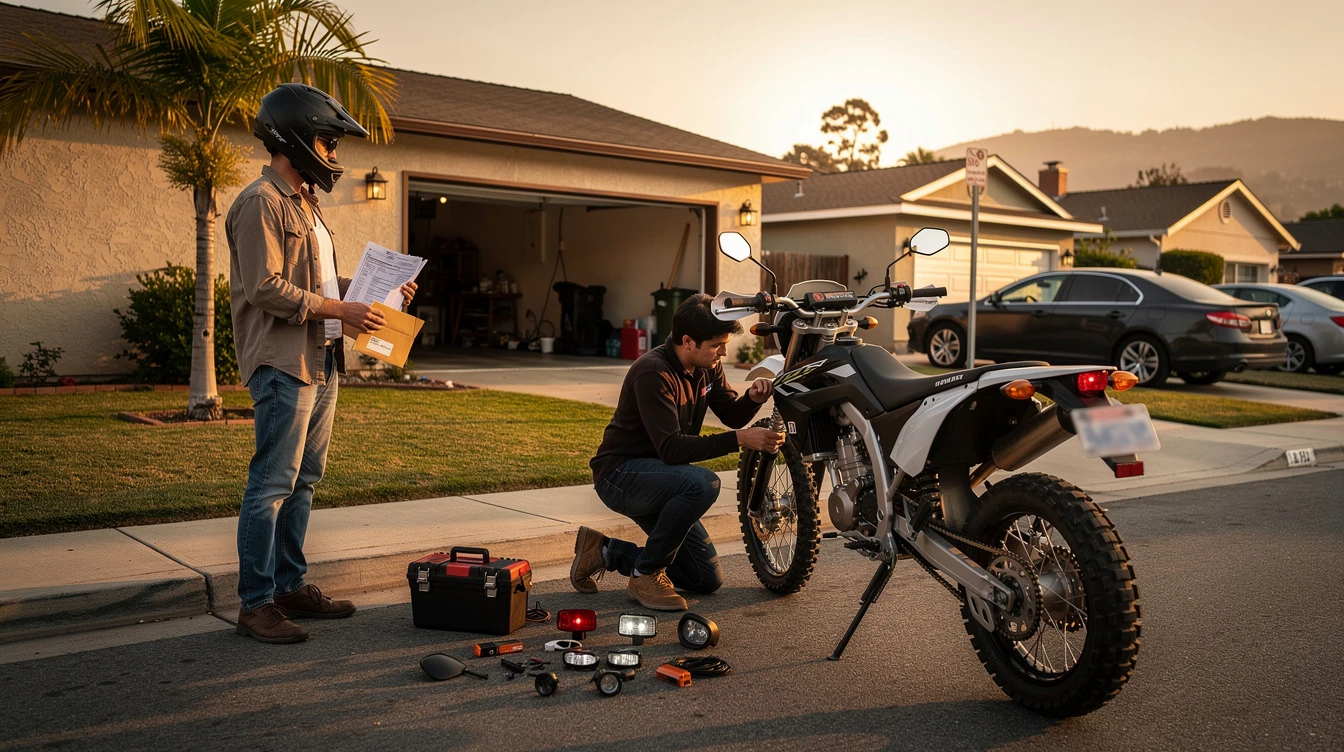
Making a Dirt Bike Street Legal in California Is Possible, But It Takes Work
Making a dirt bike street legal in California is one of the most common questions we get from riders in the Southwest. Short answer: yes, you can do it, but California sets a high bar. The state has strict emissions standards, a detailed equipment checklist, and a multi-step DMV process that trips up a lot of riders who go it alone.
This guide walks you through exactly what California requires, what it costs, how long it takes, and why some riders skip the California DMV process entirely and register through Montana instead.
Already done your research and ready to move? Check Your Eligibility and find out which path fits your bike.
What You Need to Know Before You Start
California enforces two sets of rules that most other states don't stack together: street equipment requirements and emissions compliance. Your dirt bike needs to pass both to get a street-legal title and plate in CA.
California Emissions: The Biggest Hurdle
Most off-road dirt bikes are built with carbs or fuel systems that don't meet California Air Resources Board (CARB) standards. If your bike isn't already CARB-compliant, getting it certified after the fact is difficult and expensive, sometimes not possible at all. This is the wall that stops most riders cold.
Bikes that are already EPA-compliant but not CARB-compliant typically can't be titled for street use in California. Dual-sport bikes from the factory, like a Kawasaki KLX300 or Honda CRF300L, already meet this bar. A pure motocross or enduro race bike usually does not.
Required Street Equipment in California
If your bike clears emissions, here's the equipment California expects on a street-legal motorcycle:
- Headlight (low and high beam)
- Taillight and brake light
- Turn signals (front and rear)
- Mirrors (left side minimum, right side recommended)
- Horn
- DOT-approved tires
- Working front and rear brakes
- Speedometer
- Street-legal exhaust (meets noise and emissions standards)
A good starting point for sourcing these parts is a street legal motorcycle conversion kit, which covers the core lighting and signal components in a single package. Not every kit meets California's specific standards, so confirm CARB compatibility before buying.
How the California DMV Process Works
Once your bike is physically ready, you're dealing with the DMV. Here's the general sequence:
- Verify your title: You need a clean off-highway vehicle (OHV) title or a title from another state. If your title has issues, read our guide on how to avoid car title troubles before you go any further.
- Complete a CHP Inspection: California Highway Patrol inspects motorcycles being converted from OHV to street use. They verify the VIN and confirm the bike is what you say it is.
- Submit DMV Form REG 343: This is the Application for Title or Registration. You'll submit this along with your existing title, proof of insurance, and any smog or CARB documentation.
- Pay registration fees: California DMV fees vary by vehicle value, county, and other factors. The California car registration costs breakdown covers the fee structure in detail, including use taxes and how they're calculated.
- Pass any required inspections: Some bikes may need a smog check or referee inspection depending on the engine and model year.
- Receive your plate and title: If everything clears, California issues you a motorcycle plate and a street-legal title.
For a broader look at what this process looks like from start to finish across different vehicle types, the classic car registration process step by step article gives useful context on how California titles work generally.
Cost and Timeline Breakdown
California's fees aren't fixed, so any number here is an estimate. Use the DMV's own fee estimator for precise figures based on your specific bike.
| Item | Estimated Cost |
|---|---|
| Conversion kit (lighting, signals, mirrors) | $150, $500 |
| CARB-compliant exhaust | $300, $800+ |
| DOT tires (if needed) | $100, $300 |
| CHP inspection fee | $50, $100 |
| DMV title and registration fees (CA) | $150, $500+ (varies by value and county) |
| Use tax (if applicable) | Varies by purchase price and county |
Total out-of-pocket can run $800 to $2,000+ before you factor in any mechanic labor. Timeline from parts install to plate in hand is typically 4 to 12 weeks, depending on CHP appointment availability and DMV processing time.
California DMV fee calculators online can give you an estimate before you commit. Search "dmv fees calculator california" or "california dmv fee calculator" to find the state's tool. Our California car registration costs page also breaks down the full fee structure.
The Montana Registration Alternative
Honest answer: a lot of California riders register their dirt bikes in Montana through an LLC instead of going through California's process. This is a Montana registration method, not a California workaround. Montana has no sales tax, no emissions testing, and no smog inspection requirements for vehicle registration.
Here's why it appeals to dirt bike owners:
- No CARB compliance required at the Montana level
- No sales tax on the registration, which can save hundreds depending on your bike's value (sales tax rates vary by state)
- Montana issues a title and plate that most states recognize for road use
- The process is done remotely with paperwork support
The tradeoff: you're operating a Montana-registered vehicle in California. California law requires residents who keep a vehicle in-state for more than a certain period to register it locally. This approach works best for riders who ride across multiple states, store the bike elsewhere, or use it primarily off-road in California.
For a full breakdown of how the Montana LLC registration method works, see our Montana LLC for vehicle owners guide. If you're curious about how this affects what you pay versus a California registration, the zero tax car registration explained post covers the mechanics clearly.
And if you want a broader picture of making any dirt bike street legal, not just in California, the dirt bike street legal guide covers the full state-by-state picture.
California vs. Montana Registration: Side-by-Side Comparison
| Factor | California DMV Process | Montana LLC Registration |
|---|---|---|
| Emissions testing required | Yes (CARB) | No |
| Physical equipment inspection | Yes (CHP) | No |
| Sales tax | Yes (varies by county) | No |
| Registration fees | $150, $500+ | Lower in most cases |
| Timeline | 4, 12 weeks | 2, 6 weeks (remote paperwork support) |
| In-person DMV visit required | Yes | No |
| Works for non-CARB bikes | No | Typically yes |
Frequently Asked Questions
Can any dirt bike be made street legal in California?
Not every bike qualifies. California's CARB emissions standards eliminate most purpose-built race or motocross bikes. Dual-sport bikes that came from the factory with street-legal configurations have the best shot. If your bike was built exclusively for off-road use and doesn't carry a CARB executive order number, converting it for street use in California is typically not possible through the standard DMV process.
Do I need a motorcycle license to ride a street-legal dirt bike in California?
Yes. A valid California motorcycle license (M1 endorsement) is required to legally operate a motorcycle, including a converted dirt bike, on public roads. An M2 license covers motorized bicycles and mopeds only.
What is a CHP inspection and do I need one?
The California Highway Patrol inspection verifies your VIN and confirms the vehicle is not stolen and matches your title documentation. For motorcycles being converted from OHV to street registration, a CHP inspection is typically required before the DMV will issue a street title. Appointments can run several weeks out depending on your county.
How much does it cost to make a dirt bike street legal in California?
Total costs depend heavily on what your bike already has. Budget $800 to $2,000+ for parts, inspections, and DMV fees combined. A CARB-compliant exhaust alone can run $300 to $800. California DMV registration fees vary based on vehicle value and county, so exact figures depend on your specific bike. The California car registration costs breakdown gives a solid overview of how fees are structured.
Is Montana registration street legal in other states?
Montana issues standard vehicle titles and plates that are recognized across state lines in most cases. Riders who travel between states, store their bike outside California, or use the bike primarily for recreation across multiple states often find Montana registration a practical option. Check your home state's residency and registration rules before choosing this path.
What if my dirt bike doesn't have a title?
No title means no street registration through any state's standard process. You'll need to pursue a bonded title or a title recovery process first. Our guide on avoiding car title troubles walks through the most common scenarios and what to do about each one.
Ready to Get Street Legal? Here's Your Next Step.
California's process is real, and for the right bike it's worth doing. But if your bike doesn't meet CARB standards or you want a faster path with fewer inspections, Montana registration assistance is worth a serious look.
Either way, the first move is figuring out which path fits your bike. Take two minutes to answer a few questions and find out exactly where you stand.