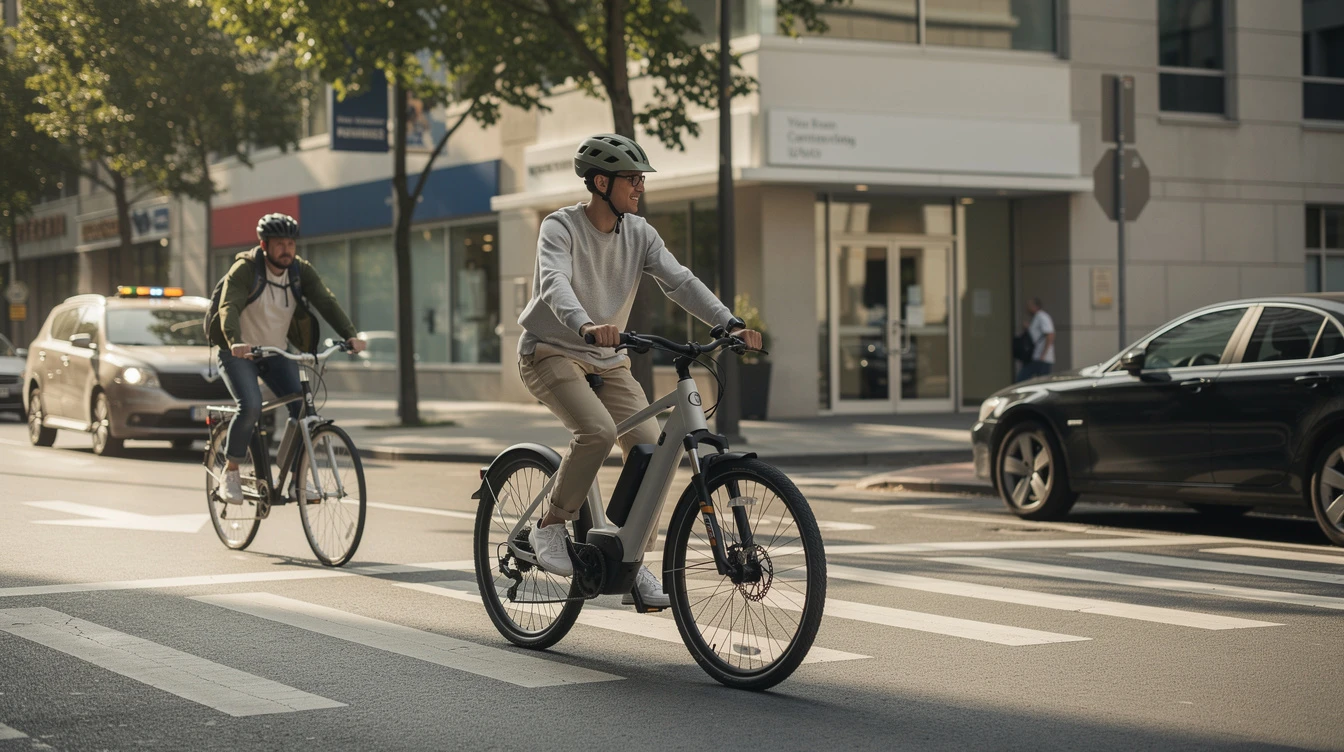
For the majority of e-bike owners in the majority of states: no, your electric bike does not need registration. If your e-bike conforms to Class 1 or Class 2 specifications (750 watts or less, 20 mph max motor-assisted speed), it is legally a bicycle — and bicycles do not require registration, plates, or title documents.
But there are exceptions. Some states require registration for certain e-bike classes. High-powered e-bikes that exceed classification thresholds always require registration. And the rules are changing rapidly as states update their vehicle codes to address the e-bike boom.
The General Rule: E-Bikes = Bicycles = No Registration
Over 30 states have adopted the three-class e-bike system, and the foundational principle is the same in all of them: a conforming e-bike is legally a bicycle. Bicycles are not motor vehicles. Motor vehicle registration requirements do not apply to bicycles.
This means:
- No DMV registration
- No license plates
- No title or MSO required
- No mandatory liability insurance
- No VIN (e-bikes have serial numbers, not VINs)
This is one of the primary advantages of e-bikes over mopeds, scooters, and motorcycles — the regulatory burden is essentially zero for the rider.
Registration Requirements by E-Bike Class
| E-Bike Class | Registration Required? | Notes |
|---|---|---|
| Class 1 (pedal-assist, 20 mph, ≤750W) | No (all states) | Universally treated as a bicycle |
| Class 2 (throttle, 20 mph, ≤750W) | No (most states) | A few states with older codes may require registration for throttle-equipped bikes |
| Class 3 (pedal-assist, 28 mph, ≤750W) | No (most states) / Yes (a few) | Some states require registration or a sticker/decal for identification |
| Non-conforming (over 750W or over 28 mph) | Yes (virtually all states) | Classified as moped or motorcycle — full motor vehicle registration required |
States That Require Some Form of E-Bike Registration
While most states require nothing, several have registration or identification requirements for certain e-bike classes:
States with Registration Requirements
Connecticut: E-bikes must be registered with the DMV and carry a registration sticker. This applies to all e-bike classes. Registration is free but required.
Massachusetts: E-bikes classified as "motorized bicycles" (those with motors capable of propelling the bike without pedaling, or exceeding 25 mph) require registration as mopeds. Standard Class 1 e-bikes that only provide pedal assist are exempt.
New Jersey: While NJ adopted the three-class system in 2020 and does not require registration for conforming e-bikes, municipalities can require local registration. Some NJ towns have enacted local e-bike registration ordinances.
North Carolina: E-bikes with motors over 750W or speeds exceeding 20 mph require moped registration.
States with Identification Sticker Requirements
A few states do not require full DMV registration but do require an identification sticker or decal:
- California: Does not require registration for any conforming e-bike class (1, 2, or 3). However, Class 3 e-bikes must display a manufacturer-applied label stating the class, top assisted speed, and motor wattage.
- Some local jurisdictions in Colorado, Oregon, and Washington have considered (but mostly not enacted) local e-bike registration programs, primarily as theft-deterrent measures rather than regulatory requirements.
When Registration Becomes Mandatory
Registration requirements kick in when your e-bike crosses the line from "bicycle" to "motor vehicle." The triggers vary by state but generally include:
Power Threshold
Exceeding 750 watts (1 horsepower) of motor output reclassifies an e-bike in most states. Bikes from brands like Sur-Ron (6,000W), Talaria (6,000W+), and some high-end EMTB builds with aftermarket motors cross this threshold easily. At that power level, the vehicle is a motorcycle or moped — full registration, insurance, and licensing apply.
Speed Threshold
If your e-bike's motor can propel it above 28 mph (or 20 mph in states without a Class 3 definition), it exceeds the e-bike classification. The actual speed matters — not the class label on the frame. A bike labeled "Class 2" that has been unlocked to reach 30 mph is not a Class 2 e-bike anymore.
Understanding e-bike speed limits helps you stay within classification thresholds and avoid unintended registration requirements.
Throttle-Only Operation
In some states that have not adopted the three-class system, any bike with a throttle (which allows motor-only operation without pedaling) is classified as a moped rather than a bicycle — regardless of speed or wattage. This is becoming less common as states modernize their vehicle codes, but it still catches riders in a few jurisdictions.
Voluntary E-Bike Registration Programs
Several cities and organizations offer voluntary e-bike registration — not as a legal requirement, but as a theft recovery tool:
- Bike Index (bikeindex.org): A free, open-source bicycle registration platform used by police departments across the country. Register your e-bike's serial number, and if it is stolen and recovered, law enforcement can identify you as the owner.
- Local police department programs: Many police departments offer free bicycle registration. This does not affect your legal requirements but provides documentation of ownership.
- Project 529 Garage: Used extensively in the Pacific Northwest for bicycle registration and recovery.
Given that e-bikes cost $1,000–$8,000+ and are frequent theft targets, voluntary registration is worth the 5 minutes it takes, even where not legally required.
E-Bike Registration vs. Motorcycle/Moped Registration
When an e-bike does require registration (because it exceeds classification thresholds), the process follows moped or motorcycle registration rules — which are significantly more involved:
| Requirement | E-Bike (Bicycle Class) | Moped/Motorcycle Class |
|---|---|---|
| DMV Registration | Not required | Required — annual renewal |
| License plate | Not required | Required |
| Title | Not required | Required (MSO for new, title transfer for used) |
| Insurance | Not required (recommended) | Liability insurance required |
| Driver's license | Not required | Valid license (sometimes motorcycle endorsement) |
| Safety inspection | Not required | Required in some states |
| Annual cost | $0 | $50–$300+ (registration + insurance) |
The jump from "no registration" to "full motor vehicle registration" is significant — hundreds of dollars per year in fees and insurance, plus the requirement to carry a valid driver's license. This is why staying within the e-bike classification thresholds matters financially, not just legally.
The Trend: Fewer Registration Requirements, Not More
As states update their vehicle codes, the clear trend is toward fewer e-bike registration requirements, not more. Between 2018 and 2026, over 30 states adopted the three-class system that explicitly exempts conforming e-bikes from motor vehicle registration. The PeopleForBikes coalition continues to advocate for adoption in the remaining states.
The exceptions to this trend are at the local level, where some cities are considering registration as a response to specific issues:
- Delivery fleet management: Cities with high-density e-bike delivery operations (NYC, San Francisco) have explored fleet registration requirements
- Theft prevention: Registration creates an ownership record that aids recovery
- Speed compliance: Some proposals tie registration to speed compliance verification
None of these local initiatives have resulted in widespread mandatory registration as of 2026, but they reflect ongoing policy discussions on forums like r/ebikes and in city council proceedings.
What You Should Do
- Check your state's current classification. Our e-bike laws by state guide covers the regulatory framework in each state.
- Know your e-bike's actual specs. Check the motor wattage (nominal, not peak) and maximum motor-assisted speed. These determine your classification.
- Register voluntarily for theft protection. Even if not required, registering your serial number with Bike Index or your local police department costs nothing and aids recovery.
- If you exceed thresholds, register properly. Riding a moped-class e-bike without registration exposes you to the same penalties as riding an unregistered motorcycle — fines, impoundment, and no insurance coverage if you are in an accident.
Frequently Asked Questions
Do I need to register my e-bike at the DMV?
Not if it conforms to Class 1, 2, or 3 specifications (750W or less motor, 20-28 mph max assisted speed) in the vast majority of states. A few states (Connecticut, parts of Massachusetts) require registration for certain e-bike types. E-bikes exceeding these thresholds require full motor vehicle registration.
Does my e-bike need a license plate?
No, conforming e-bikes (Class 1, 2, 3) do not need license plates in any state. Only e-bikes that exceed classification thresholds and are registered as mopeds or motorcycles receive license plates.
Do I need insurance for my e-bike?
Not legally required for conforming e-bikes in any state. However, e-bike insurance is recommended — dedicated policies cost $100–$300/year and cover theft, damage, and liability that homeowner's or renter's insurance may not. If your e-bike is registered as a moped or motorcycle, liability insurance is required.
What happens if I ride an unregistered high-powered e-bike?
If your e-bike exceeds classification thresholds (over 750W or over 28 mph motor-assisted), riding without registration is treated the same as riding an unregistered motorcycle or moped. Penalties include fines ($100–$500+), possible vehicle impoundment, and no insurance coverage in an accident — meaning you are personally liable for all damages.
Is e-bike registration likely to become mandatory?
The national trend is toward fewer requirements, not more. Over 30 states have explicitly exempted conforming e-bikes from registration since 2018. Local initiatives for fleet registration or theft-prevention registration exist but have not resulted in widespread individual registration mandates. The e-bike industry and advocacy groups actively oppose mandatory registration as a barrier to adoption.