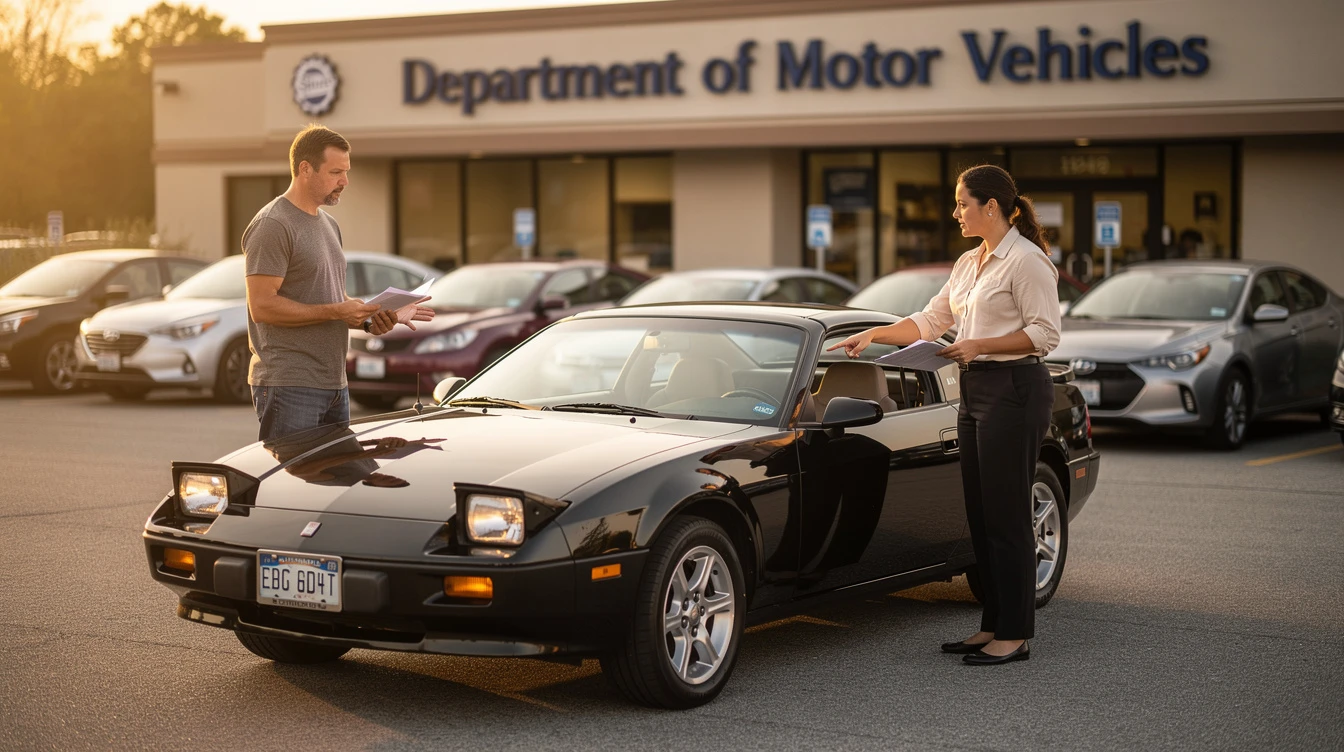
Registering a kit car in the USA means working through a process most DMV offices aren't set up to make easy. Kit cars, custom-assembled vehicles built from a manufacturer's kit, often on a donor chassis, don't arrive with a standard factory title. That means you're responsible for getting a VIN assigned, proving the build is street-legal, and satisfying your state's inspection and titling rules before you can ride or drive on public roads.
This guide covers what you actually need: VIN assignment, title transfer options, state-specific rules, and how to start your paperwork the right way.
Get Street Legal, Check Your Kit Car's EligibilityWhat Is a Kit Car and Why Registration Is Different
A kit car is a vehicle you assemble yourself using a pre-manufactured kit, typically combining a purpose-built body with mechanical components from a donor car. Popular examples include Cobra replicas, Locost Seven builds, and Hayabusa-powered three-wheelers. Because no single manufacturer produces the completed vehicle, there's no Manufacturer's Certificate of Origin (MCO) issued at the factory level, the document most states require to start a title.
Without an MCO, you need an alternative path to title. That path usually runs through a state-assigned VIN, a homemade or specially-constructed vehicle (SCV) title, or a title transfer based on the donor vehicle. The right route depends on your state and how you sourced the components.
For a broader look at how the car title transfer process works across states, the how to avoid car title troubles guide covers the most common title problems builders run into and how to prevent them before they stall your registration.
Step 1, VIN Assignment for Your Kit Car
Most states require a state-issued VIN for any vehicle that doesn't carry a factory VIN. A VIN (Vehicle Identification Number) is a 17-character code that uniquely identifies your vehicle in state and national databases. Without one, your kit car can't be titled, registered, or insured for road use.
Here's how VIN assignment typically works:
- Submit an application to your state's motor vehicle division, many call this a "specially constructed vehicle" or "homemade vehicle" application.
- Provide documentation: receipts for major components, a build description, photos of the completed vehicle, and any existing VINs from donor parts.
- Pass a physical VIN inspection by a law enforcement officer or state inspector.
- Receive a state-assigned VIN plate that gets affixed to the vehicle.
Some states, like California and Texas, have well-documented SCV processes. Others are more informal. A few states, including Montana, are known for being more builder-friendly with lower barriers to titling custom and specialty vehicles.
You can verify any existing donor vehicle VIN using the NHTSA VIN decoder, the free federal tool that confirms recall status and factory specs tied to that number.
Step 2, Titling Your Kit Car
Once you have a VIN, you can apply for a title. Most states issue kit cars a "specially constructed" or "homemade" title, a designation that shows the vehicle was built rather than purchased new from a dealer. This title functions the same as a standard title for registration, insurance, and resale purposes.
What you'll typically need to submit:
- Completed title application for your state
- Proof of VIN assignment (state-issued VIN plate documentation)
- Build receipts or component invoices totaling the vehicle's declared value
- Photos of the completed build
- Proof of insurance (required in most states before a title is issued)
- Payment for title fees, which vary by state
If your kit car was built using a titled donor vehicle, say, a Mazda Miata chassis, you may be able to transfer that donor title to your new build in some states, effectively keeping the existing VIN. This is called a title transfer, and it's the path used most often by builders who want to keep the process straightforward.
The classic car registration process step by step guide covers the documentation flow for vehicles that don't fit standard dealer-purchase models, which applies directly to kit car builds.
State-by-State Overview: Kit Car Registration Rules
Rules vary significantly. Here's a quick-reference table for states where kit car builders are most active:
| State | Title Category | VIN Inspection Required | Emissions Test | Notes |
|---|---|---|---|---|
| Montana | Specially Constructed | Yes | No | No sales tax, builder-friendly, Montana LLC option available |
| Texas | Specially Constructed | Yes | Yes (county-based) | Requires safety inspection; title transfer process well-documented |
| California | Specially Constructed (SB100) | Yes | Yes | Strict emissions; SB100 exemptions for pre-1976 components in some cases |
| South Dakota | Homemade Vehicle | Yes | No | Low fees, no emissions, SD residency option available |
| Florida | Specially Constructed | Yes | No (statewide) | Annual registration renewal required; insurance required before title |
| Arizona | Specially Constructed | Yes | Yes (select counties) | Safety inspection required; ARS 28-2165 governs SCV titling |
Montana and South Dakota stand out as two of the most straightforward states for non-standard vehicle registration. Montana charges no sales tax on vehicles and has no emissions testing requirement statewide. South Dakota offers low flat registration fees with no emissions. Both are popular options for builders who want a clean title path without fighting a hostile DMV process.
The montana LLC for vehicle owners guide explains how forming a Montana LLC can let out-of-state builders title and register a kit car in Montana, avoiding home-state sales tax and emissions requirements where applicable.
Texas Kit Car Title Transfer: What Builders Need to Know
Texas is one of the most active kit car states in the country. The Texas Department of Motor Vehicles processes specially constructed vehicle titles under a defined process that starts with a safety inspection at a licensed inspection station, followed by a VIN verification.
The title transfer process in Texas requires a completed Form 130-U (Application for Texas Title), the assigned or donor VIN, proof of insurance, and payment of applicable taxes and fees. Texas does charge sales tax on the declared value of the vehicle, so documenting component costs accurately matters.
For detailed guidance on the Texas title transfer process, the how to make classic car street legal texas guide covers the inspection and title steps that also apply to kit car builds in the state.
Montana LLC Registration for Kit Cars
Montana has no state sales tax and no vehicle emissions testing. For a kit car builder in a high-tax state, that's a meaningful difference. By forming a Montana LLC and titling the kit car under that LLC, some builders register their vehicles in Montana rather than their home state.
Montana-based LLC vehicle registration is a documented, established path. The Montana Motor Vehicle Division processes specially constructed vehicle titles, and the state is accustomed to non-standard vehicle applications. Fee schedules are published by the state at the Montana Vehicle Title and Registration page.
The zero tax car registration explained guide breaks down exactly how this works, what states it's most relevant for, and what you need to set it up.
Also worth reading: how to get montana plates for my vehicle walks through the specific steps to get Montana plates issued after your registration is processed.
Kit Car vs. Military Vehicle vs. Classic Car: Registration Differences
Kit cars share some registration challenges with other specialty vehicles, but the process differs in important ways. Military surplus vehicles like HMMWVs often have existing government VINs but require civilian title issuance. Classic cars typically have existing titles but may need bonded title work if the chain of ownership has gaps.
Kit cars are unique because they often start with zero documentation on the completed vehicle itself. The builder is, in effect, the manufacturer, which is why states treat them as specially constructed rather than used or antique vehicles.
If you also own or are registering a military surplus vehicle, the how to register a military vehicle in the USA guide covers the HMMWV, deuce-and-a-half, and M-series registration process in detail.
Why Use Street Legal Hookup for Kit Car Registration Assistance
Street Legal Hookup is a private third-party service specializing in registration paperwork assistance for specialty vehicles, including kit cars, ATVs, UTVs, motorcycles, military vehicles, and RVs. We're not a DMV. We don't work for the state. We work for riders and builders who want the paperwork done right without spending weeks on hold.
Here's what sets our registration assistance apart:
- Specialty vehicle focus. We work with kit cars, homebuilts, and custom vehicles regularly. This isn't general title work.
- Montana and South Dakota options. We provide paperwork support for both Montana LLC registration paths and South Dakota residency-based registration, two of the most builder-friendly states in the country.
- Remote paperwork support. Everything is handled remotely. You don't need to be present in Montana or South Dakota.
- Clear next steps. You'll know exactly what to submit, in what order, and what to expect on timing.
Frequently Asked Questions: Registering a Kit Car in the USA
Can you get a title for a kit car with no Manufacturer's Certificate of Origin?
Yes. Most states have a specially constructed or homemade vehicle title category specifically for vehicles built without factory documentation. You'll typically need to provide build receipts, component invoices, photos of the completed vehicle, and pass a VIN inspection. The state then assigns a VIN and issues a title under the SCV designation. Montana and South Dakota are particularly well-suited for this process due to their lower administrative barriers.
What is a state-assigned VIN and how do I get one?
A state-assigned VIN is a Vehicle Identification Number issued by your state's motor vehicle division when no factory VIN exists on the completed vehicle. To get one, you submit a specially constructed vehicle application along with documentation of your build, receipts, photos, a description of major components. A law enforcement officer or certified inspector then physically inspects the vehicle and verifies the build. Once approved, the state issues a VIN plate that gets affixed to the vehicle in a designated location. After that, you can proceed to title and registration.
Can I register a kit car in Montana if I don't live there?
Yes. Montana allows non-residents to form an LLC and register vehicles under that LLC. The kit car is titled and registered in Montana under the LLC's name. This is a documented path used by builders across the country to access Montana's no-sales-tax, no-emissions-test registration environment. You do not need to be physically present in Montana to complete the process with remote paperwork support. See the montana LLC for vehicle owners guide for a full breakdown.
Does a kit car need a safety inspection to be registered?
In most states, yes. Safety inspections for kit cars typically cover lighting, brakes, steering, tires, and basic safety equipment. Some states also require emissions testing if the vehicle uses a late-model engine. Montana and South Dakota do not require emissions testing statewide, which makes them attractive options for builders with high-displacement or older-spec powerplants.
How does the title transfer process work if I used a donor vehicle?
If your kit car was built on a titled donor chassis, some states allow you to transfer the donor vehicle's title to the new build. The donor vehicle's VIN carries over to the kit car, and the title is reissued to reflect the new specially constructed vehicle classification. You'll need the donor title, proof that the original vehicle was disassembled or destroyed, and photos of the completed kit build. The exact process varies by state. Texas, for example, has a formal title transfer process for this scenario. Check the how to avoid car title troubles guide for common donor-title pitfalls.
How long does it take to get a kit car titled and registered?
Timelines vary significantly by state. In Montana, the process with a properly prepared application typically takes 4 to 8 weeks from submission to receiving your title and plates. South Dakota is often faster, sometimes as little as 2 to 4 weeks. States like California can take considerably longer due to emissions certification requirements and heavier application review processes. Remote paperwork support through Street Legal Hookup can reduce back-and-forth delays by making sure your documentation package is correct before it's submitted.
Is a kit car treated differently than a classic car for registration purposes?
Yes, in most states. A classic or antique vehicle typically has an existing chain of title dating back to original manufacture. A kit car starts with no completed-vehicle title at all, which puts it in the specially constructed category. Classic car registration may qualify for reduced fees or antique plates in many states; kit cars typically don't qualify for those exemptions until the vehicle reaches a minimum age threshold. The classic car registration process step by step guide is a useful comparison for understanding where the two paths diverge.
What does Street Legal Hookup actually do for kit car registration?
Street Legal Hookup is a private third-party service that provides paperwork support and guidance for specialty vehicle registration. For kit car owners, that means helping you identify the right registration path (Montana LLC, South Dakota, or home state), preparing your documentation package, and walking you through each step from VIN assignment through title issuance. We're not affiliated with any DMV or government agency. We provide the guidance and paperwork support so you're not starting from scratch and guessing at forms.
Ready to Get Your Kit Car Street Legal?
You built something worth riding. Don't let paperwork be the thing that keeps it in the garage. Street Legal Hookup provides private registration assistance for kit cars, homebuilts, and specialty vehicles across all 50 states, with specialized support for Montana and South Dakota registration paths.
See If Your Kit Car Qualifies, Get Street LegalStreet Legal Hookup is a private third-party service and is not affiliated with any DMV, state agency, or government office. Services involve assistance and guidance with vehicle paperwork, Montana LLC filings, title support, and related registration processes.