You Found the Car. Now What?
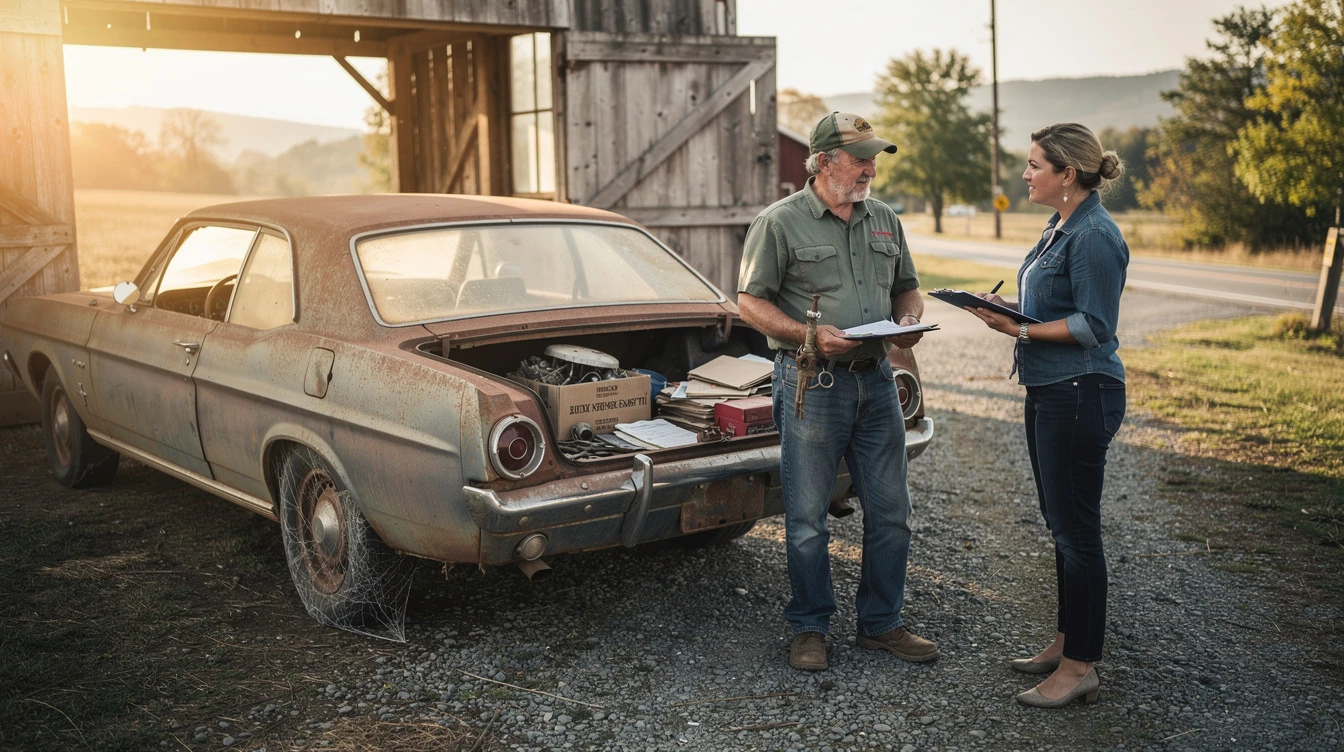
Barn finds are a rush. You pull back a dusty tarp and there it sits, a classic muscle car, a forgotten pickup, maybe a vintage European coupe that hasn't moved in thirty years. The body's solid. The engine might turn over. The title? Nobody's seen it since 1987.
This is where a lot of buyers freeze up. No paperwork means no title. No title means you can't register it, can't plate it, can't drive it anywhere except the property you're standing on. That's frustrating when you've got a real vehicle on your hands.
The good news: getting a title for an old car with no paperwork is possible in most cases. It takes some legwork, but there's a real path forward. Let's walk through it.
What You Need to Know Before You Start
First, grab the VIN. Every vehicle built after 1954 has one, and it's your single most important starting point. The VIN tells you the year, make, model, and whether there's an existing title on record somewhere. Run it through the NHTSA VIN Lookup to check for recalls and confirm the vehicle's identity before you do anything else.
A few things to sort out early:
- Is the vehicle stolen? Run a VIN check. If it comes back flagged, walk away. No title path will help you there.
- Is there a lien? If a lender ever had a claim on this vehicle, that lien may still be on record. You'll need a lien release before a title can transfer cleanly.
- Does any owner still exist on record? Some states let you track down the last registered owner and get a signed bill of sale or title transfer. That's often the cleanest path.
- What state was it last registered in? Each state handles title transfers and replacement titles differently. A Texas title transfer process differs from Montana's. More on that below.
Also check whether the car qualifies as a bonded title candidate. Most states have this option for vehicles where ownership is unclear but not disputed. A bonded title is exactly what it sounds like: you post a surety bond, the state issues a title with a "bonded" notation, and after a set period (typically 3 years) the bond notation drops off.
Want a full picture of what title problems look like before they become yours? Read how to avoid car title troubles, it covers the most common title problems owners run into and how to get ahead of them.
How the Barn Find Title Process Works
There's no single universal method. The right path depends on the state, the vehicle's age, and what paperwork (if any) you can dig up. Here are the main routes:
Option 1: Replacement Title From the Last State of Record
Some DMVs will issue a duplicate title if you can prove ownership through a bill of sale, old registration documents, or insurance records. This works best when the vehicle was registered in the not-too-distant past and the last owner is either you or someone you can reach.
Option 2: Bonded Title
This is the most common path for true barn finds with zero paperwork. You get a surety bond for the vehicle's appraised value, submit it to your state DMV along with a VIN inspection, and the state issues a bonded title. The bond protects any unknown prior owner who might surface later.
Most states accept bonded titles. A few don't, so check your state's specific rules before going this route. The bond typically costs 1, 3% of the vehicle's appraised value per year.
Option 3: Court-Ordered Title
When a bonded title isn't available in your state, some owners go through small claims or probate court to establish ownership. It's slower and involves more paperwork, but it works. You'll need to show due diligence in trying to locate the previous owner.
Option 4: Vermont or Montana Title Workaround
Some collectors register older vehicles (typically pre-1995) in Vermont, which has historically issued titles without requiring a prior title. Montana is another option for older vehicles. These approaches work in specific situations and come with their own requirements. This isn't a workaround for every vehicle, but for certain older cars it's a real option.
If you're thinking about Montana registration to avoid sales tax on a classic or collector vehicle, the Montana LLC for vehicle owners post breaks down how that process works and who it makes sense for.
Title Transfers Across State Lines
Once you have a title in hand, transferring it to your home state is the next step. States like Texas have their own specific process for a car title transfer that requires a completed title application, a current VIN inspection, and applicable fees. If you're working through a Texas title transfer, for example, you'll submit your paperwork to the county tax assessor-collector rather than a central DMV office. Sales tax rates vary by state, so factor that into your budget.
The classic car registration process step by step article walks through what to expect once you've got the title and are ready to register.
Cost and Timeline Breakdown
Here's a realistic look at what barn find titling costs and how long each path typically takes:
| Method | Typical Cost | Timeline | Best For |
|---|---|---|---|
| Replacement / Duplicate Title | $15, $75 (state fees) | 2, 6 weeks | Vehicles with traceable ownership history |
| Bonded Title | $100, $500+ (bond + fees) | 4, 12 weeks | Most true barn finds with no paperwork |
| Court-Ordered Title | $200, $600+ (court costs) | 2, 6 months | States without bonded title option |
| Vermont / Montana Title | $75, $300+ | 3, 8 weeks | Older vehicles, collector buyers |
Bond costs run roughly 1, 3% of the vehicle's value annually. So on a $15,000 barn find, you're looking at $150, $450 per year for the bond period. After 3 years in most states, the bonded notation drops and you hold a clean title.
Montana's registration fees are set by the state. You can check current fee schedules directly on the Montana Vehicle Title and Registration Fees page.
Making the Car Street-Legal After You Have the Title
A title gets the paperwork straight. But if this is a vehicle that's been sitting for decades, there's more work to do before you can drive it on public roads. A street-legal classic or collector car needs to meet your state's equipment requirements, lighting, mirrors, brakes, and in some states, emissions compliance.
Montana registration through an LLC has no emissions testing requirements, which is one reason collectors use it. No inspections, no smog checks, no annual testing. Sales tax rates vary by state, and Montana has no sales tax on vehicles, which can mean real money saved on a high-value classic.
If you're in Texas and trying to get a classic street-legal after registration, see how to make a classic car street legal in Texas for the state-specific equipment requirements you'll need to meet.
Also worth reading: how to verify classic car originality covers VIN decoding and documentation, steps that matter both for titling and for protecting your investment before you sell or insure the vehicle.
Curious about the broader savings picture? The zero tax car registration explained post breaks down how Montana registration works for cost-conscious buyers.
Frequently Asked Questions
Can I get a title for a barn find car with no paperwork at all?
Yes, in most cases. A bonded title is the most widely available option for vehicles with no existing paperwork. You'll need a VIN inspection and a surety bond, but you don't need the original title. Some states also allow court-ordered titles if bonded titles aren't available in your jurisdiction.
What is a bonded title and how does it work?
A bonded title is issued by your state DMV when ownership can't be proven through normal title documentation. You purchase a surety bond, typically for 1.5x the vehicle's value, and submit it with a title application and VIN inspection. The state issues a title with a "bonded" notation. After the bond period (usually 3 years), the notation is removed and you hold a clean title. The bond protects any prior owner who might come forward during that window.
Does the car have to pass inspection before I can get a title?
For titling purposes, most states require only a VIN inspection, not a safety or emissions inspection. The VIN inspection confirms the vehicle's identity matches what you're claiming. Safety and emissions requirements kick in at the registration stage, not the titling stage, though requirements vary by state.
Can I do a title transfer across state lines for a barn find?
Yes. Once you have a valid title in any state, you can typically transfer that title to your home state and complete the registration there. The car title transfer process varies by state. In Texas, for example, a Texas title transfer goes through the county tax assessor-collector. In Montana, you'd work through the county treasurer's office. Each state has its own fees and timelines for a DMV title transfer.
Should I register my barn find in Montana?
Montana registration makes sense for collector vehicles, high-value classics, or any vehicle where sales tax savings are significant. Montana has no sales tax on vehicles and no emissions testing requirement. If you're buying a vehicle worth $50,000 or more, the savings on sales tax alone (sales tax rates vary by state, but many states charge 6, 10%) can be substantial. Montana LLC registration is a street-Montana registration method, not a workaround, and it's been used by collectors for decades.
What if the barn find is a motorcycle or dirt bike with no title?
Same general process applies: bonded title, replacement title, or court-ordered title depending on your state. Motorcycles and dirt bikes go through the same title assistance route as cars. If you're also looking at making an off-road bike street-legal, the dirt bike street legal guide covers what that process looks like from start to finish.
Ready to Get Your Barn Find on the Road?
You've got the vehicle. You know the path. The paperwork side doesn't have to stall you out. Street Legal Hookup provides registration assistance for vehicles that don't fit the standard DMV mold, including classics, collectors, and barn finds that need a clear title path before they can hit the road.
Start by telling us about your vehicle. We'll point you toward the right approach for your state, your vehicle type, and your budget.