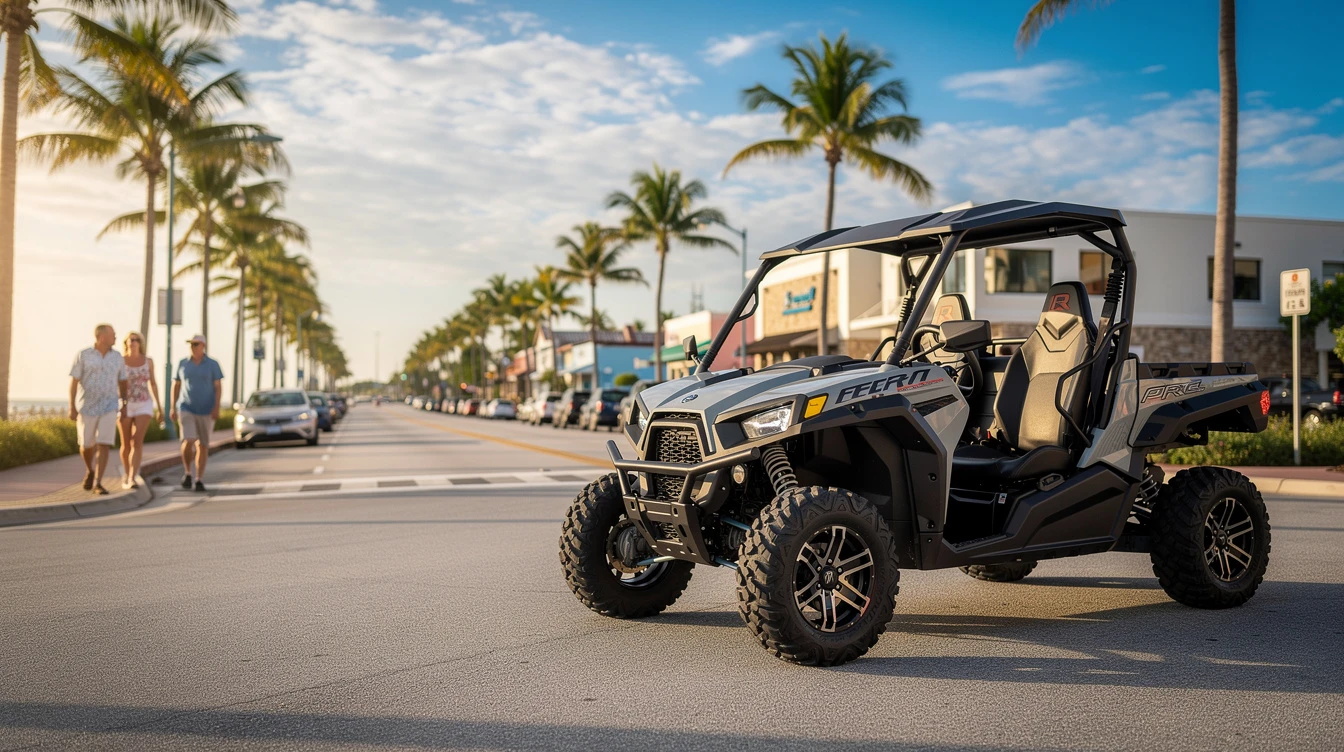
Making your UTV street-legal in Florida isn't simple, but it's not impossible either. Florida's off-road vehicle laws are strict compared to other states, yet plenty of riders and operators get their UTVs properly tagged and road-ready every year. This guide walks you through everything you need to know about Florida UTV registration, the safety equipment you'll need, and the step-by-step process to get your rig on public roads legally.
Can You Register a UTV as Street Legal in Florida?
The short answer is yes, but with conditions. Florida recognizes UTVs (also called side-by-sides) as off-road vehicles by default. To get a UTV street-legal in Florida, you need to meet specific safety standards and complete a formal registration process through the Florida Department of Highway Safety and Motor Vehicles (DHSMV).
Unlike Montana, which has no sales tax on vehicles and offers simplified registration, Florida requires your UTV to pass certain equipment checks and safety inspections. The process typically takes 2-4 weeks depending on how prepared your documents are and whether your UTV needs modifications to meet state standards.
Your UTV doesn't automatically qualify for street-legal status just because you own it. The vehicle must be manufacturer-equipped or aftermarket-modified to include required safety gear, and you'll need proof of ownership before any title transfer or registration can happen.
Florida UTV Registration Requirements and Tags
Florida requires that any side-by-side or UTV operated on public roads must be registered with the state. Here's what you need to prepare:
Ready to register your vehicle?
Join thousands of vehicle owners who use Street Legal Hookup to handle their registration quickly.
Get Started Today →- Proof of Ownership: Bill of sale, manufacturer's statement of origin (MSO), or an existing title. If your UTV has an out-of-state title, you may need a title transfer to Florida first.
- Application Form: Complete Form HSMV 82040 (Application for Title and Registration). You can get this form online or at your local county tax collector's office.
- Identity Verification: Valid Florida ID or driver's license, plus proof of Florida residency (utility bill, lease, or bank statement dated within 30 days).
- VIN Verification: Your UTV's vehicle identification number must be confirmed. Some county tax collectors offer free VIN verification; others charge a small fee.
- Safety Equipment Inspection Report: A certified inspector must verify that your UTV meets Florida's safety standards. We'll cover required equipment below.
Once all documents are submitted and your UTV passes safety inspection, the state issues a registration card and license tag. You'll also receive a title if you don't already have one.
The registration fee in Florida varies by county and vehicle type but typically ranges from $75 to $150 for initial registration. Annual renewal usually costs $35-$75, depending on your county.
Required Safety Equipment for Street Legal UTVs in Florida
This is where many UTV owners hit a roadblock. Florida has strict equipment requirements that your UTV must meet before it can be registered for road use. Missing even one piece can delay or block your registration.
Lighting and Reflectors
Your UTV must have working headlights, taillights, brake lights, turn signals (front and rear), and side marker lights. All lights must meet Department of Transportation (DOT) standards. Reflectors must be mounted on both sides of the vehicle. Many aftermarket UTV light kits are available specifically for street-legal conversions, and installing them is typically straightforward if you're comfortable with basic wiring.
Mirrors
Both a left and right side-view mirror are required. The mirrors must have a combined field of view of at least 200 degrees and be securely mounted so they don't vibrate or shift during driving.
Horn and Warning Devices
Your UTV needs an electric horn that produces a sound audible from at least 200 feet away. Optional but helpful: a backup warning device (beeper) if your UTV will be used in low-visibility areas.
Brakes and Brake Fluid
Your braking system must be in good working order with adequate brake fluid. Florida requires that brake fluid meet DOT 3, DOT 4, or DOT 5 specifications. If your UTV's brakes are worn, they must be replaced before inspection.
Tires and Wheels
Tires must be DOT-approved and suitable for road use. Off-road-only tires (those without a DOT rating) won't pass inspection. You'll likely need to swap out your dirt tires for street-legal alternatives, which can cost $400-$800 depending on tire size and quality.
Windshield and Wipers
A windshield is required, and if it's going to rain, you need working windshield wipers. The windshield must be safety glass or equivalent.
Seatbelts
All occupant seats must have three-point seat belts (lap and shoulder belts). If your UTV originally came with lap belts only, you'll need to upgrade to three-point belts.
Muffler and Emissions
A working muffler is required to meet noise standards. Florida doesn't require emissions testing for UTVs, but your exhaust system must be intact and functioning correctly.
How to Get Your UTV Street Legal in Florida, Step by Step
Step 1: Assess Your UTV Against Safety Standards
Before you do anything else, compare your UTV's current equipment against the list above. Make a checklist of what's missing or non-compliant. If your UTV is newer and came from a manufacturer with a street-legal package option, you may already have most of these items. Older or fully off-road UTVs will need more work.
Step 2: Purchase and Install Required Equipment
Order the equipment you need. Most items are available through aftermarket UTV suppliers. Budget $1,000-$3,000 for a complete street-legal conversion kit (lights, mirrors, horn, wipers, DOT tires). If you're handy, you can install much of this yourself. Otherwise, find a local mechanic or UTV shop familiar with street-legal builds. This step typically takes 1-3 weeks depending on parts availability and labor.
Step 3: Get a Safety Inspection
Contact your county tax collector's office or a certified UTV inspector to schedule a safety inspection. Bring your UTV fully equipped and in running condition. The inspector verifies that all required equipment is present, working, and meets standards. The inspection fee is usually $30-$50. Once passed, you'll receive an inspection report to submit with your registration application.
Step 4: Prepare Your Documents
Gather your bill of sale or manufacturer's statement of origin, proof of identity, proof of residency, and the safety inspection report. If you're doing a title transfer from out of state, allow extra time for title paperwork to clear.
Step 5: Submit Your Application
Visit your county tax collector's office in person or submit your application by mail along with all required documents and fees. In-person submission is faster and lets you address any missing items on the spot. Most county offices process applications within 7-10 business days.
Step 6: Receive Your Tag and Title
Once approved, you'll receive your registration card, license plate, and title (if applicable). Affix the tag to your UTV according to state guidelines, and you're street-legal in Florida.
Why Street Legal Hookup is Your Best Resource for UTV Registration
Getting a UTV street-legal in Florida is detailed work, and mistakes cost time and money. Street Legal Hookup specializes in off-road vehicle registration, and we understand Florida's requirements inside and out. Here's what sets us apart:
- Expert Guidance on Equipment: We know exactly what Florida inspectors look for. We help you avoid expensive mistakes like installing the wrong size mirrors or DOT tires that won't pass inspection.
- Document Management: Florida paperwork is picky. We review your documents before you submit them, catching missing items or errors that would delay approval.
- Streamlined Process: We handle the back-and-forth with county offices so you don't have to spend time on hold or making multiple trips.
- National Coverage: While Florida is outside our core service areas (Montana and South Dakota), our partner network and expertise in off-road vehicle registration means we can guide you through the process accurately.
Comparing Florida UTV Registration to Other States
If you're curious how Florida stacks up, here's a quick comparison. Montana offers a simpler path for off-road vehicle registration, with no sales tax and minimal equipment requirements, making it a popular option for serious riders. South Dakota also has streamlined registration for UTVs. Florida, by contrast, treats UTVs more like traditional vehicles and requires more complete safety compliance.
That said, Florida has advantages if you live there full-time. Registering your UTV in Florida keeps everything local, avoids out-of-state title complications, and ensures your registration aligns with state laws you'll actually drive under.
Common Mistakes to Avoid When Registering a UTV in Florida
Missing the Windshield or Wiper Requirement: Many owners skip this thinking it's optional. It's not. Inspectors check it.
Using Off-Road Tires: This is the single most common reason UTVs fail inspection. Swap to DOT-approved tires before you submit your application.
Incomplete Documentation: A missing utility bill or mismatched vehicle identification number on paperwork will stall your application. Double-check everything.
Ignoring Seat Belt Upgrades: If your UTV has lap belts only, upgrade to three-point belts before inspection.
Forgetting About Out-of-State Titles: If you're moving a UTV to Florida from another state, you need to complete a title transfer before registration. This adds 2-3 weeks to your timeline.
What Happens After Your UTV Is Street Legal in Florida?
Once your UTV is registered and tagged, it's legal to operate on public roads, highways, and streets throughout Florida, subject to normal traffic laws. You'll need to carry your registration card and proof of insurance while driving. Most standard auto or motorcycle insurance policies cover street-legal UTVs, though you should verify coverage with your insurer before hitting the road.
Annual renewal is straightforward. You'll renew your registration each year through your county tax collector's office, either in person or by mail. As long as your UTV remains in safe working condition and you keep your registration current, you're good to go.
Get Started With Your UTV Street Legal registration Today
Florida's street-legal UTV process is manageable once you know the requirements and timeline. The key is starting early, installing the right equipment, and getting a proper inspection before you submit anything to the state.
If you want expert guidance on your specific UTV, don't hesitate to reach out. Street Legal Hookup has helped hundreds of off-road vehicle owners work through state registration requirements. We'll review your situation, help you plan your conversion, and make sure your documents are complete and accurate before you submit them.