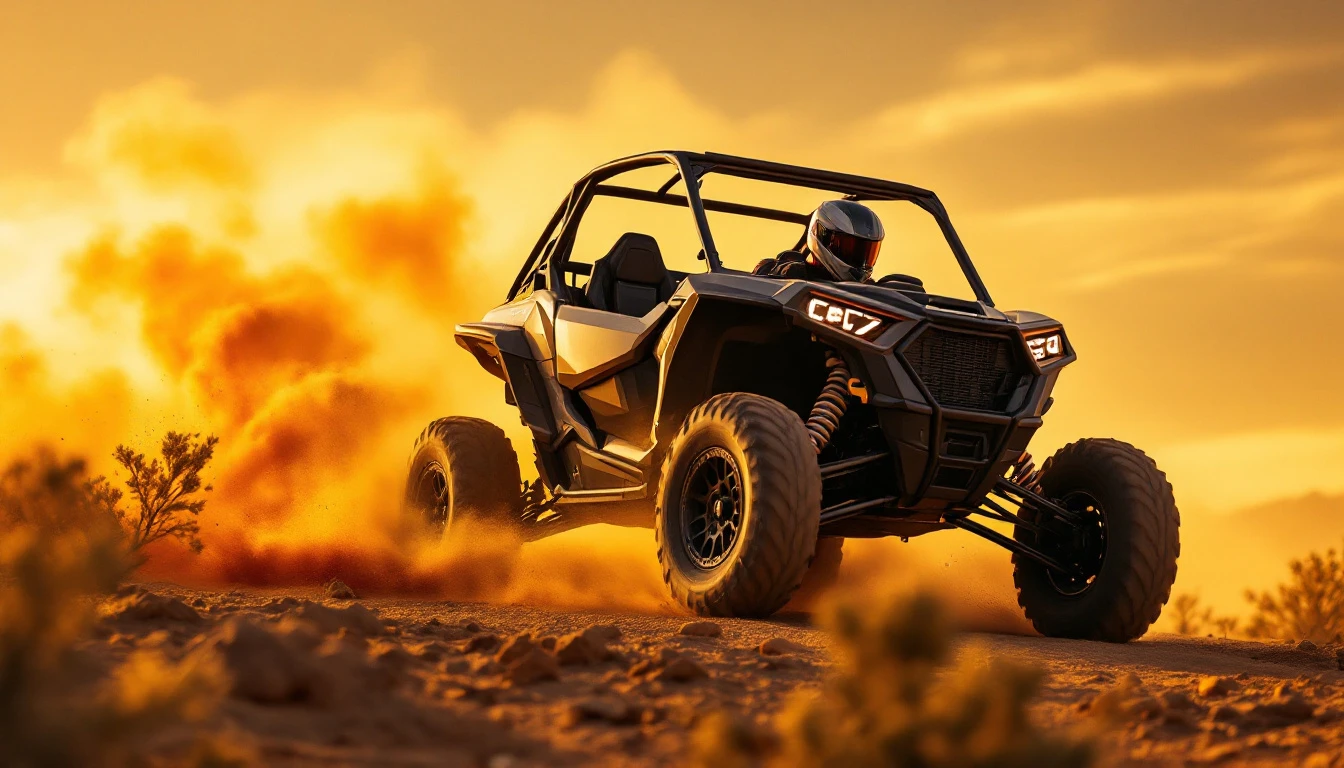
Where It All Started: The Origin of the Side by Side
Updated on June 30, 2026
The side by side, or UTV (utility task vehicle), did not start on a trail. It started on a farm. Long before enthusiasts were blasting through dunes or running mountain single-track in a two-seat rig, ranchers and landowners needed a capable work vehicle that could carry a passenger and haul gear across rough terrain. That was the gap early UTVs were built to fill.
The earliest ancestors of the modern side by side were basic utility carts built in the 1950s and 1960s. Companies like Cushman and Club Car produced low-speed work vehicles designed for industrial and agricultural use. These were not performance machines. They were practical tools, slow and simple, but they planted the seed.
Yamaha changed the game in 1987 with the Yamaha YFU1, often credited as one of the first purpose-built UTVs. It was designed as a utility vehicle, not a sport machine, and it seated the driver and one passenger side by side. That layout, driver and rider sitting next to each other rather than tandem like on an ATV, gave the category its name. The side by side was born.
The 1990s and 2000s: Utility Grows Up
Through the 1990s, the side by side remained mostly a farm and worksite tool. Polaris entered the segment in 1999 with the Ranger, a proper utility UTV that quickly became the benchmark for the category. Farmers, ranchers, and land managers bought them by the thousands. The Ranger was tough, practical, and capable, and it introduced a massive new audience to the UTV concept.
Kawasaki, John Deere, and Kubota all followed with their own utility-focused models. By the mid-2000s, the side by side had become a legitimate workhorse category with real competition and rapid development.
Then things got interesting.
In 2007, Polaris launched the RZR 800. That single machine reset the entire industry. The RZR was not a work vehicle. It was a sport UTV, narrow, efficient, and aggressive, built to chase ATVs and motorcycles on trails and dunes. Riders who had never considered a UTV suddenly wanted one. The sport segment exploded almost overnight.
How Side by Sides Evolved Into What They Are Today
The decade after the RZR launch saw manufacturers pour resources into the sport UTV segment. Horsepower climbed from 40 to 60 to over 100. Turbocharging arrived. Suspension travel grew from a few inches to 18, 20, even 24 inches of wheel travel on purpose-built desert racers. Can-Am launched the Maverick in 2012 with a 1000cc engine, and the horsepower wars were officially on.
Here is a quick look at how the key specs evolved across generations:
| Era | Typical Engine | Typical Horsepower | Primary Use |
|---|---|---|---|
| 1980s-1990s | 300-500cc, carbureted | 15-25 hp | Farm/utility |
| Early 2000s | 500-700cc, fuel injected | 30-50 hp | Utility/work |
| Late 2000s | 800cc+, sport-tuned | 50-75 hp | Sport/trail |
| 2010s | 1000cc, turbocharged | 100-130 hp | Sport/desert |
| 2020s | 1000cc turbo, advanced ECU | 150-200+ hp | Sport/trail/utility |
Alongside power, safety and comfort improved dramatically. Doors, roofs, windshields, and bespoke audio systems became standard on higher-trim models. The side by side had grown from a no-frills work cart to a full-featured machine that could handle a weekend race or a Sunday family trail ride.
If you want a broader look at how Montana registration handles these machines, the Montana Plates FAQ covering costs, process, and requirements is a solid starting point.
The Side by Side and Montana registration: Where It Gets Complicated
Here is where most UTV owners hit a wall. Side by sides are built for off-road use. Most roll off the dealer floor with no lights, no horn, no mirrors, and no DOT-rated tires. That means they are not street-legal in most states right out of the box.
Every state has its own rules on what it takes to make a UTV street-legal, and many states make it genuinely difficult. Some require full motorcycle or low-speed vehicle compliance. Some ban UTVs from public roads entirely. California, for example, has strict emissions and equipment requirements that price out a lot of owners. Sales tax rates vary by state, but in high-tax states, a $20,000 UTV can mean $1,500-$2,000 in sales tax alone before you even start the registration process.
Montana is different. Montana has no sales tax and no emissions testing requirement. That combination is exactly why UTV owners from across the country register through a Montana LLC. A $20,000 side by side registered in Montana through an LLC costs nothing in state sales tax, compared to potentially thousands in a state like California or Texas where sales tax rates vary but can hit 8-9%.
For a deeper look at how the Montana LLC registration process works, check out this guide on setting up an LLC in Montana for vehicle registration.
How Montana LLC Registration Works for Side by Side Owners
The process is straightforward. You do not need to live in Montana. You form a Montana LLC, and the LLC owns the UTV. Registration, title, and plates all go through Montana. No sales tax is collected because the LLC is the buyer and Montana has no sales tax. No emissions test is required because Montana does not mandate one for these vehicles.
Street Legal Hookup handles this entire process for UTV and side by side owners. Here is what the steps look like:
- Submit your vehicle details and purchase documents through the Street Legal Hookup service finder.
- A Montana LLC is formed in your name (or an existing LLC can be used).
- Your side by side title is issued in the LLC's name through Montana.
- Montana plates and registration documents are mailed to you.
- Your UTV is now registered and titled through Montana.
Turnaround is typically 2-4 weeks for standard processing. Rush options are available. The cost of the service, including LLC formation and registration fees, is generally far less than the sales tax you would have paid in a high-tax state. For most UTV owners, the savings are significant enough that the math is obvious.
Montana registration fees are published by the state, and you can confirm current fee schedules directly through the Montana Vehicle Title and Registration fee schedule.
Cost and Timeline at a Glance
Here is a realistic breakdown of what to expect:
| Item | Estimated Cost |
|---|---|
| Montana LLC formation | Included in SLH service |
| Montana registration fees (state) | $25-$100+ depending on vehicle age/value |
| SLH service fee | Varies by package, typically $299-$499 |
| Sales tax avoided (example: 8% on $18,000 UTV) | $1,440 saved |
| Processing time | 2-4 weeks standard |
Most UTV owners in high-tax states recover the full cost of the service on the first registration alone. After that, annual Montana LLC maintenance and renewal fees are modest. For details on annual LLC filings, see the Montana Secretary of State annual report page.
Honestly, the numbers speak for themselves. If your state charges sales tax on UTVs and you are buying a machine that costs $15,000 or more, the Montana registration path is worth checking out.
FAQ
Can I register any side by side through a Montana LLC?
In most cases, yes. New UTVs, used machines, and even older models can typically be registered through a Montana LLC. The key requirement is a clean title or a title that can be transferred properly. If your side by side has a lien or a title issue, that needs to be resolved first. Street Legal Hookup can help you work through title situations that are not straightforward.
Do I need to physically go to Montana to register my UTV?
No. The entire process can be handled remotely. You do not need to travel to Montana, visit a Montana office, or be a Montana resident. Street Legal Hookup manages the process with our paperwork support using the LLC structure. Your plates and registration documents arrive by mail.
Is Montana LLC registration a compliant method for UTV owners?
Yes. Registering a vehicle through a Montana LLC is a fully compliant, Montana registration method that has been used by vehicle owners for decades. Montana allows LLCs to own and register vehicles. The LLC is a real entity formed under Montana state law. For a broader look at how many vehicle owners use this approach, see how many vehicles are registered in Montana through this method. Consult a tax professional or for advice specific to your situation.
What about making my side by side actually street-legal for road use?
Montana registration gets your UTV titled and plated. Making a side by side compliant for public road use typically also requires equipment upgrades: DOT-rated tires, mirrors, lighting, a horn, and in some states additional safety equipment. The requirements vary by state. Street Legal Hookup can point you toward the right conversion path for your machine and your state. Start with the service finder to see what applies to your UTV.
Can I register a side by side I bought from a private seller?
Yes. Private-party purchases can be registered through Montana just like dealer purchases. You will need the signed title from the seller and a bill of sale. If the title has issues, a bonded title process may be needed. Street Legal Hookup handles both standard and bonded title situations.
Next Steps: Get Your Side by Side Registered
You have got the machine. Now get it properly titled, registered, and ready to ride wherever you want. Street Legal Hookup makes Montana registration straightforward for UTV and side by side owners across the country. Remote paperwork support, no sales tax, no emissions hassle.
Use the service finder below to check your options and start your registration today.