No Title? You're Not Stuck
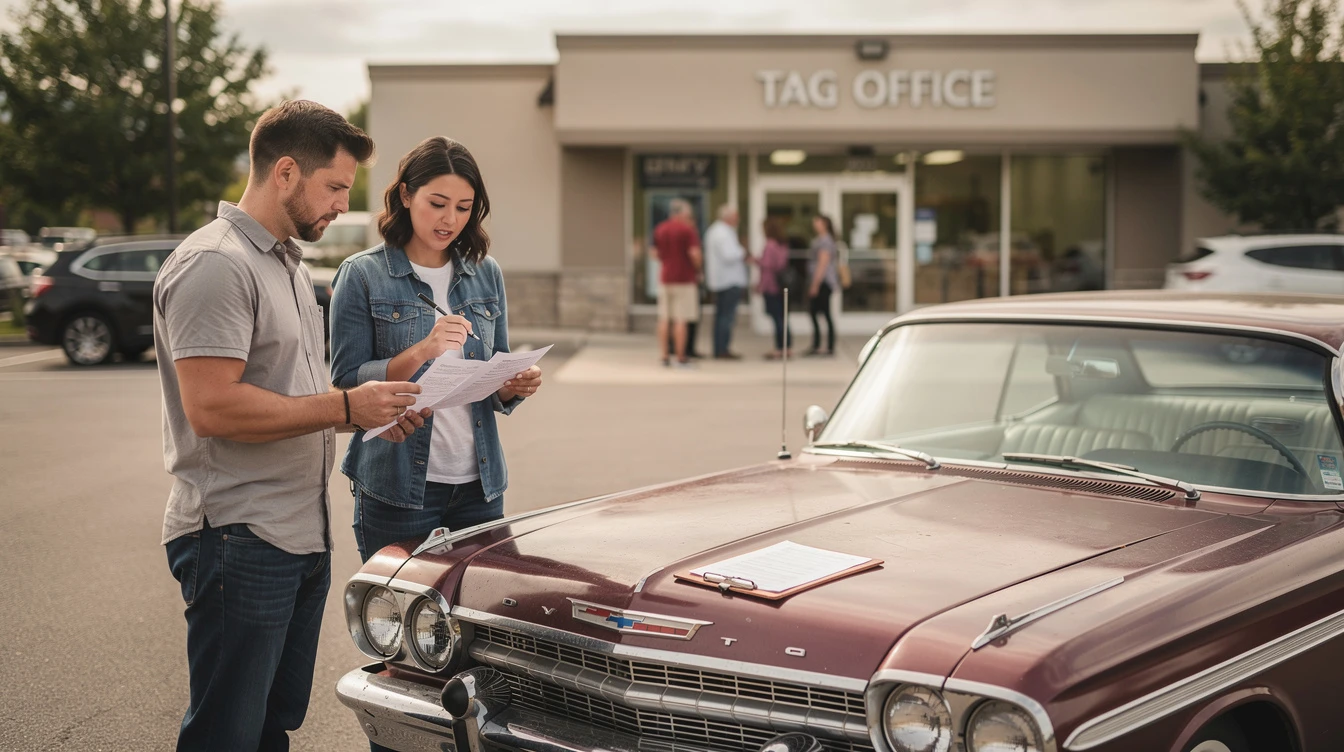
You found the classic car of your dreams at a barn sale, an estate auction, or on the side of the road with a handwritten price on the windshield. Problem is, there's no title. That happens more than you'd think with older vehicles, and it doesn't mean you're out of options.
Registering a classic car without a title in the USA is possible. The two most common paths are a bonded title and a bill of sale-based registration process. Which one you'll use depends on your state, your vehicle's age, and what documentation you actually have in hand.
This guide breaks down both options in plain language so you can stop guessing and start moving forward.
What You Need to Know About Title Problems on Classic Cars
Old vehicles change hands constantly without proper paperwork. A car might have passed through three owners over 40 years with nothing but a handshake and a receipt. Titles get lost, names never got transferred, or the original was never issued at all for pre-title-era vehicles.
Here's the thing: states do have processes for this. They're not quick, but they work. Before you do anything, pull a VIN check through the NHTSA VIN decoder to confirm the vehicle isn't stolen or flagged with an open lien. That step matters before you spend a dollar on paperwork.
Also consider how you plan to register the vehicle. If you're thinking about Montana registration to avoid sales tax, understanding the LLC structure first is worth your time. The post Montana LLC for vehicle owners covers the full picture of how that works and why collectors use it.
What Documents Actually Help
- A signed bill of sale with seller name, address, price, VIN, and date
- Previous registration documents (even expired ones)
- Insurance records showing prior ownership
- Any photographs connecting the vehicle to a previous owner
- A notarized statement from the seller if you can get one
The more you can establish a chain of custody, the smoother the process goes. Don't skip gathering these, even if they feel incomplete.
How It Works: Bonded Title vs. Bill of Sale Registration
These two paths aren't interchangeable. They apply in different situations, and mixing them up wastes time.
Bonded Title
A bonded title is a standard vehicle title with a bond attached. The bond acts as financial protection in case someone with a prior claim shows up after you've titled the vehicle. Most states offer this path, and it's typically available when you have enough documentation to prove ownership but can't produce the original title.
Here's how it works in most cases:
- Get a vehicle value appraisal (usually from a licensed dealer or certified appraiser).
- Purchase a surety bond from a bond company for 1.5x to 2x the vehicle's appraised value.
- Submit the bond, your bill of sale, VIN inspection results, and a completed title application to your state's motor vehicle division.
- The state issues a bonded title, which typically carries a "bonded" notation for three to five years.
- After the bond period clears with no competing claims, the notation is removed and you get a clean title.
Some states, including Texas, have a formal bonded title program that's well-documented. If you're a Texas classic car owner, the detailed breakdown in how to make a classic car street-legal in Texas is worth reading alongside this guide.
Bill of Sale Only Registration
Some states, and some vehicle age categories, allow you to register a vehicle using just a bill of sale and a VIN inspection. This typically applies to pre-title-era vehicles, usually manufactured before the mid-1970s depending on the state, where titles were not routinely issued.
In these cases, you present the bill of sale at your county motor vehicle office, pass a physical VIN inspection (confirming the number matches), and the state issues a fresh title in your name. Straightforward when it applies. The catch is that not every state does it, and rules vary on what year cutoff qualifies as "pre-title era."
For Florida classic car owners, the process has its own quirks. See how to make a classic car street-legal in Florida for state-specific details on what's required there.
Which One Do You Need?
| Situation | Recommended Path |
|---|---|
| Vehicle post-1975, title was lost or never transferred | Bonded title |
| Vehicle pre-1975 in a state that allows bill of sale titling | Bill of sale registration |
| Stolen or lien-flagged VIN | Neither, resolve the flag first |
| Title exists but name was never transferred | Standard car title transfer (not a bonded title) |
A standard car title transfer is a different process entirely and only applies when a title does exist. If you're in that situation, the post car title transfer process in Ohio shows how that works in one common state example.
Cost and Timeline
Bonded titles are not free, but they're not outrageous either. Here's a realistic cost breakdown for most states:
| Item | Typical Cost |
|---|---|
| Vehicle appraisal | $50 to $150 |
| Surety bond (1.5-2x appraised value) | $100 to $500 depending on value |
| State title application fee | $15 to $100 depending on state |
| VIN inspection (some states charge) | $0 to $50 |
| Registration fee | Varies by state and vehicle age |
Total out-of-pocket for a bonded title is often in the $200 to $700 range for a vehicle valued under $10,000. The bond itself is an annual premium paid until the title clears, typically three to five years.
Timeline runs four to eight weeks in most states from submission to receiving the bonded title. Bill of sale only registrations, where available, can process in as few as one to two weeks.
Honest note: sales tax rates vary by state, and some states charge sales tax based on the appraised value even on a no-title vehicle. Check your state's rules before budgeting.
If avoiding sales tax on a vehicle registration is a priority, the Montana LLC registration path is worth knowing about. The full breakdown is in zero tax car registration explained.
The classic car registration process step by step
Every state has its own exact forms and office requirements, but this sequence covers what nearly all states follow:
- Run a VIN check. Use the NHTSA VIN decoder to confirm the vehicle is clear of theft flags and open recalls.
- Gather your documents. Collect the bill of sale, any prior registration, insurance records, and photographs if available.
- Schedule a VIN inspection. Most states require a physical inspection by a law enforcement officer, licensed dealer, or state inspector to confirm the VIN matches the vehicle.
- Get an appraisal. For a bonded title, you'll need a written appraisal from a certified appraiser or licensed dealer.
- Purchase the surety bond. Bond companies are easy to find online. Provide the appraised value and VIN. They issue the bond same-day in most cases.
- File your title application. Submit everything to your state motor vehicle division, county treasurer office, or equivalent. Pay the applicable fees.
- Wait for processing. The state reviews, issues the bonded title, and mails it. Then you can get your registration plates.
For a complete look at what to expect from start to finish, see the full classic car registration process step by step guide.
Frequently Asked Questions
Can I drive a classic car while waiting for a bonded title?
In most cases, no. You'll need valid registration and plates to drive on public roads. Some states issue a temporary permit while your bonded title application is pending, but that varies. Check with your state's motor vehicle division before assuming you can drive it.
What if the VIN is missing or damaged on my classic car?
A missing or altered VIN complicates everything. Most states require a VIN inspection as part of the bonded title process, and an unreadable VIN will stop that cold. Some states allow a VIN assignment for older vehicles in this situation, but it typically involves law enforcement verification and additional paperwork. Consult your state's motor vehicle division directly for this one.
Does a bonded title affect my ability to sell the car later?
Yes, temporarily. A bonded title carries a "bonded" notation that will show on any title search. Most buyers and lenders will see it. Once the bond period expires with no competing claims, typically three to five years, the notation clears and you receive a clean title. Many classic car collectors buy and sell bonded-title vehicles without issue, but the notation does need to be disclosed.
Can I get a Montana registration on a classic car without a title?
Montana registration through an LLC requires a title in the LLC's name. That means you'd typically need to resolve the title issue in your home state first through a bonded title or bill of sale process, then transfer the title to a Montana LLC. The Montana LLC for vehicle owners guide explains how that structure works once you have a title in hand.
Is a bill of sale alone enough to get plates in any state?
Not typically for newer vehicles. For pre-title-era classics (generally pre-1973 to pre-1976 depending on the state), some states do allow a bill of sale plus VIN inspection to generate a fresh title. For anything newer, a bonded title or title recovery process is usually required. Rules vary significantly by state, so confirm with your specific state's motor vehicle division before assuming which path applies.
What's the difference between a bonded title and a rebuilt title?
These are completely different things. A bonded title addresses missing ownership documentation. A rebuilt title applies to vehicles that were declared salvage due to damage and then repaired. You can end up with a bonded title on a pristine classic that just had lost paperwork. Rebuilt titles involve a separate inspection and damage disclosure process.
Ready to Get Your Classic Car Street-Legal?
Paperwork without a title feels like a wall, but there's a way through. Bonded titles and bill of sale registrations are both real, established paths that riders and collectors use every day to get classic vehicles on the road.
Street Legal Hookup provides registration assistance for vehicles the standard DMV process wasn't built for. Classic cars, military vehicles, off-road builds, and more. If you're not sure which path fits your situation, start with the quiz and get a clear answer fast.