Classic Cars Without a VIN, More Common Than You Think
Pre-1981 vehicles weren't required to carry a standardized 17-digit VIN. Some were stamped with a short chassis number. Others had a serial plate that rusted off decades ago. And a few were never given anything resembling a modern identification number at all. If you've picked up a vintage muscle car, a pre-war coupe, or an old-school truck with no traceable ID number, you're not alone, and you're not stuck.
Registering a classic car with no VIN is possible. The path takes a little more paperwork than a routine car title transfer, but riders and collectors do it every year. The key is knowing which route fits your vehicle's specific situation, because the wrong move can delay your plates by months.
For context on the full classic car registration process, check out our guide on the classic car registration process step by step, what to expect and how to prepare. It covers what to gather before you ever walk into a county office.
What You Need to Know Before You Start
The first thing to get straight: most states require some form of vehicle identification to issue a title. No ID number typically means one of three things happened to your vehicle.
- The original number exists somewhere on the vehicle, just not where you're looking.
- The number was stamped in a non-standard location by the original manufacturer.
- The number was damaged, removed, or was never assigned in a recognizable format.
Before assuming there's no number, check the firewall, door jamb, dashboard, frame rail, and engine block. Pre-1981 vehicles often had chassis or serial numbers stamped in surprising spots. A classic car inspector or marque-specific club can help you pin down the right location for your make and model.
If there genuinely is no usable number, your two main options are a VIN inspection with state-assigned number, or a bonded title. Some states also accept a court order title for vehicles with disputed or missing documentation. Each path has different costs and timelines, covered below.
Want a deeper look at how original numbers factor into authenticity and value? Our article on how to verify classic car originality, VIN decoding, documentation, and authentication breaks down what to look for and how to document what you find.
How VIN Verification and Title Options Actually Work
State-Assigned VIN
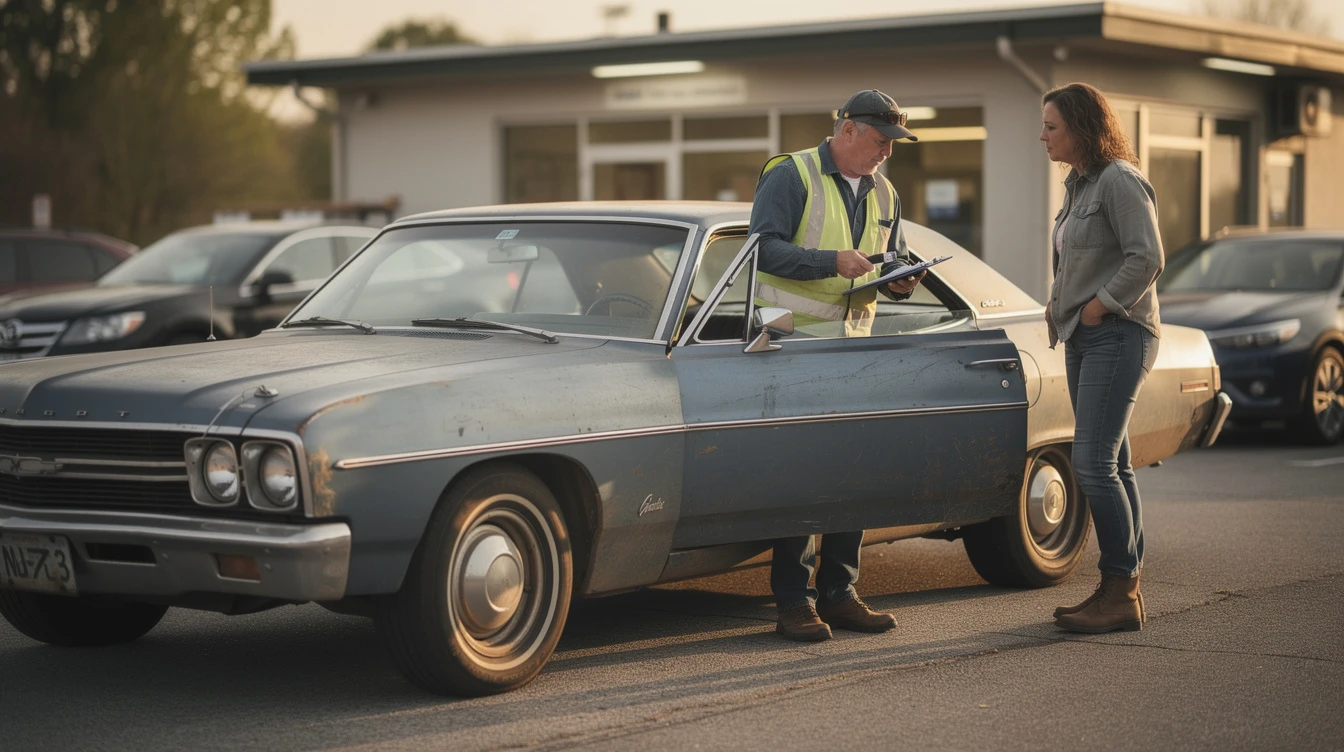
If your classic car has no usable identification number, most states will assign a new one after a physical inspection. A state trooper or licensed VIN inspector examines the vehicle, confirms it isn't stolen, and generates a new number that gets stamped or riveted to the vehicle. You then use that assigned number to start the title and registration process.
The NHTSA VIN Lookup tool can help you cross-check any existing partial numbers against federal records before you go the assigned-number route. It's free and takes about 30 seconds.
Bonded Title
A bonded title is the go-to option when a vehicle has some documentation but the chain of ownership has a gap. You purchase a surety bond, typically valued at 1.5x the vehicle's appraised value, and the state issues a title marked "bonded." After a set period, usually three to five years with no ownership dispute, the bond notation is removed and you get a clean title.
Bonded titles are worth understanding before you buy a no-paper classic. Our guide on how to avoid car title troubles, common title problems and how to prevent them covers bonded titles alongside other common documentation headaches collectors run into.
Court Order Title
Less common, but an option in many states. You petition a local court to recognize your ownership, present whatever documentation you have, and a judge issues an order directing the state to issue a title. This path typically makes sense when a vehicle has been abandoned, inherited without a will, or acquired at auction with no paperwork trail.
Montana Registration for Classic Cars
Once you have a title, Montana is worth a serious look as your registration state. Montana has no sales tax, no emissions testing, and no annual inspections. For a classic car valued at $50,000, that's potentially thousands of dollars saved compared to registering in a state with a 7, 10% sales tax rate (rates vary by state). Registration is done through a Montana LLC, and you don't have to live in Montana to do it.
The full breakdown of how that works is in our article on Montana LLC for vehicle owners. If you're also curious about what Montana plates cost, see our guide on how to get Montana plates for my vehicle.
Montana registration fees are publicly listed on the Montana Vehicle Title and Registration Fees page maintained by the Montana Motor Vehicle Division.
How to Register a Classic Car With No VIN: Step by Step
- Search the vehicle thoroughly. Check all known stamping locations for the make, model, and year. Photograph everything.
- Order a VIN inspection. Contact your state's motor vehicle division or a certified VIN inspector. Bring photos, any bill of sale, and prior registration documents if available.
- Choose your title path. State-assigned VIN, bonded title, or court order, depending on what documentation you have and your state's rules.
- Get an appraisal. Required for bonded titles and useful for Montana registration fees, which are based on vehicle value for newer classics.
- Submit title application. File with your state's motor vehicle office or, if going the Montana route, through a Montana LLC with registration assistance.
- Receive your title, then register. Once the title is in hand, registration follows. Montana is a strong option here for collectors wanting to save on sales tax.
Cost and Timeline Comparison
| Path | Typical Cost | Timeline | Best For |
|---|---|---|---|
| State-Assigned VIN + Title | $50, $200 inspection fee + title fees | 2, 8 weeks | No existing number anywhere on vehicle |
| Bonded Title | $100, $400 bond premium + title fees | 2, 6 weeks for title, 3, 5 years for clean title | Missing title, broken ownership chain |
| Court Order Title | $300, $800+ legal filing costs | 1, 4 months | Abandoned, inherited, or auction vehicles |
| Montana LLC Registration (after title) | $300, $800 one-time LLC + registration | 2, 4 weeks | Collectors wanting no sales tax, no emissions |
Costs above are estimates. Fees vary by state and vehicle value. Consult a registration specialist before committing to a path.
Also worth reading if you're thinking about what to do with a classic in Texas: our post on how to make a classic car street legal in Texas covers Texas-specific rules and equipment requirements that apply even after you've sorted the title.
If you've got questions about car title transfer paperwork across state lines, including how a title transfer DMV process typically works, our vehicle registration guide covers the core mechanics: vehicle registration guide, how to register any vehicle in any state.
Frequently Asked Questions
Can I register a classic car with no VIN at all?
Yes, in most cases. You'll need to go through a VIN inspection or bonded title process first. The state will either locate a hidden number or assign a new one. Once a number is on file and a title is issued, registration proceeds normally.
What if the original number was removed or damaged?
A removed or damaged VIN is a red flag in most states and may trigger a more detailed inspection to rule out theft. Bring as much provenance documentation as possible: old photos, bill of sale, marque club records, or auction paperwork. Transparency speeds the process considerably.
Is a bonded title the same as a regular title?
Not exactly. A bonded title carries a notation indicating a surety bond was used to establish ownership. It's valid for registration and sale, but some buyers and lenders treat it differently than a clean title. After the bond period ends with no disputes, typically three to five years, you can apply for a standard clean title.
Can I transfer a car title in Texas for a classic without a VIN?
Texas does have a process for assigning a new number to vehicles without one. You'd contact the Texas DMV for a VIN inspection and, if needed, apply for a bonded title through TxDMV. The transfer car title in Texas process then follows once a proper number is on record. Requirements and fees are set by TxDMV and can change, so confirm current rules directly.
Does Montana registration require a clean title?
Montana typically requires a title to register a vehicle through an LLC. A bonded title is generally accepted. If you're working through the process of getting a title first and then want Montana registration afterward, that's a common two-step approach collectors use. Check out zero tax car registration explained for more on how that works in practice.
Will I need a new VIN inspection if I move states after registering?
Possibly. Some states require a physical VIN inspection on any incoming vehicle, especially one with a state-assigned or bonded title. This is a standard check, not a problem in most cases. Keep your documentation folder current and you'll work through it without major delays.
Ready to Get Your Classic on the Road?
Sorting out a missing VIN and title situation takes some legwork, but it's a solved problem. Thousands of collectors have done it. Once your title paperwork is straight, Montana registration is one of the smartest moves you can make, especially on a high-value vehicle where sales tax would otherwise cost you a serious chunk of money.
Street Legal Hookup provides registration assistance for exactly these situations. Tell us what you've got and we'll point you toward the right path.