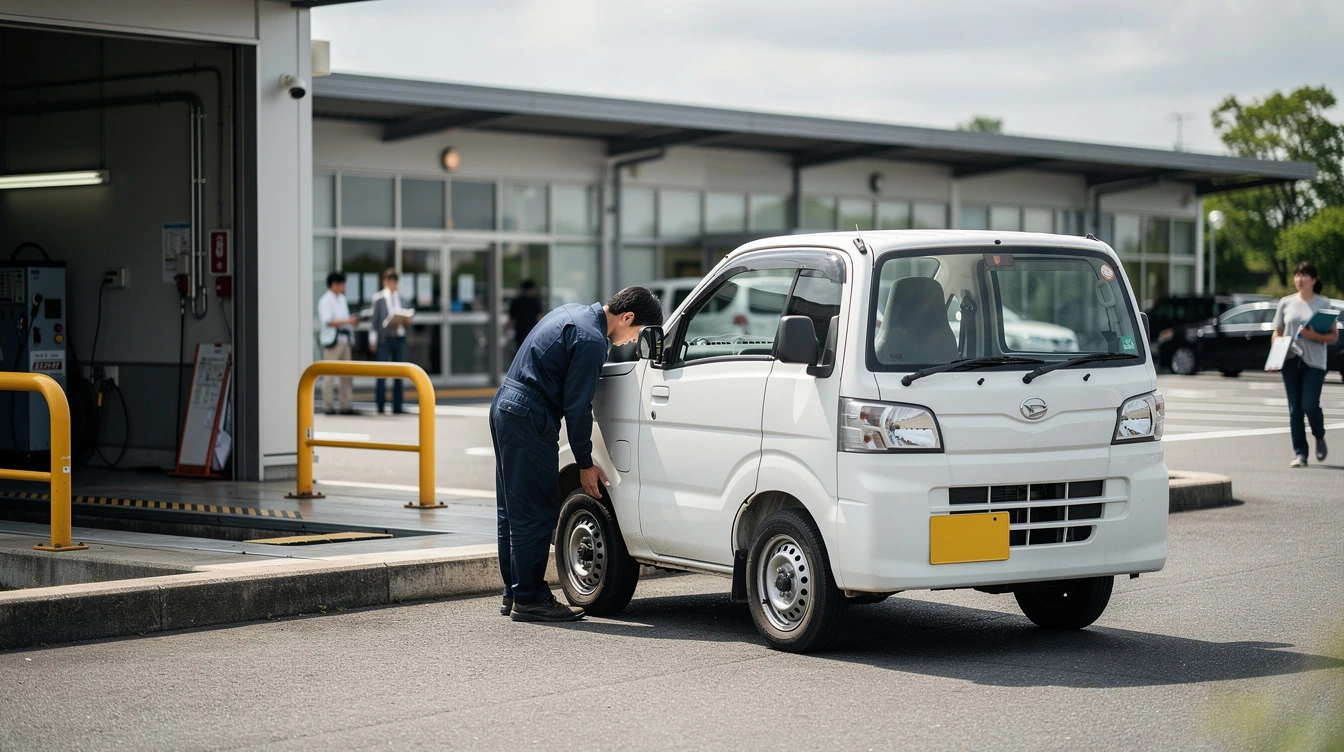
Kei truck registration requires specific documentation, including an original Japanese export certificate and a valid customs entry form, to prove ownership and legal importation. Because these vehicles often lack standard 17-digit VINs or were never certified for US crash safety standards by the manufacturer, they require specialized paperwork to obtain a title and plates that allow on-road use. A kei truck is a class of tiny, Japanese-market vehicles restricted by engine size, typically under 660cc, and physical dimensions that make them popular for agriculture and urban utility.
Which Documents Do I Need to Start Kei Truck Registration?
To successfully file for registration, you must prove the vehicle entered the country legally and meets basic requirements. You will need the original Japanese Export Certificate, which serves as the equivalent of a bill of sale and title from the country of origin.
- Customs Entry (CBP Form 7501): This document proves the vehicle passed through US Customs and that duties were paid.
- Bill of Sale: A clear, dated document showing the transfer of ownership from the importer or seller to you.
- Proof of Insurance: You must have a policy that specifically covers a micro-truck for on-road use.
- Safety Equipment Certification: Depending on the state, you may need a verification that your truck has functioning headlights, tail lights, turn signals, mirrors, and a DOT-approved horn.
A kei truck, also known as a 'Keitora', is a compact vehicle designed to work through tight Japanese streets. It is vital to note that some states have specific bans on these vehicles, so verifying your local vehicle code before starting is critical.
How Much Do Kei Truck Registration Costs Compare by Method?

Registration costs vary based on whether you attempt a self-filing process through a local office or use professional registration support to secure an out-of-state title. Using our services ensures you avoid common pitfalls like rejection due to missing paperwork or incomplete translations.
Ready to register your vehicle?
Join thousands of vehicle owners who use Street Legal Hookup to handle their registration quickly.
Get Street Legal →| Registration Option | Estimated Initial Cost | Typical Timeline |
|---|---|---|
| Self-Filed (DIY) | $150 - $400 | 6 - 12 Months |
| Professional Registration Support | $600 - $1,200 | 3 - 5 Months |
| Bonded Title (If Paperwork Missing) | $800 - $1,500 | 4 - 6 Months |
We handle the required legal filings to register assets through your newly formed Montana LLC. A more detailed breakdown is available in Montana Registration FAQ: Do You Need to Live There, What It Costs, and How It Works.
If you lack a title, our Getting a Title for a Bike With No Paperwork: Your Step-by-Step Guide offers strategies that apply to many imported vehicles. This resource covers the bonded title process, which is often necessary if you have a truck without a clear chain of ownership.
Can I Use a Montana LLC for Kei Truck Registration?
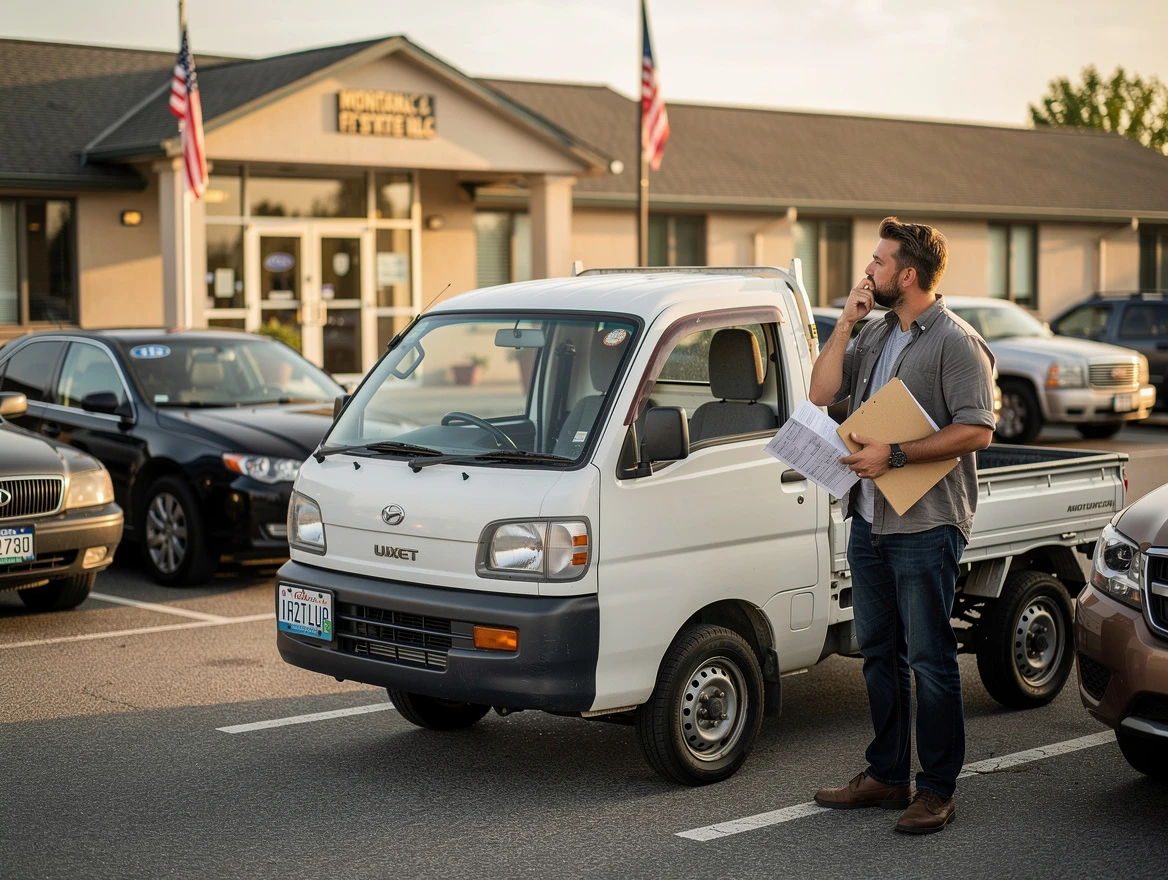
Forming a Montana LLC is a strategy many owners use to simplify the registration of specialized vehicles. Because these vehicles are frequently used for off-road or commercial utility, an LLC provides a clear ownership structure for business-related assets.
By registering under an LLC, you can manage the vehicle in a state that recognizes its status as an on-road vehicle more clearly than states with restrictive local policies. Learn more about the process in How Forming an LLC for Vehicle Registration Works for Your Assets. This resource explains how to set up the entity, protect your vehicle as property, and maintain compliance.
Why do some states ban kei trucks?
Some states restrict kei truck operation due to concerns over Federal Motor Vehicle Safety Standards (FMVSS). These trucks were designed for Japanese infrastructure and do not feature modern airbags, crumple zones, or advanced electronic stability controls. Consequently, local authorities may deem them unsafe for high-speed highways, leading to registration limitations or total bans in regions like Rhode Island or Maine.
What if my kei truck lacks a 17-digit VIN?
A standard 17-digit VIN is a North American requirement that Japanese vehicles often lack because they use shorter, manufacturer-specific chassis numbers. When you register, you must present the original Japanese paperwork to the motor vehicle office to create a vehicle record. Specialists can assist you in verifying the chassis number during the application process to make sure it is correctly recorded in the database.
How do I handle the customs paperwork?
Customs paperwork, specifically the CBP Form 7501, is the primary evidence that your vehicle is legally present in the US. If you purchased the truck from an importer, they should provide this form. If you imported it yourself, keep the stamped original with your registration files. Losing this form makes it nearly impossible to prove legal entry, preventing successful registration in almost every state.
Are there age restrictions for registering?
In most US jurisdictions, a vehicle must be at least 25 years old to be exempt from federal NHTSA crash safety requirements. This 25-year rule is the gold standard for importing and registering kei trucks without needing complex federal modification or testing. Always check the manufacture date on the door jamb or the export certificate to confirm your truck qualifies for this exemption before you start.