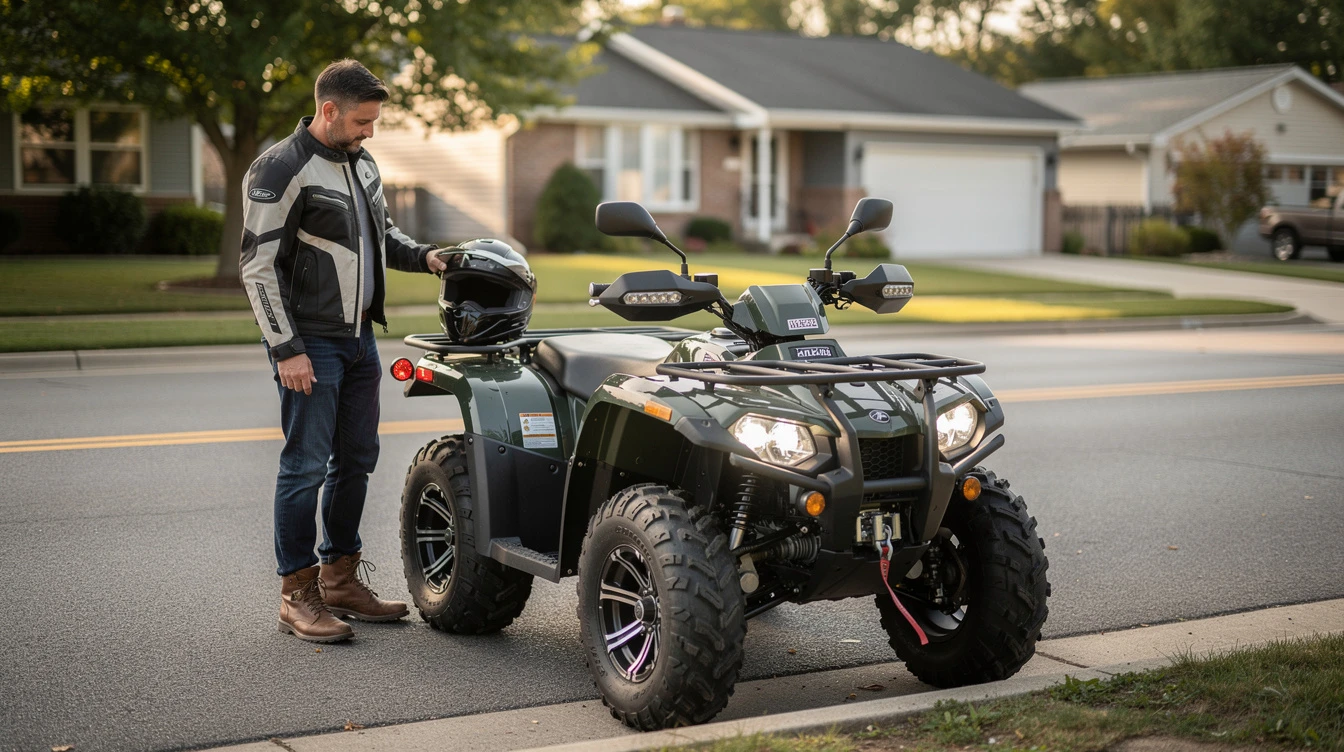
Making an ATV street legal in the US requires a specific combination of safety equipment, a valid registration document, and an insurance policy that meets state standards. While most states restrict off-road vehicles to trails, you can often gain public road access by converting your quad to meet motorcycle-standard safety requirements and utilizing specialized registration paths.
Equipping Your ATV for Public Road Use
Before you even think about hitting the pavement, your machine must be physically capable of riding safely alongside traffic. Most states require you to add specific components that were never factory-installed on your off-road machine. You will need a reliable headlight with both high and low beam settings, a bright taillight, and a functional brake light that activates when you pull the lever or press the pedal.
Turn signals are another non-negotiable requirement. These must be visible from both the front and rear of the vehicle. You will also need a horn, which must be audible at a distance of at least 200 feet, and at least one side-mounted mirror to check for vehicles approaching from behind. Tires must also be DOT-approved, as standard off-road knobbies lack the rubber compound and structural integrity required for sustained high-speed asphalt use.
A more detailed breakdown is available in Street Legal ATV Registration: What You Need to Plate Your Quad and Ride Anywhere. This resource explains the specific hardware configurations needed to pass inspection hurdles.
Title and Registration Requirements for Off-Road Vehicles
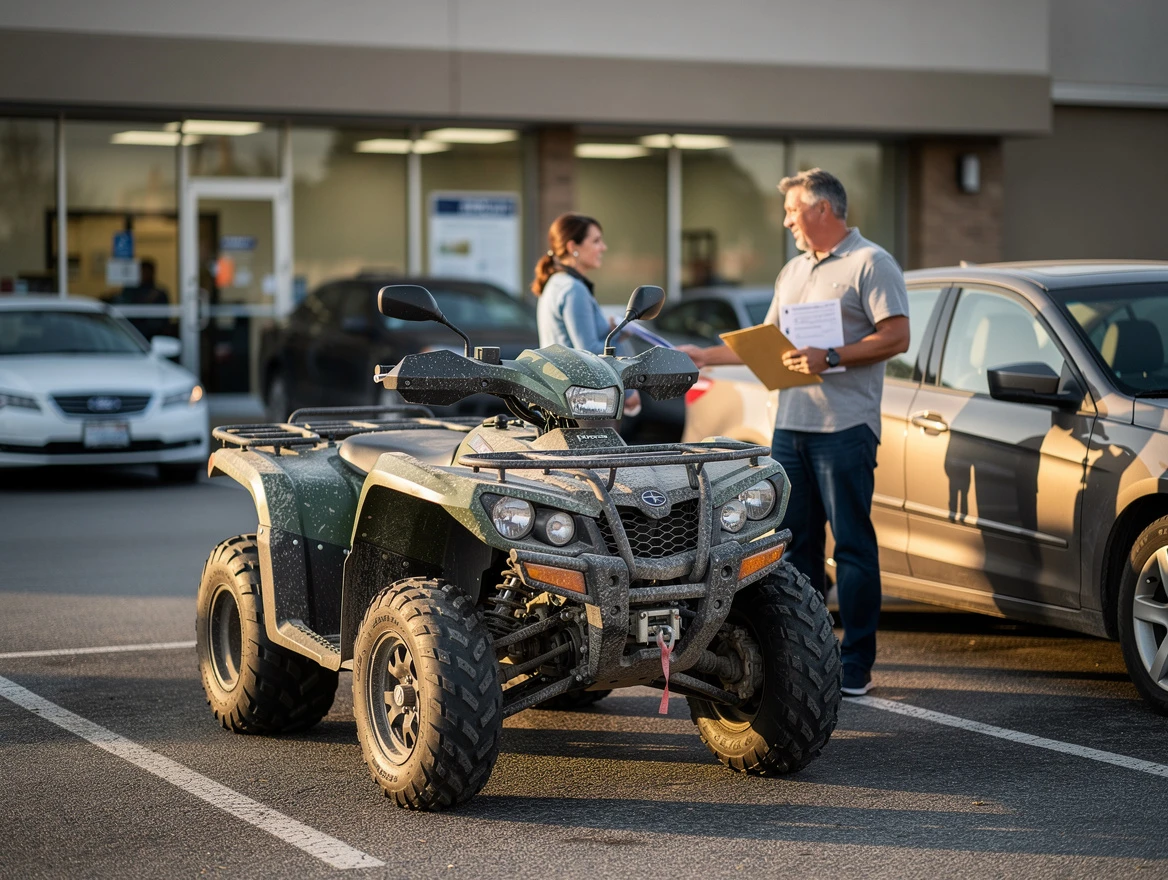
The primary barrier for most owners is the manufacturer statement of origin or the off-road title, which typically contains language saying the vehicle is for off-road use only. To bypass this, you need to work through a process that changes the vehicle classification in the eyes of a state agency. In many cases, this involves establishing residency or business entity registration in a state that allows for dual-purpose conversion.
Ready to register your vehicle?
Join thousands of vehicle owners who use Street Legal Hookup to handle their registration quickly.
Get Street Legal →You must also make sure your VIN is clean and clear. If you bought your quad used without a title, you face a tougher road, but it is not impossible. You may need to look at bonded title paths or similar administrative solutions to establish ownership before you can start the registration paperwork.
The Role of Montana Registration for Powersports
Forming an LLC in Montana is a common strategy for powersports owners because the state does not impose sales tax on vehicle purchases, and the registration process is designed to handle unique vehicle types that other states refuse to process. By moving your registration to a Montana LLC, you gain a recognized path for tagging your vehicle as a street-legal asset.
This structure allows you to hold the vehicle in the name of your company, which simplifies the registration of multiple assets. It is a proven approach for enthusiasts who want to avoid the administrative headache of dealing with local agencies that are unfamiliar with the specific needs of off-road vehicle conversion.
Comparing Conversion Methods
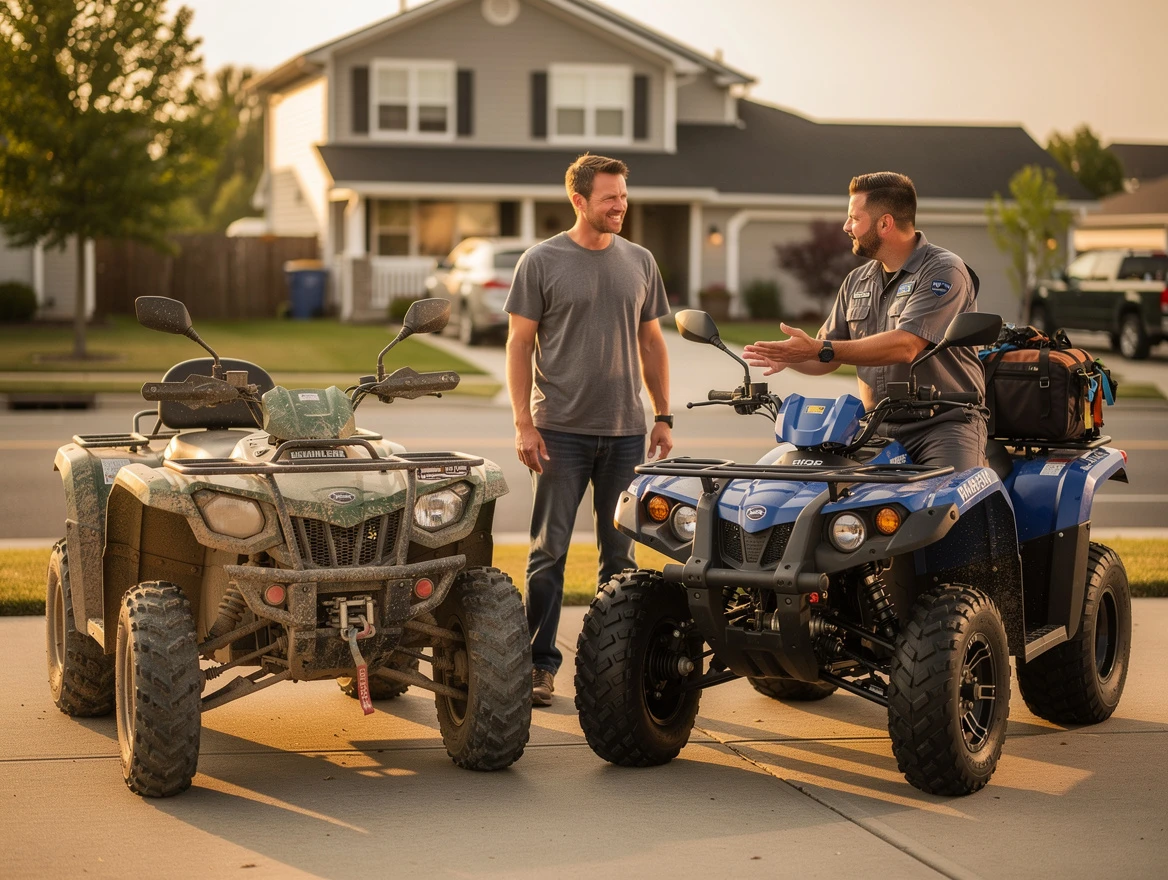
Not every approach works for every rider. Some states allow you to convert your current title, while others require a different state of residence or entity registration entirely. Here is a comparison of how different pathways impact your timeline and effort.
| Method | Ease of Use | Timeline | Best For |
|---|---|---|---|
| State Conversion | Moderate | 4-8 weeks | States with clear conversion statutes |
| Montana LLC | Simplified | 3-5 weeks | Multi-state travelers and tax-conscious owners |
| Bonded Title | Difficult | 2-4 months | Vehicles with missing or lost titles |
For additional reading on how business structures assist with asset compliance, see How Forming an LLC for Vehicle Registration Works for Your Assets. This guide clarifies why many owners choose the LLC route over standard titling services.
Insurance and Ongoing Compliance
Once you are street-legal, your responsibility does not end. You must carry liability insurance that explicitly covers your vehicle for street use. Standard off-road policies often exclude public road liability, leaving you exposed if an incident occurs. Verify with your provider that your policy covers your vehicle as a street-legal quad.
Frequently Asked Questions
Can I drive a quad on the highway?
Even with street-legal status, most states restrict ATVs and UTVs from limited-access highways or interstate roads. Always check local ordinances, as street-legal status grants you access to secondary roads, not necessarily the high-speed turnpike.
Do I need to live in Montana to register my ATV there?
You do not need to be a Montana resident. By forming a Montana LLC, you create a legal entity that is eligible to register vehicles in the state, regardless of where you actually live.
How long does the process take?
The timeline depends on the current backlog at the state agencies and the completeness of your paperwork. Generally, the process moves efficiently when you have all required documents ready.
Is a street legal ATV kit enough to get registered?
A kit provides the parts, but it does not grant you the registration card or license plate. You still need to submit the proper filing to a state agency to update your vehicle status.
What if my ATV does not have a title?
You must address the missing title first. This often involves a bonded title or a specific state process to prove ownership before you can even consider registration.
Ready to take the next step? We can help. Get Street Legal