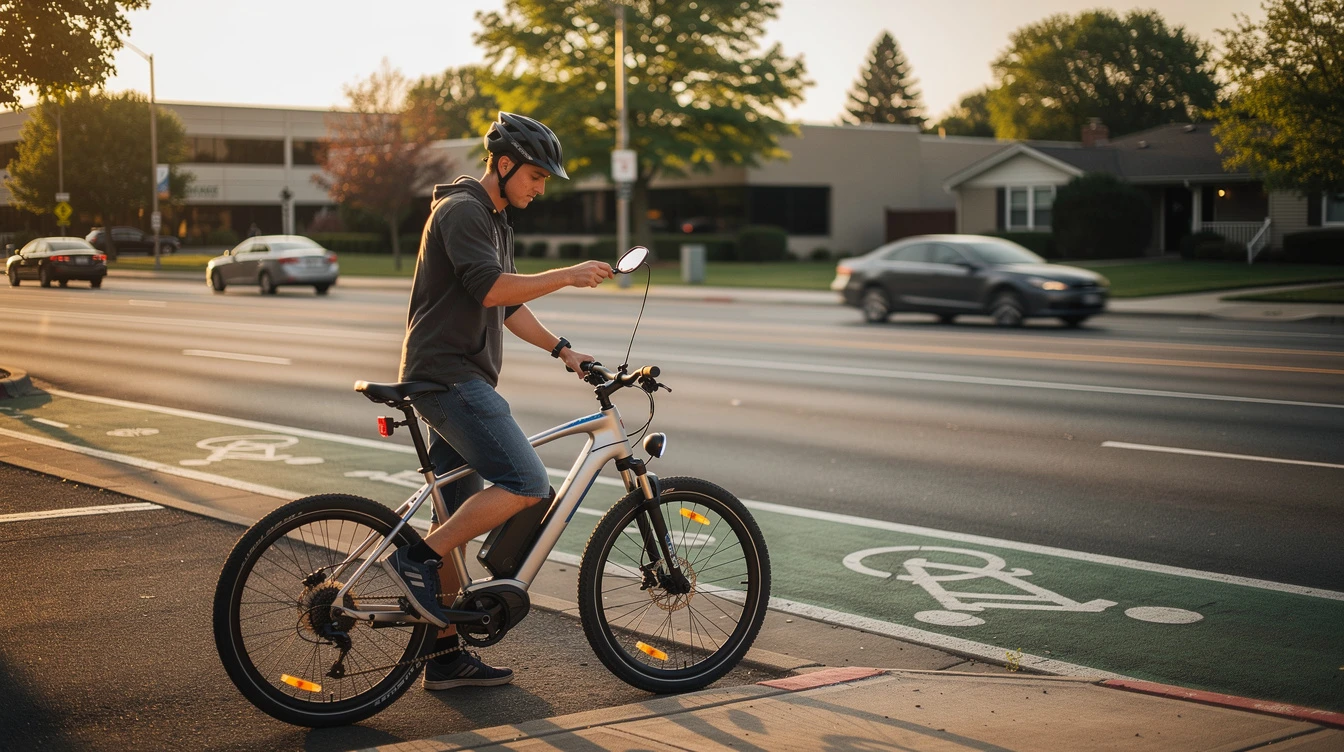
Why Your E-Bike's Street-Legal Status Matters More Than You Think
You bought an electric bike to ride it. Not to let it collect dust because some county sheriff decided your motor is too big for the bike path. The rules around e-bike street-legal status are scattered, state-specific, and written by people who clearly never ridden one. But that doesn't mean they don't matter.
Ride a non-compliant e-bike on public roads and you could face fines, impoundment, or a registration headache that costs more than the bike. Get it right from the start and you ride anywhere, any time, with zero hassle.
This guide cuts through the noise. We'll cover federal class definitions, what individual states actually require, the equipment you need, and when Montana registration becomes a smart move for higher-powered builds.
For riders who've already been through a similar process with off-road machines, our dirt bike street legal guide covers the full conversion playbook and is worth reading alongside this one.
What You Need to Know: Federal Classes vs. State Rules
The federal government set a three-tier class system for electric bikes. States use this as a starting point, but plenty of them have added their own twist. Here's the federal baseline:
| Class | Motor Type | Max Speed (Motor Assist) | Typical Street Status |
|---|---|---|---|
| Class 1 | Pedal-assist only | 20 mph | Street and multi-use path legal in nearly all states |
| Class 2 | Throttle-assisted | 20 mph | Street legal in most states, some path restrictions |
| Class 3 | Pedal-assist only | 28 mph | Street legal, typically requires rider to be 16+ |
| Above Class 3 | Throttle or motor | Over 28 mph | Treated as a moped or motorcycle, registration required |
Anything that exceeds Class 3 thresholds, meaning a top motor-assisted speed above 28 mph or a motor over 750 watts, gets bumped into moped or motorcycle territory by most states. That changes everything about how you register and ride it.
If your build lands in that "above Class 3" bucket, it's worth looking at what Montana registration can do for you. More on that below.
How It Works: Making an Electric Bike Street Legal by State
The process depends on which class your e-bike falls into and where you ride. For Class 1, 2, and 3 bikes, the path is usually simple. For anything more powerful, expect a more involved process, similar to registering a motorcycle or moped.
Class 1, 2, and 3 E-Bikes
Most states treat these as bicycles. No registration, no license plate, no insurance required. Some states require a helmet, and Class 3 bikes often carry a minimum age requirement of 16. Check your state's DMV site to confirm, but for the majority of riders on standard e-bikes, you're already street legal as long as your motor and speed specs stay within class limits.
High-Power or Modified E-Bikes
This is where it gets real. If your e-bike tops 28 mph under motor assist, or if you've swapped in a motor over 750 watts, most states classify it as a moped or low-speed motorcycle. That typically means:
- Title and registration in your home state
- A license plate
- A valid driver's license (sometimes a motorcycle endorsement)
- Proof of insurance in most states
- Required safety equipment: headlight, tail light, brake light, mirrors, horn
Sales tax rates vary by state and can add a meaningful cost to the registration process. That's one reason Montana registration gets attention from higher-powered e-bike owners.
Our electric scooter street legal requirements by state page runs through a similar state-by-state breakdown and is a solid companion resource if your build sits at the moped end of the spectrum.
Required Equipment for Street-Legal E-Bikes (Moped or Motorcycle Class)
If your e-bike needs to be titled and registered, you'll also need it equipped for the road. The standard checklist:
- Front headlight (DOT-compliant)
- Rear tail light and brake light
- Left and right mirrors
- Audible horn
- Working front and rear brakes
- Reflectors (front, rear, sides)
- Valid VIN or manufacturer's serial number
If your bike didn't come with a VIN, that's a hurdle. In most states you'll need an assigned VIN before you can title it, and that process varies widely. This is one area where professional registration assistance pays for itself fast.
Montana Registration for High-Power E-Bikes
If your e-bike falls into moped or motorcycle classification, Montana registration through an LLC is a Montana registration method that a lot of riders use. Here's why it makes sense.
Montana has no sales tax. None. On a high-end e-bike or electric motorcycle running $5,000 to $15,000, that's a real number. Sales tax rates vary by state, but in many places you'd be looking at hundreds to over a thousand dollars in state tax alone. Montana takes that off the table.
There's also no emissions testing and no annual safety inspection for most vehicle types. You form a Montana LLC, title and register the bike under that LLC, and you're done. The LLC stays in Montana, which is where the registration lives. You ride the bike wherever you are.
Street Legal Hookup works directly with Montana Registration Services, the actual state processor, to handle the paperwork. You don't need to move to Montana or visit in person.
For a full breakdown of how the Montana LLC process works for vehicle owners, read our post on Montana LLC for vehicle owners. It explains the LLC structure, annual compliance, and what ongoing costs look like.
Curious about what zero-tax registration actually means in practice? Our post on zero tax car registration explained gives you the straight answer. And if you want Montana plates fast, the how to get Montana plates for my vehicle guide walks through that process step by step.
Cost and Timeline: What to Expect
Costs vary depending on your state, your e-bike's classification, and whether you need a title assigned or just registration renewed. Here's a realistic breakdown:
| Route | Typical Cost | Timeline |
|---|---|---|
| Class 1/2/3, no registration needed | $0 (equipment costs only) | Same day once equipped |
| Moped/motorcycle title in your home state | $75, $300+ in fees, plus state sales tax | 2, 8 weeks depending on state |
| Montana LLC registration (via SLH) | LLC formation + registration fees (no sales tax) | 2, 4 weeks for plates |
Montana registration fees are published by the Montana Motor Vehicle Division at dojmt.gov/driving. Annual LLC compliance (the Montana annual report) is due April 15 each year, and filing info is at sosmt.gov/business/annual-report.
Honestly, the Montana route saves most riders money in year one on sales tax alone. The LLC keeps you in compliance year over year with minimal effort.
The street legal motorcycle conversion kit requirements post is a great read if you're also converting a gas-powered machine alongside your e-bike build, since the equipment requirements overlap significantly.
Frequently Asked Questions
Does an e-bike need to be registered in every state?
Not always. Class 1, 2, and 3 e-bikes are treated as bicycles in most states and don't require registration, a license plate, or insurance. Once your bike exceeds Class 3 specs (28 mph motor assist or over 750 watts), most states classify it as a moped or motorcycle and registration becomes required.
Can I ride a high-power e-bike on the street without a license?
Not in most states. If your e-bike is classified as a moped or motorcycle, you'll typically need a valid driver's license, and in some states a motorcycle endorsement. Riding without the proper license on a vehicle that requires one is a ticketable offense in nearly every jurisdiction.
What makes an e-bike street legal vs. a bicycle?
Federal guidelines define a bicycle-class e-bike as one with a motor under 750 watts that tops out at 20, 28 mph under motor assist (depending on class). Anything beyond those thresholds is typically reclassified. The exact cutoffs vary by state, so check your specific state's motor vehicle statutes or DMV site for the final word.
Does Montana registration work for electric bikes?
Yes, for e-bikes that qualify as mopeds or motorcycles. Montana registration through an LLC is a legitimate registration method that gives you a title, plate, and registration without state sales tax. It's most valuable on higher-cost builds where sales tax would otherwise be a significant expense. Sales tax rates vary by state, so your actual savings depend on where you live.
What if my e-bike doesn't have a VIN?
Most states require a VIN to issue a title. If your bike came without one, you may need to apply for a state-assigned VIN before you can title it. The process and cost vary by state. This is one of the more common friction points in e-bike registration, and it's worth getting professional paperwork support to work through it correctly.
Is Montana registration street-legal in other states?
In most cases, yes. A Montana-titled and registered vehicle can be operated in other states the same way any out-of-state vehicle is. That said, local laws on e-bike use, speed limits, and permitted roads still apply wherever you're riding. Montana registration covers your title and plate, not local traffic rules.
Ready to Get Your E-Bike Street Legal?
If your e-bike is in Class 1, 2, or 3, you're likely already good to ride. Add the required safety equipment and you're set.
If your build runs hotter than that, the path to street-legal status runs through proper title and registration, and Montana is worth a serious look. No sales tax, no emissions testing, remote paperwork support through Street Legal Hookup.
Take two minutes to check your eligibility and find the right package for your ride.