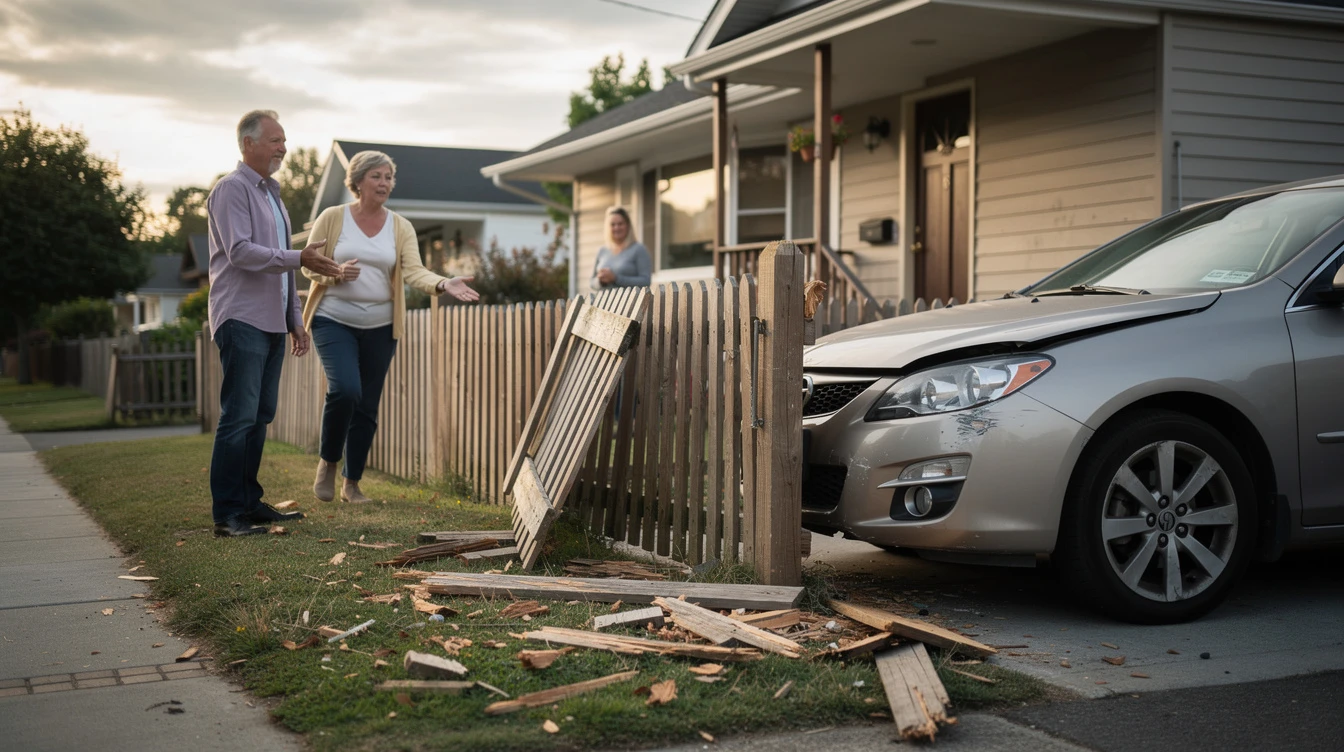
Someone backed into your parked truck, sideswiped your trailer, or their vehicle rolled into your property and caused damage. Can you sue? The short answer is yes — if another person's vehicle caused damage to your property, you have the right to seek compensation through insurance or the courts. Here is how the process works, what evidence you need, and when it makes sense to file a lawsuit versus handling it through insurance.
When You Can Sue for Vehicle Property Damage
You can sue for property damage caused by a vehicle in most situations where someone else was at fault. Common scenarios include:
- Vehicle-on-vehicle collisions: Another driver hits your car, truck, motorcycle, UTV, or trailer
- Vehicle hits your real property: A car drives into your fence, mailbox, building, or landscaping
- Parking lot damage: Someone hits your parked vehicle and leaves (hit-and-run) or stays and disputes responsibility
- Off-road incidents: Another rider damages your ATV, UTV, or dirt bike on trails or private land
- Towing or impound damage: A tow company damages your vehicle during transport or storage
The key requirement is proving the other party was at fault (negligent) and that their actions directly caused the damage you are claiming. You do not need to prove intent — negligence (carelessness) is sufficient.
Step 1: Document Everything Immediately
Your case lives or dies on evidence. At the scene or as soon as possible after discovering the damage:
- Photograph the damage from multiple angles — wide shots showing both vehicles/properties and close-ups of specific damage
- Photograph the scene — road conditions, weather, signage, skid marks, debris
- Get witness information — names and phone numbers of anyone who saw what happened
- File a police report — even for minor damage. The report creates an official record and often includes the officer's assessment of fault
- Get repair estimates — at least two written estimates from reputable shops
- Keep receipts — for towing, rental cars, temporary repairs, and any other expenses caused by the damage
Do not rely on the other party's promise to "work it out." People change their minds, deny fault, or disappear. Paper trails protect you.
Step 2: File an Insurance Claim
Before suing, most property damage cases go through insurance first. You have two paths:
File Against the Other Driver's Insurance (Third-Party Claim)
If the other driver was at fault and has liability insurance, you file a claim with their insurer. The insurer investigates, determines fault, and pays for repairs up to the policy limits. This is the most common and least confrontational path.
The catch: insurance companies regularly undervalue claims, delay payments, or dispute fault. If the offer does not cover your actual damages, you can reject it and pursue legal action.
File With Your Own Insurance (First-Party Claim)
If the other driver is uninsured, unidentified (hit-and-run), or if their insurance is insufficient, you can file under your own collision or uninsured motorist coverage. You pay your deductible, your insurer pays for repairs, and your insurer may pursue the other driver to recover costs (subrogation).
Step 3: When Insurance Is Not Enough — Filing a Lawsuit
You may need to sue when:
- The at-fault driver has no insurance
- The insurance offer is too low to cover actual repair costs
- Fault is disputed and the insurer denies your claim
- There are additional damages beyond the vehicle — lost income from not having transportation, rental car costs, diminished vehicle value
- The damage was caused by a commercial vehicle or business (towing company, delivery truck, etc.)
Small Claims Court
For damages under your state's small claims limit — typically $5,000 to $10,000 — small claims court is the fastest and cheapest option:
- Filing fees: $30 to $100 in most states
- Lawyer: Not required (and not allowed in some states' small claims courts)
- Timeline: Cases are typically heard within 30 to 60 days of filing
- Evidence needed: Photos, repair estimates, police report, receipts, witness statements
You present your case directly to a judge or magistrate, show your evidence, and get a ruling. If you win, the judge orders the defendant to pay. Collecting the judgment is a separate process — if the defendant does not pay voluntarily, you may need to garnish wages or place a lien.
Civil Court
For larger claims, you file in civil court (sometimes called superior court or district court). This is where a lawyer becomes valuable — many work on contingency for property damage cases, meaning they take a percentage of the settlement or judgment rather than charging upfront fees. Civil cases take longer (months to over a year) but can recover larger amounts including consequential damages.
Statutes of Limitations by State
Every state sets a deadline for filing property damage lawsuits. Miss it and your claim dies, no matter how strong your evidence:
| State | Property Damage Statute of Limitations |
|---|---|
| California | 3 years |
| Texas | 2 years |
| Florida | 4 years |
| New York | 3 years |
| Pennsylvania | 2 years |
| Ohio | 2 years |
| Illinois | 5 years |
| Arizona | 2 years |
| Montana | 2 years |
These clocks start ticking from the date the damage occurred. File your insurance claim and begin legal proceedings well before the deadline approaches.
How Vehicle Registration Status Affects Your Case
A question we hear from off-road and specialty vehicle owners: does your registration status affect your ability to sue for property damage?
The answer is nuanced:
- Parked vehicles: Registration status is irrelevant. If someone hits your parked vehicle, you can sue regardless of whether your registration was current, expired, or the vehicle was unregistered.
- Vehicles in motion: If you were driving an unregistered vehicle on a public road when the damage occurred, the other party's lawyer may argue contributory negligence — that you were operating illegally. This can reduce your recovery in comparative negligence states or bar it entirely in contributory negligence states (Alabama, Maryland, North Carolina, Virginia, DC).
- Off-road vehicles: Registration requirements vary widely for ATVs, UTVs, and dirt bikes used off-road. In most states, you do not need registration for off-road-only use on private land, so registration status does not affect a property damage claim from an off-road incident.
The best protection is keeping your vehicles properly registered and insured. If you own specialty vehicles that are difficult to register in your state, a Montana LLC can simplify the process and keep your registration current.
What Damages Can You Recover?
In a property damage lawsuit, you can typically recover:
- Repair costs: The actual cost to restore the vehicle or property to pre-damage condition
- Replacement value: If the vehicle is totaled, the fair market value at the time of the loss
- Diminished value: The reduction in your vehicle's resale value even after repairs (not available in all states)
- Loss of use: Rental car costs or lost income while your vehicle is being repaired
- Towing and storage: Costs to move and store the damaged vehicle
- Court costs and fees: Filing fees and related expenses
You generally cannot recover for emotional distress or pain and suffering in a property-damage-only case. Those damages apply to personal injury claims.
Tips for Strengthening Your Case
- Get multiple repair estimates. Two or three written estimates from licensed shops establish the reasonable cost of repair and prevent the other side from claiming you inflated the price.
- Keep a timeline. Document every interaction — insurance calls, adjuster visits, repair shop communications — with dates and summaries.
- Do not sign anything from the other driver's insurance without understanding it. Their initial offer is almost always lower than your actual damages. Signing a release closes your claim permanently.
- Photograph your vehicle's pre-damage condition if possible. If you have photos from before the incident showing the vehicle in good condition, they establish the baseline for your damage claim.
Frequently Asked Questions
Can I sue someone for vehicle property damage without a police report?
Yes. A police report strengthens your case but is not required to file a lawsuit. You can use photographs, witness statements, repair estimates, and other evidence to support your claim. However, insurance companies strongly prefer having a police report, so file one whenever possible — even after the fact in most jurisdictions.
How long do I have to sue for vehicle property damage?
The statute of limitations varies by state. Most states give you 2 to 6 years for property damage claims. California allows 3 years, Texas allows 2 years, Florida allows 4 years, and New York allows 3 years. Missing the deadline means you lose the right to sue entirely, so do not delay.
What if the other driver does not have insurance?
You can still sue the driver personally in small claims or civil court. If you carry uninsured motorist property damage (UMPD) coverage on your own policy, you can file a claim there first. Collecting a judgment from an uninsured driver can be difficult if they lack assets, but a judgment remains enforceable for years and can be renewed.
Does my vehicle registration status affect my ability to sue?
Your ability to sue for property damage is generally not affected by your registration status. You can still pursue a claim even if your vehicle had an expired registration at the time of the incident. However, if you were operating an unregistered vehicle when the damage occurred, the other party's lawyer may use that to argue contributory negligence.
Should I sue in small claims court or hire a lawyer?
For damages under $5,000 to $10,000 (limits vary by state), small claims court is usually faster and cheaper. No lawyer is needed, filing fees are low ($30 to $100), and cases are decided within weeks. For larger claims or complex liability disputes, hiring a lawyer on contingency is typically the better path — you pay nothing upfront and the lawyer takes a percentage only if you win.
Need help getting your vehicle properly registered? Start here →