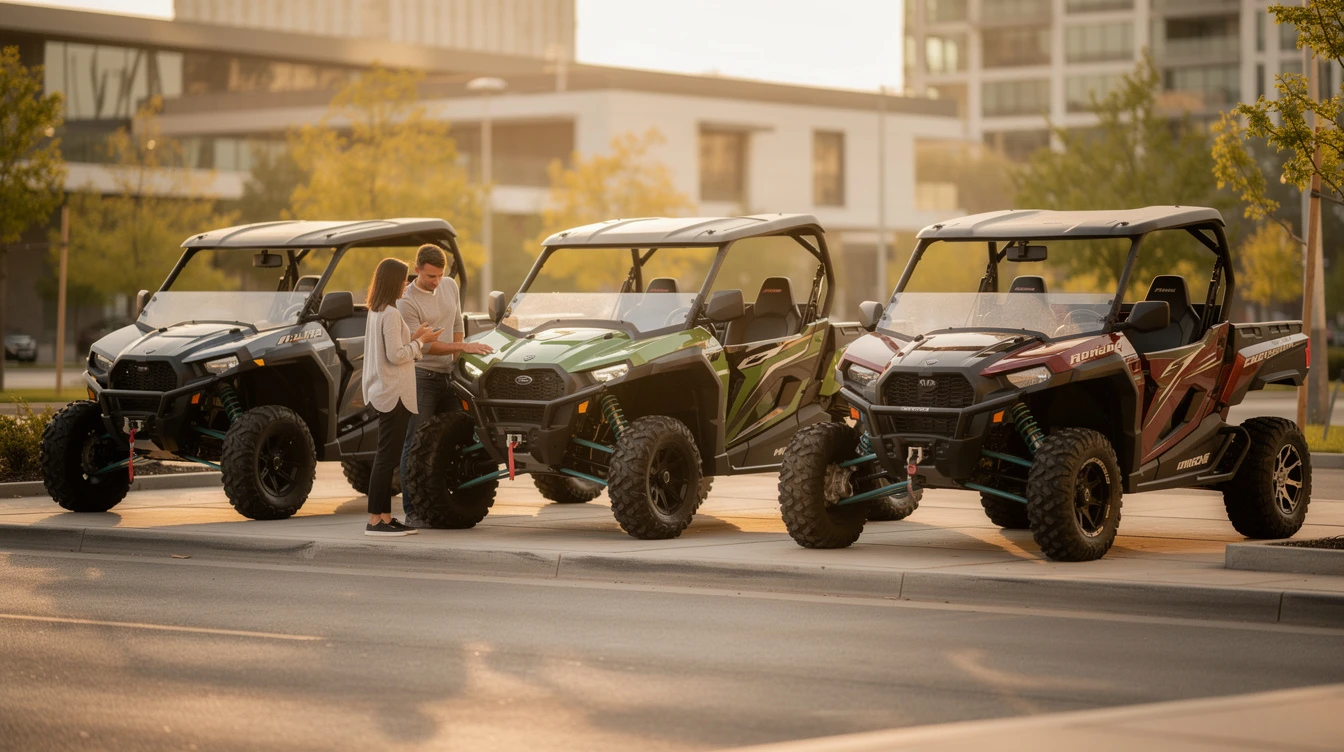
The Best Street Legal UTVs in 2026 Are Here, and the Options Are Serious
The best street legal UTVs in 2026 are not just capable off-road machines, they're built from the factory with the hardware to run on public roads. Windshields, DOT tires, headlights, mirrors, seatbelts, and in some cases full HVAC systems. The UTV market has moved fast, and 2026 models close the gap between side-by-side and street vehicle more than ever before.
But owning a street-ready UTV and actually being able to drive it on public roads are two different things. The vehicle has to meet your state's equipment requirements, and it has to be registered. That's where most riders hit a wall. This guide covers the top 2026 models worth your money, what registration actually costs, and the fastest way to start the registration process without the headache.
Want to see how UTVs became this capable? The full story is at Side by Side, a breakdown of how the side-by-side segment got to where it is today.
What You Need to Know About Street Legal UTV Requirements
Street legal UTV requirements vary by state, but most follow a similar baseline. Your UTV typically needs: DOT-approved tires, working headlights and taillights, turn signals, a windshield (or eye protection requirement), mirrors, horn, seatbelts, and a VIN that can be traced in a title document. Some states also require a speedometer and a specific brake light setup.
Most factory-built UTVs sold as "street-ready" in 2026 come with the bulk of this equipment already installed. What they don't come with is your state's registration plate. That requires paperwork, fees, and in some states, an inspection.
States With UTV-Friendly Street Laws
Some states make street legal UTV registration straightforward. Arizona, Idaho, Arkansas, and Florida all have defined pathways. Others, like California, have stricter requirements that require you to meet state-specific emissions and equipment standards before you can register. Check the state guide that matches where you ride:
- Street legal UTV guide in Arizona, laws, requirements, registration
- Street legal UTV guide in Idaho, laws, registration, required equipment
- Street legal UTV guide in Florida, laws, tags, required equipment
- Street legal UTV guide in California, laws, registration, DMV requirements
- Street legal UTV guide in Illinois
- Can you make a UTV street legal in Colorado, rules and requirements
Top Street Legal UTV Models to Watch in 2026
Here's a direct comparison of the top street-ready UTV models available in 2026. These are machines that either ship with a street-legal package or are widely registered on public roads with minor add-ons.
| Model | Engine | Top Speed | MSRP (est.) | Street-Ready Package |
|---|---|---|---|---|
| Polaris RANGER XP Kinetic | Electric (110hp) | 60 mph | $29,999+ | Optional street kit |
| Can-Am Defender MAX Limited | 976cc Rotax HD10 | 63 mph | $27,499+ | Doors, windshield, audio std. |
| Honda Pioneer 1000-6 Deluxe | 999cc parallel twin | 55 mph | $19,999+ | DOT tires, mirrors available |
| Kawasaki MULE PRO-FXT EPS LE | 812cc 3-cylinder | 50 mph | $18,299+ | Windshield, doors std. |
| Yamaha Wolverine RMAX4 1000 XT-R | 999cc parallel twin | 60 mph | $24,999+ | DOT tires, lighting upgrades |
| Textron Havoc X | 812cc 3-cylinder | 57 mph | $17,999+ | Full cab enclosure available |
Honestly, any of these machines can be registered and driven on public roads in most UTV-friendly states. The Can-Am Defender and Polaris RANGER line consistently lead the pack for real-world street registrations. The Honda Pioneer is a go-to for riders who want reliability without a premium price tag.
How Street Legal UTV Registration Works
Getting your UTV registered for street use comes down to a few steps, and it's not as complicated as the DMV makes it sound. Here's how the process typically goes:
- Confirm your UTV meets your state's equipment requirements. Check the list above, lights, tires, mirrors, horn, seatbelts. Some states require a speedometer too.
- Gather your paperwork. You need the Manufacturer's Certificate of Origin (MCO) or existing title, your bill of sale, and proof of insurance in most states.
- Submit your title and registration application. This goes to your, county clerk, or a private registration specialist depending on your state.
- Pay your fees. Registration costs vary by state (more on this below).
- Receive your plate and registration card. Once processed, your UTV can legally operate on public roads where UTVs are permitted.
Some states let you handle all of this remotely with paperwork support. Others require an in-person visit or inspection. If your home state is difficult, Montana registration is worth a serious look.
For riders in states with stricter conversion requirements, the street legal motorcycle conversion kit requirements post covers the equipment standards that often apply to off-road vehicles going through a street conversion, and a lot of it translates directly to UTVs.
Registration Costs and Timeline: What to Budget
Registration costs for UTVs vary significantly by state. Here's a realistic breakdown so you know what to expect.
State Registration Fees (Typical Range)
| State | Approx. Registration Fee | Sales Tax on Purchase | Notes |
|---|---|---|---|
| Montana | $28, $217 (age/weight based) | None | No sales tax, no emissions |
| Arizona | $9, $30 base + VLT | Varies by county | VLT based on vehicle value |
| Florida | $27.60, $46.15 | 6% state + local | County fees apply |
| California | $60, $175+ | 7.25%, 10.75% | Smog/emissions required |
| Texas | $51.75 base | 6.25% | County and local fees apply |
| Idaho | $33, $45 | 6% | UTV-specific pathway available |
Sales tax rates vary by state. On a $25,000 UTV, that difference is significant. A buyer in California could pay $2,500 or more in sales tax alone. In Montana, that number is $0. That's the reason Montana registration through an LLC is a serious option for riders buying higher-value machines. The zero tax car registration explained post breaks down exactly how that works and who it makes sense for.
Montana LLC Registration for Your UTV
Montana has no sales tax on vehicle purchases. When you register a UTV through a Montana LLC, the vehicle is owned by the LLC, not by you personally, and Montana collects no sales tax on the transaction. Registration fees are based on vehicle age and weight, and in most cases run well under $300 per year. There are no emissions tests.
This is a Montana registration method used by thousands of vehicle owners every year. If you want to see the full picture on how Montana plates work, how to get Montana plates for my vehicle walks through the process step by step. For the LLC side of things, Montana LLC for vehicle owners explains how the ownership structure works and what's involved in setting one up.
Montana registration fee schedules are posted publicly at the Montana Vehicle Title & Registration Fees page so you can see exactly what you'll owe before you commit.
Typical Timeline
Once your paperwork is in order, registration typically takes 2, 6 weeks depending on the state and processing volume. Montana LLC formation adds a few days up front, but most riders have plates in hand within 3, 4 weeks. Expedited processing is available in some cases.
Frequently Asked Questions
What makes a UTV street legal in 2026?
Most states require DOT-approved tires, working headlights and taillights, turn signals, mirrors, a horn, seatbelts, and a valid title and registration. Some states add requirements for a windshield, speedometer, and minimum speed ratings. The specific list varies by state, so check your state's guide before assuming your factory UTV qualifies out of the box.
Can I register my UTV in Montana even if I don't live there?
Yes. Non-residents register vehicles in Montana through a Montana LLC every day. The LLC is a Montana business entity, and the vehicle is titled in the LLC's name. You don't need to live in Montana or visit the state to complete the process. Registration assistance is available remotely.
How much does it cost to register a UTV in Montana?
Montana registration fees for UTVs typically run $28, $217 per year depending on the vehicle's age and weight. There's no sales tax on the purchase and no emissions testing required. You'll also need to budget for Montana LLC formation, which is typically a one-time cost of around $50, $100 in state filing fees, plus any assistance fees from a private registration service.
Do street legal UTVs need insurance?
In most states, yes. If your UTV is registered for road use, you'll typically need liability insurance at a minimum. Some states have UTV-specific policies; others allow you to add coverage through a standard auto or powersports policy. Check your state's requirements before you hit the road.
Which 2026 UTV is the best choice for someone who wants to drive on roads daily?
The Can-Am Defender MAX Limited and the Polaris RANGER XP Kinetic are the top choices for riders who want a UTV that functions as a daily driver on public roads. Both offer cab enclosures, significant cargo capacity, and street equipment that either comes standard or is available as a factory package. The Honda Pioneer 1000-6 is a strong runner-up for riders who want reliability at a lower price point.
What's the difference between a UTV title transfer and a new registration?
A title transfer moves ownership from one person (or entity) to another. A new registration is what creates the license plate and registration card. If you buy a used UTV, you'll do a title transfer first, then register it. If you're buying new, you go straight to registration using the Manufacturer's Certificate of Origin. States handle these processes differently, and some, like Texas, have specific rules around how the transfer must be documented. The post car title transfer process Ohio post covers what happens after a title transfer clears, and the general sequence applies in most states.
Ready to Get Your UTV Street Legal? Start Here.
You've picked your model. Now get it registered. Whether you're going through your home state or taking the Montana LLC route to skip sales tax and emissions requirements, Street Legal Hookup has the paperwork support to move things forward.
Don't sit on it. The longer your UTV sits without plates, the more rides you're missing. Take two minutes, answer a few questions, and find out which registration path makes sense for your machine.