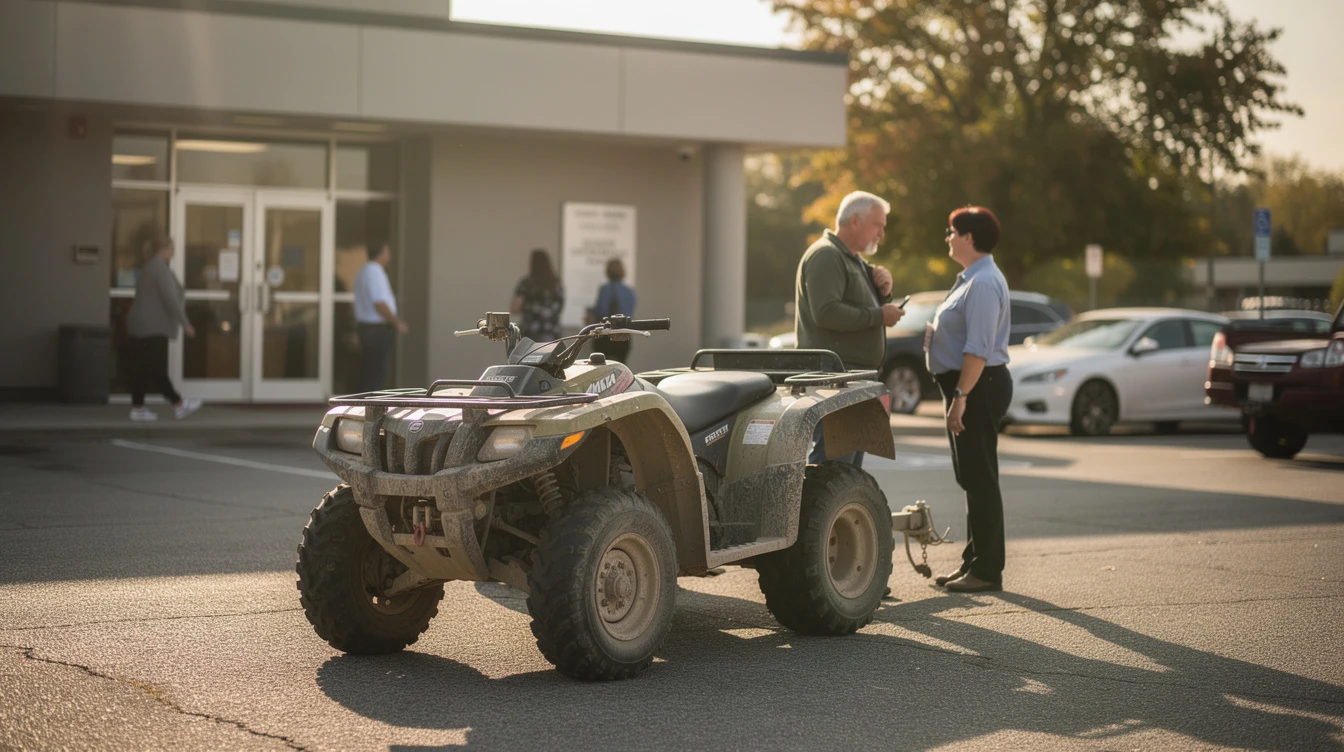
No Title, No Problem, But You Do Need a Plan
Bought a used ATV with no paperwork? You're not alone. Thousands of ATVs change hands every year through private sales, estate deals, and old barn finds with zero documentation. The good news: you have real options to register an ATV without a title, and none of them require you to give up on the machine.
The bad news: the options vary a lot by state. What works in Montana won't necessarily fly in California. This guide breaks down every practical path available, what each one costs, and which approach tends to work best depending on your situation.
Honestly, the biggest mistake riders make is assuming a missing title means an unregisterable ATV. That's rarely true.
What You Need to Know About Titling an ATV You Can't Document
A title is the legal document that proves ownership of a vehicle. Without one, your state's motor vehicle office has no official way to confirm the ATV isn't stolen or doesn't have a lien on it. That's the core problem you're solving.
Before picking a path, do two things first:
- Run the VIN through NHTSA's free VIN decoder to check for recalls and verify the machine isn't flagged as stolen.
- Check whether your state even requires a title for ATVs. Some states title ATVs, some only register them, and a handful treat them purely as off-road equipment with no title requirement at all.
Once you've done that, pick the option below that fits your state and situation.
How to Register an ATV Without a Title, Your Options
1. Bonded Title (Most States)
A bonded title is the most widely accepted path when a title is missing. You purchase a surety bond, typically valued at 1.5x the ATV's assessed value, and the state issues you a bonded title. After a holding period (usually 3 years), the bond expires and you receive a clean title.
Cost of the bond varies, but expect $100, $300 for most ATVs valued under $5,000. Most states accept bonded titles, including Texas, Florida, Arizona, and most of the South and Midwest.
2. Bill of Sale Plus Affidavit
Some states let you register an ATV with just a notarized bill of sale and a sworn affidavit of ownership. This is more common in rural states and works best when you have a solid paper trail from the seller, even a handwritten, signed receipt helps. States like Montana, Wyoming, and parts of the Midwest are more flexible here than coastal states.
3. Court-Ordered Title
If you've been turned away by the state and have clear evidence of purchase, a judge can issue a court-ordered title. This takes time, often 30, 90 days, and there are filing fees involved. But it produces a clean title with no surety bond attached. It's not complicated, just slow.
4. Vermont Registration (The 15-Year-Old Rule)
Vermont will register vehicles manufactured before a certain model year without requiring a title at all. Once Vermont issues you a registration, you can use that to title the ATV in your home state. This is a well-known, street-compliant path that works for older machines. Vermont charges a small registration fee, and the process is done by mail.
5. Montana LLC Registration
Montana has no sales tax and no emissions testing requirements. For off-road vehicles including ATVs, registering through a Montana LLC can be a smart move, especially if your machine is high-value or you want to avoid your home state's sales tax burden. Sales tax rates vary by state, but in high-tax states riders can save several thousand dollars this way.
Montana registration is also an option when documentation is minimal, making it worth a conversation if you're stuck on the title question. Read more about how this works in our guide on Montana LLC for vehicle owners. That article covers the full setup process, what the LLC costs annually, and which vehicle types benefit most.
You can also check out zero tax car registration explained for a plain-English breakdown of how Montana's no-sales-tax registration works across different vehicle types.
6. State-Specific Programs
A handful of states have special abandoned vehicle or off-road vehicle programs that let you register an ATV through a simplified process. These are worth checking directly with your state's motor vehicle division. Arizona, for instance, has specific OHV registration rules that differ from standard title transfer procedures. See our street legal UTV guide in Arizona for state-specific details.
Title Transfer and ATV Registration, What the Process Looks Like
Regardless of which path you take, the general process for a title transfer or first-time ATV registration without a title follows a similar flow:
- Verify the VIN and confirm there's no lien or theft report.
- Choose your path: bonded title, bill of sale affidavit, court order, Vermont, or Montana LLC.
- Gather supporting documents: bill of sale, photos, seller contact info, any prior registration records.
- Submit your application to the appropriate office (county treasurer, court, or out-of-state DMV).
- Pay the applicable fees and wait for processing.
- Receive your title or registration document, then register in your home state if needed.
For those going the Montana route, the process is handled remotely with paperwork support from specialists like the team at Montana Registration Services. No in-person visits required.
If your ATV situation involves a UTV or side-by-side, our street legal UTV guide in Idaho and street legal UTV guide in California cover state-specific registration rules that also apply to titling questions.
Cost and Timeline Breakdown
| Method | Typical Cost | Timeline | Best For |
|---|---|---|---|
| Bonded Title | $100, $300 (bond) + state fees | 2, 6 weeks | Most states, any age ATV |
| Bill of Sale Affidavit | $20, $75 (notary + filing) | 1, 3 weeks | Rural/flexible states |
| Court-Ordered Title | $100, $400 (filing fees) | 30, 90 days | Any state, contested ownership |
| Vermont Registration | $76 + return-state fees | 2, 4 weeks | Pre-1995 machines |
| Montana LLC Registration | $300, $600 (LLC + registration) | 2, 4 weeks | High-value ATVs, tax savings |
Timelines depend heavily on how quickly your paperwork is submitted and how backed up the processing office is. Montana and Vermont mail-in options typically move faster than court processes.
For more context on what Montana registration fees look like, the Montana Vehicle Title and Registration Fees page has the current fee schedule directly from the state.
Frequently Asked Questions
Can I ride my ATV on the street without a title?
Not in most states. Street-compliant operation typically requires both registration and proof of ownership. An ATV without a title is harder to register for street use, though off-road-only riding on private land generally doesn't require a title in most states. If street-legal operation is your goal, work through one of the title paths above first.
What if the VIN is missing or tampered with?
A missing or altered VIN is a serious issue. Most states require a VIN inspection before any title or registration can be issued. If the VIN is gone, you'll typically need a law enforcement inspection and possibly a new VIN assignment from your state's motor vehicle division. Don't skip this step, riding a machine with no VIN creates real liability.
Does Montana registration work if I don't live in Montana?
Yes, in most cases. That's the point of the Montana LLC structure. You form an LLC in Montana (a quick process), and the LLC registers the vehicle in Montana. You don't need to be a Montana resident. Sales tax rates vary by state, so check how your home state treats out-of-state registrations. Our how to get Montana plates for my vehicle guide covers the full setup.
Can I transfer an ATV title in Texas if I only have a bill of sale?
Texas does have a bonded title process, and a bill of sale can support your application. Texas title transfer typically requires a completed title application, a notarized bill of sale, and a vehicle inspection. For high-value ATVs in Texas, the Montana LLC path may save more money than the Texas registration route, since Texas sales tax rates vary and can add up fast on a premium machine.
What's the difference between ATV registration and a title?
Registration gives you the right to operate the vehicle in a specific state or environment (road, off-road park, etc.). A title proves ownership. You can sometimes register an ATV for off-road use without a title, but you'll typically need a title to sell the machine, finance it, or convert it to street use. Both matter for different reasons.
What if I bought the ATV from an estate sale with no paperwork at all?
Estate sales are one of the most common situations where ATVs change hands without titles. Most states will accept a combination of a notarized bill of sale, a death certificate, and an affidavit from the estate executor as supporting documentation for a bonded title application. A court-ordered title is also an option if the bonded title path is blocked. Start with the bonded title process and ask your county treasurer's office what they specifically require.
Ready to Get Your ATV Street-Legal and Properly Registered?
Missing a title slows things down, but it doesn't stop you. You've got real options, and the right one depends on your state, your machine, and how you plan to ride it. Street Legal Hookup works with ATV and UTV owners across the country who are stuck exactly where you are right now.
If the Montana LLC path makes sense for your situation, or if you just want someone to point you at the fastest route to get your machine registered, take two minutes and answer a few questions. We'll match you with the right approach.