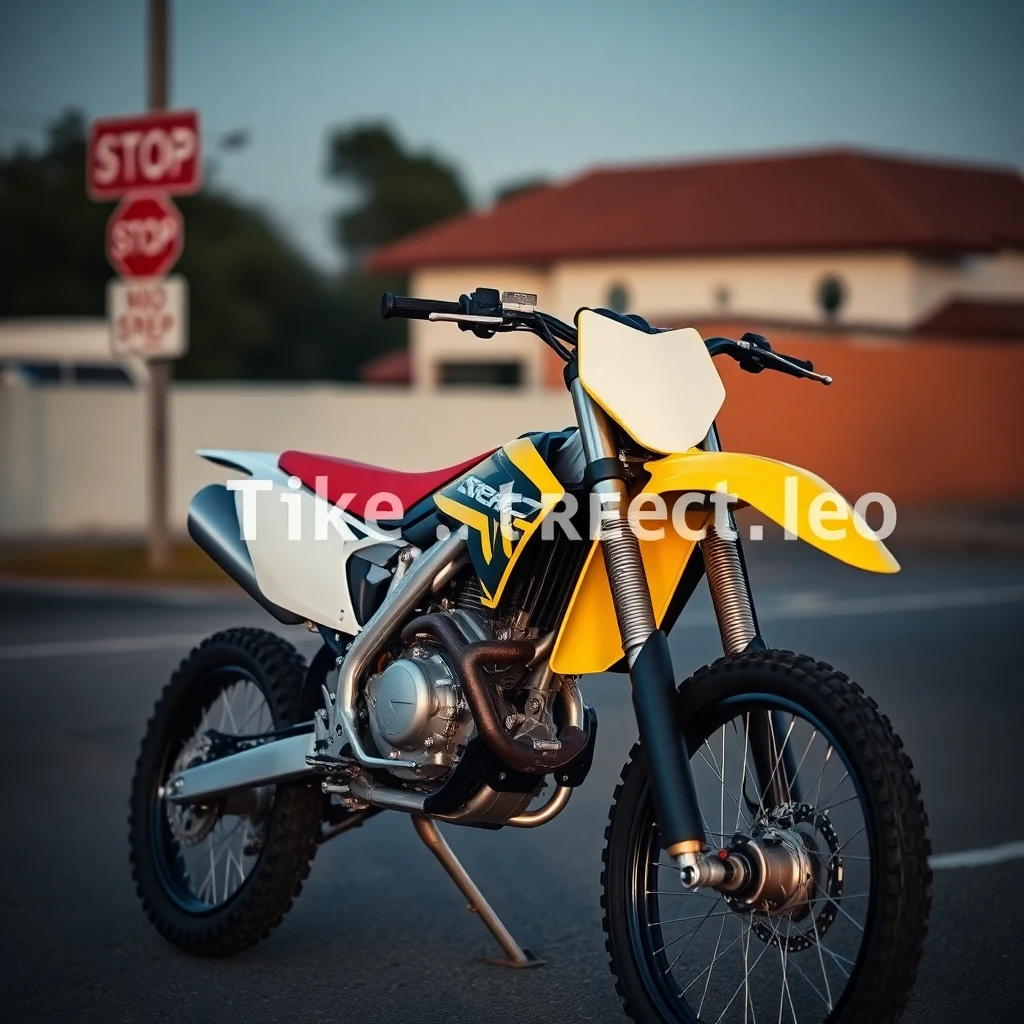
Knowing how to make a dirt bike street legal is the first step toward riding your bike on public roads instead of hauling it to a track. The process has two sides: physical equipment your bike must have, and the paperwork side, meaning a valid title and registration. Skip either one and you are not street legal, no matter what parts you bolt on.
This guide covers both sides completely. You will find the required equipment list, a breakdown of the title and registration process, and a clear path to getting Montana plates if your home state makes the conversion process difficult or expensive. Every step is laid out in plain language.
Dirt bikes, dual-sport builds, enduro conversions, and off-road-only machines Street Legal Hookup handles the paperwork side for all of them, backed by a state-licensed Montana processor.
What Equipment Does a Street Legal Dirt Bike Actually Need?
The physical requirements for a street legal dirt bike are set at the state level, so the specific list varies. That said, most states share a core set of equipment requirements. If your bike has all of these, it will meet the standard in the vast majority of states.
Required Safety and Lighting Equipment
- Headlight must be DOT-approved and functional in low and high beam. Most dirt bikes come with a headlight, but it may not meet DOT specs.
- Taillight and brake light separate functions, both required. The brake light must activate from both hand and foot levers.
- Turn signals front and rear on both sides, four total. This is where most bikes need the most work.
- Mirrors at least one, usually left side. Many states require two.
- Horn a basic 12-volt horn bolted to the handlebars satisfies this requirement.
Mechanical and Safety Requirements
- DOT-approved tires knobby off-road tires typically do not carry a DOT rating. You will likely need dual-sport or DOT-rated tires.
- Speedometer required in most states.
- Working brakes front and rear, independently functional.
- Muffler and exhaust compliance straight pipes or spark arrestors without a proper muffler will fail noise ordinances in many areas.
What About Emissions Testing?
Some states require a two-stroke or four-stroke dirt bike to pass an emissions test before they will register it as a street-legal motorcycle. This is one of the biggest friction points in the home-state registration process. Montana has no emissions testing requirement, which is a significant reason many riders go the Montana registration route. More on that below.
The Title and Registration Side: Why This Is Harder Than the Parts
Bolting on turn signals is the easy part. Getting a title that says your dirt bike is a street-legal motorcycle is where most riders run into real problems. An off-road-titled bike cannot legally be ridden on public roads regardless of what equipment it has.
Ready to register your vehicle?
Join thousands of vehicle owners who use Street Legal Hookup to handle their registration quickly.
Get started today. →Off-Road Title vs. Street-Legal Title
Most dirt bikes leave the factory with a Manufacturer's Certificate of Origin (MCO) that designates them as off-road only. When that MCO is processed through your state DMV, it typically results in an off-road or OHV title. That title does not give you registration plates. To get plates, you need a street-legal motorcycle title, and converting from one to the other requires your state to inspect and reclassify the vehicle.
The Home-State Inspection Route
If your state allows it, you can bring your converted bike to a DMV inspection station or a state-authorized inspector. The inspector confirms your bike meets all equipment requirements, then your title gets reclassified. After that, you register as a motorcycle and receive plates. The catch: many states have stopped doing these inspections, have long waiting lists, or have requirements that are difficult or impossible to meet on a modified dirt bike.
When the Home-State Route Is Blocked
If your state does not offer a clear path to reclassification, or if the process is prohibitively complex, Montana registration is a proven alternative. Montana does not require emissions testing and has a straightforward registration process for motorcycles, including converted dirt bikes. A Montana LLC holds the title and registration, and the plates are valid in all 50 states. This is not a shortcut, it is a different and fully street-Montana registration jurisdiction.
For riders who have dealt with salvage or off-road title situations on other vehicles, the approach is similar. See the full breakdown at salvage motorcycle title montana for context on how Montana handles non-standard titles.
Montana Registration for Converted Dirt Bikes
Montana registration works through a simple LLC structure. A Montana LLC is formed in your name, the LLC purchases and titles the vehicle, and Montana issues registration and plates. The LLC is yours to manage, and Street Legal Hookup is backed by a state-licensed Montana processor who handles the formation and title work correctly the first time.
Why Montana Works for This
- No sales tax on vehicle purchases in Montana
- No emissions testing required
- No annual vehicle inspections
- Straightforward motorcycle registration process
- Plates are recognized in all 50 states
Montana registration fees are set by the state. You can review the official fee schedule at the Montana Vehicle Title and Registration page. LLC formation is handled through the Montana Secretary of State, and annual reports are due each April 15 to keep the LLC in good standing.
What You Need to Get Started
To register a converted dirt bike through a Montana LLC, you typically need the existing title (or MCO), basic vehicle information including the VIN, and your personal information for LLC formation. If your title situation is unusual, such as a missing title or a bike that was never formally titled, there are additional steps. Street Legal Hookup handles both straightforward and complex cases.
Is Montana Registration Right for Your Bike?
If you live in a state with heavy sales tax, strict emissions rules, or no clear conversion path for off-road bikes, Montana registration is worth a serious look. Riders across the country use this approach for dirt bikes, dual-sports, ATVs, UTVs, motorcycles, and more. The process is the same whether you are in California, Texas, Florida, or anywhere else.
If you are also considering registration for a project build or a non-standard vehicle, the same Montana LLC framework applies. Read more at project car registration montana for a detailed look at how the process works for builds that do not fit the standard DMV mold.
Street Legal Conversion: Equipment Cost and Timeline Summary
Here is a practical look at what the equipment side of the conversion typically costs and how long it takes. These are estimates based on common conversion kits and aftermarket parts. Prices vary by bike make, model, and where you source parts.
| Component | Estimated Cost | Notes |
|---|---|---|
| DOT turn signal kit (4 signals) | $30, $80 | Universal kits fit most bikes |
| DOT headlight upgrade | $40, $150 | Required if factory unit is not DOT-rated |
| Brake light / taillight | $25, $75 | Combined units available |
| Horn (12V) | $10, $30 | Simple bolt-on |
| DOT-rated tires (pair) | $100, $300 | Dual-sport tires recommended |
| Speedometer | $20, $100 | GPS units accepted in most states |
| Mirrors (pair) | $15, $50 | Handlebar mount, many styles available |
| Total Equipment Estimate | $240, $785 | DIY install saves labor cost |
Installation time for a full conversion kit on a single-cylinder dirt bike is typically four to eight hours for a competent DIY mechanic. Factor in an additional two to four hours if you are routing wiring from scratch.
Riding Smart After the Conversion
Getting your bike street legal is one part of the equation. Riding it safely on public roads is the other. Dirt bikes have a different riding posture and handling profile compared to purpose-built street motorcycles. If you are new to road riding on a converted bike, take time to get familiar with traffic before heading onto busy roads.
Gear and Insurance
A street-legal dirt bike is a registered motorcycle, which means you need a valid motorcycle endorsement on your driver's license and motorcycle insurance. Requirements vary by state, but liability coverage is required in most jurisdictions. Riding without insurance on a plated bike is a separate violation from registration issues, so get both handled before you ride.
For riders who want to build good habits from the start, the Motorcycle Safety: Essential Tips for Every Rider resource from MTMC Foundation covers the fundamentals well, particularly for riders transitioning from off-road to street riding.
Keep Your Registration Current
Once your bike is titled and registered, keep the registration current. A lapsed registration on a street-legal bike creates the same problems as no registration at all. If you go the Montana LLC route, the annual report for your LLC is due April 15 each year through the Montana Secretary of State. Street Legal Hookup can help with annual renewals as well as first-time registrations.
Frequently Asked Questions About Making a Dirt Bike Street Legal
Can any dirt bike be made street legal?
Most four-stroke dirt bikes can be converted with the right equipment. Two-stroke bikes face more restrictions because many states have emissions standards that two-strokes cannot meet. Four-stroke single-cylinder bikes from major manufacturers like Honda, Yamaha, Kawasaki, KTM, and Husqvarna are the most common candidates for street legal conversion. Some bikes have frames or electrical systems that make wiring in DOT lighting difficult, but complete conversion kits exist for most popular models.
Do I need a motorcycle license to ride a street legal dirt bike?
Yes. Once your dirt bike is titled as a street motorcycle and carries registration plates, it is legally a motorcycle. Riding it on public roads without a motorcycle endorsement is a violation in every state. Requirements to get a motorcycle endorsement vary, but typically involve a written test and a riding skills test, or completion of an approved motorcycle safety course.
What is the cheapest way to get a dirt bike street legal?
The cheapest physical approach is buying a complete universal conversion kit, which typically runs $100 to $200 and includes turn signals, a horn, and mirrors. DIY installation avoids labor costs. On the registration side, costs depend on your state. Montana registration through an LLC has upfront costs for LLC formation and title work, but you avoid sales tax, which often more than offsets the registration fees depending on the bike's value.
Will Montana plates work in my home state?
Montana registration and plates are valid in all 50 states for a vehicle properly titled and registered in Montana. The Montana LLC holds the title and registration. As long as your LLC stays in good standing and the registration is current, the plates are valid nationwide. You should confirm with a professional that the process is set up correctly for your situation before riding on public roads.
What if my dirt bike has no title?
A dirt bike with no title is a common situation. Many off-road bikes were sold without a title or the title was lost. Montana has a process for establishing ownership on vehicles without a clear title, including bonded title options. Street Legal Hookup handles these cases. The key is to start the title process before attempting to get plates, since a plate without a valid title is not a complete registration.
How long does the Montana registration process take?
LLC formation in Montana typically takes one to three business days. Title and registration processing after that is typically two to four weeks for most standard cases. Rush processing options may be available. Once complete, your plates and registration documents are mailed to you. The full timeline from starting the process to having plates in hand is typically three to five weeks in most cases.
Can I register an ATV or UTV the same way as a dirt bike in Montana?
Yes. The Montana LLC registration approach works for ATVs and UTVs as well as dirt bikes, motorcycles, and a wide range of other vehicles. The specific title classification may differ, but the core process is the same. Street Legal Hookup has experience with the full spectrum of off-road and powersport vehicles. If you have an ATV with a complicated title situation, read more at salvage ATV title registration montana for details on how Montana handles those cases.
Ready to Make Your Dirt Bike Street Legal?
You now have the full picture on how to make a dirt bike street legal, covering both the equipment requirements and the title and registration path. Whether you go through your home state or use a Montana LLC registration, the goal is the same: a bike with a valid title, current plates, and the right equipment to ride on public roads without issue.
Street Legal Hookup is backed by a state-licensed Montana processor and handles everything from straightforward conversions to complex title situations. Verified customer reviews are growing daily, and the process is built for riders who want it done right without the DMV runaround.
Get started today and put your dirt bike on the road where it belongs.