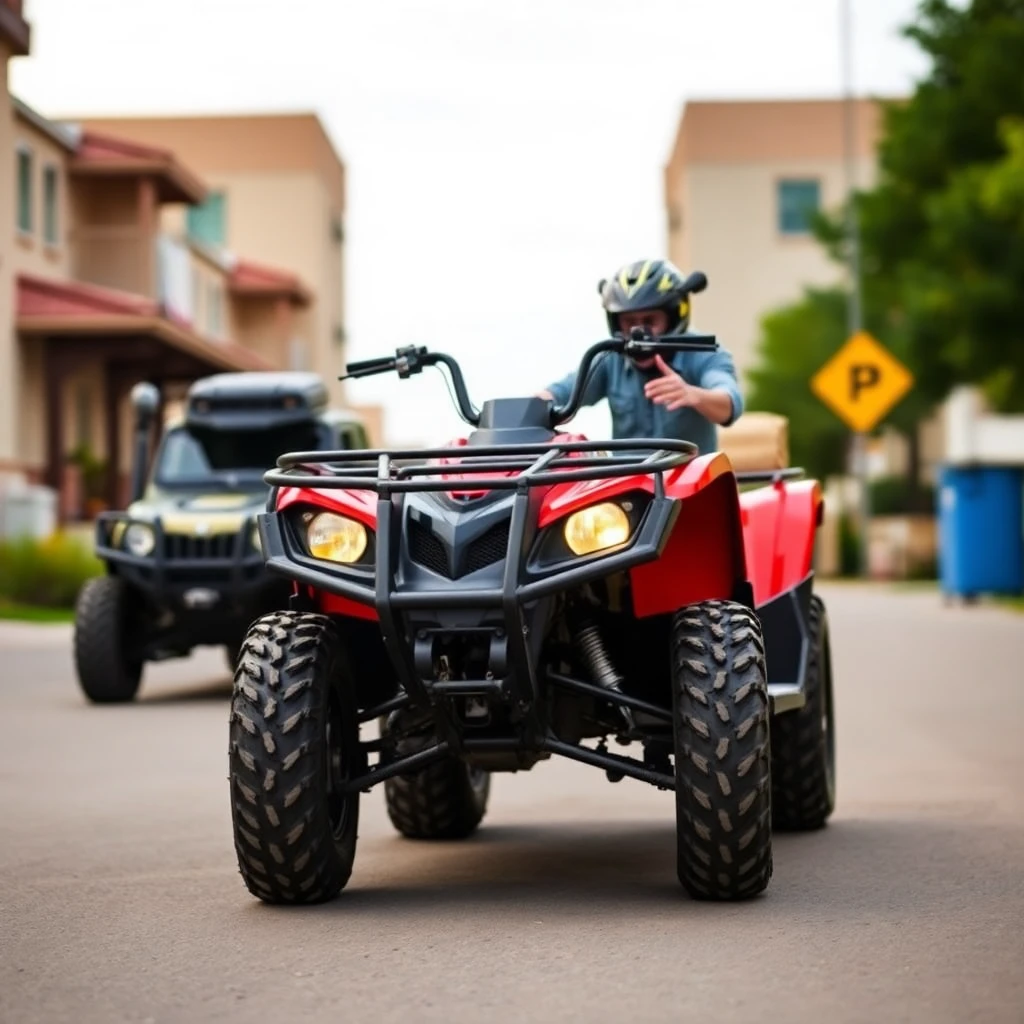
A UTV street legal kit is the hardware you need to turn an off-road machine into a vehicle you can ride on public roads without getting pulled over. The parts list is straightforward, but what actually is eligible your UTV as road-ready depends on your state, your VIN, and whether your registration matches your build. This guide breaks down every component typically required, what the registration process looks like, and how to avoid the mistakes that stall most UTV owners.
Whether you ride a Can-Am Defender, a Polaris RZR, a Yamaha Wolverine, or a Kawasaki Teryx, the street-legal path is the same basic route. Get the right equipment, get the right paperwork, and get it registered. Here is exactly what that takes.
If your UTV is already built out and you just need the plate side handled, Street Legal Hookup is backed by a state-licensed Montana processor and works with the full vehicle spectrum, including UTVs, ATVs, dirt bikes, and everything else in between.
What a UTV Street Legal Kit Actually Includes
A street legal kit for a UTV is a bundle of components that brings the machine up to minimum on-road equipment standards. States vary on specifics, but the core components are consistent across nearly all jurisdictions that allow UTVs on public roads.
What lights are required on a street legal UTV?
Lighting is the first thing inspectors and officers look for. At minimum, most states require:
- Headlights (low and high beam capable)
- Tail lights
- Brake lights
- Turn signals (front and rear, both sides)
- Hazard flashers
Many OEM UTVs come with basic lighting. A full street legal kit adds the turn signal relay, switches, and wiring use to make them road-compliant. DOT-approved lenses are required in most states, not just any aftermarket LED bar.
Do you need mirrors on a street legal UTV?
Yes. Nearly every state that allows UTVs on paved roads requires at least one, and usually two, rear-view mirrors. Side mirrors are the standard, and they need to give the driver a clear view behind the vehicle without obstructions. Most UTV street legal kits include a pair of bolt-on side mirrors that mount to the roll cage or door bar.
What other safety equipment is typically required?
Beyond lights and mirrors, a complete kit typically includes:
- A horn (DOT-compliant, audible at 200 feet in most states)
- A windshield, or at minimum a windscreen (requirements vary by state)
- Seatbelts (most UTVs already have these from factory)
- A speedometer (many states require one)
- Reflectors (front amber, rear red)
- A DOT-rated tire on each wheel, or in some states just tread depth compliance
Some states also require a parking brake, a rearview mirror from the driver's seat view, and specific wiper provisions if a windshield is installed. Check your state's off-highway vehicle code directly before purchasing any kit.
State-by-State Differences in UTV Street Legal Requirements
There is no single federal standard for making a UTV street legal. Each state sets its own rules, and those rules range from very permissive to outright prohibitive. Understanding where your state falls before buying a kit saves you time and money.
Ready to register your vehicle?
Join thousands of vehicle owners who use Street Legal Hookup to handle their registration quickly.
Get started today. →Which states allow UTVs on public roads?
Most western and rural states have passed legislation allowing properly equipped UTVs on roads with lower speed limits, typically 35 to 55 mph. States with well-established UTV road programs include Montana, Utah, Arizona, Colorado, Tennessee, Idaho, South Dakota, and Texas. Each has its own equipment checklist, but all allow registration and plating of Eligibleing UTVs.
States like California, New York, and New Jersey are more restrictive and either prohibit UTVs on public roads entirely or allow them only in specific rural counties with special permits.
Does Montana allow street legal UTV registration?
Yes. Montana is one of the most accessible states for UTV registration and is frequently used by out-of-state owners who want a clean plate and title without fighting their home state's DMV. Montana requires the UTV to meet basic equipment standards and have a proper title. There is no sales tax, no emissions testing, and no inspection requirement at the state level. This is why Montana registration remains one of the most widely used paths for UTV owners across the country.
For a closer look at how the Montana registration process works for salvage or off-road-titled ATVs and UTVs, see salvage ATV title registration Montana, which covers the title recovery side of the process when your paperwork is not clean.
What speed limits apply to street legal UTVs?
This varies sharply by state. Most states that allow UTVs on public roads restrict them to roads with posted speed limits of 35 mph or lower, though some states extend this to 55 mph. A few states require the UTV to be capable of maintaining the posted speed limit before it is eligible for plating. Check your state's specific maximum speed allowance for low-speed vehicles and UTVs before assuming your machine is eligible.
UTV Street Legal Kit Requirements at a Glance
The table below summarizes the most common equipment requirements found across states that allow UTVs on public roads. Always confirm with your specific state before purchasing a kit or filing for registration.
| Equipment Item | Typically Required | Notes |
|---|---|---|
| Headlights | Yes | DOT-compliant, high/low beam in most states |
| Tail lights | Yes | Must be visible from 500 ft in many states |
| Brake lights | Yes | Separate from tail lights in most rules |
| Turn signals | Yes | Front and rear, both sides |
| Hazard flashers | Yes | Typically uses turn signal system |
| Horn | Yes | Audible at 200 ft minimum in most states |
| Mirrors | Yes (usually 2) | Driver-side required, passenger-side common |
| Windshield / windscreen | Varies | Required in some states, optional in others |
| Speedometer | Often | Required in most states with street UTV programs |
| DOT tires | Varies | Some states require DOT stamp, others only tread depth |
| Seatbelts | Yes | Most UTVs include from factory |
| Registration plate light | Yes | Must clarify rear plate at night |
The Registration Side: Getting Your UTV Plated After the Kit Install
Installing the hardware is step one. Getting a street-legal title and registration is step two, and for many UTV owners this is the harder part. A UTV that started life as an off-highway vehicle may have an OHV title, a recreational title, or no title at all depending on how it was purchased.
What title does a UTV need to Eligible for street legal registration?
Your UTV needs a clean title in your name, or in the name of a Montana LLC if you are registering through Montana. OHV titles, off-road-only titles, and recreational-use certificates are not the same as a street-legal vehicle title. In some states, you can apply to convert an OHV title to a road-use title once the equipment upgrades are complete and a state inspection is passed. In other states, there is no conversion path and Montana registration becomes the practical solution.
If your UTV title has complications, the process for working through those is similar to what is covered in project car registration Montana, which covers getting clean plates on vehicles that started life outside normal title channels.
How does Montana LLC registration work for a UTV?
Montana has no sales tax and does not require emissions testing or physical inspections for registration. A Montana LLC is formed, the UTV is titled in the LLC's name, and Montana plates are issued. Those plates are recognized in all 50 states for driving and insurance purposes. This path is especially popular for owners in high-tax states who want to avoid paying sales tax on a high-value UTV purchase.
Street Legal Hookup is backed by a state-licensed Montana processor, which means you are working directly with someone who handles the filing, not a middleman reselling another service. You get processor-direct reliability without hunting down a Montana attorney on your own.
For details on how Montana registration holds up across state lines, the team at HMMWV Registration has a helpful breakdown at Montana Registration Valid in All 50 States, which explains how out-of-state owners use Montana plates day-to-day.
What documents do you need to register a UTV in Montana?
Typical document requirements include:
- Original title or Manufacturer's Certificate of Origin (MCO)
- Bill of sale (if purchased from a private party)
- Montana LLC formation documents (if registering under an LLC)
- Completed registration application
- Payment for registration fees
Montana registration fees are based on age and weight of the vehicle. The official fee schedule is published by the Montana Motor Vehicle Division, and fees for most UTVs are significantly lower than what most states charge annually.
Common Mistakes When Building a Street Legal UTV
Most UTV owners hit the same snags when going through the street-legal process. Avoiding these speeds things up considerably.
Buying a kit that does not match your state's equipment rules
Generic UTV street legal kits sold online are not always state-specific. Some do not include DOT-compliant lenses. Some do not include a speedometer. Some states require a working windshield wiper if a windshield is installed. Buying a kit without cross-referencing your state's OHV or low-speed vehicle statute first is the most common and costly mistake.
Assuming equipment alone gets you plated
Installing the kit does not automatically make your UTV street legal. You still need a state inspection in many states, and you need to file for a title conversion or new registration. Without the registration step completed, riding on public roads with a kit-equipped UTV is still illegal in most jurisdictions. The plate is what makes it street legal in the eyes of law enforcement.
Losing the original title during a sale
If your UTV was bought used without a clean title, you may need to pursue a bonded title or a title recovery process before any registration can happen. This is especially common with UTVs that were sold off-range without proper paperwork. Street Legal Hookup handles the hard cases, including vehicles with missing, damaged, or out-of-state titles. For a related example involving motorcycles, salvage motorcycle title Montana walks through how title recovery works when documentation is incomplete.
Frequently Asked Questions About UTV Street Legal Kits
Can any UTV be made street legal?
Not always. Most modern UTVs from major manufacturers can be converted with the right equipment kit, but some states restrict street-Montana registration to UTVs that meet specific power, speed, or weight requirements. High-performance race-spec UTVs may face additional hurdles. In states with no UTV road program at all, no amount of kit installation will get you a street-legal plate, and Montana registration becomes the practical path for those owners. Always check your state's specific UTV code before investing in a kit.
How much does a UTV street legal kit cost?
Kit prices typically range from $150 to $600 depending on the brand, included components, and whether DOT-compliant lighting is included. Installation labor at a shop runs anywhere from $100 to $300 additional. Factor in registration and title fees on top of hardware costs. Montana registration fees for a UTV are generally modest, and the no-sales-tax benefit often offsets the cost of the LLC formation and registration service entirely on higher-value machines.
Do I need insurance for a street legal UTV?
Yes. Once your UTV is registered for road use, you need liability insurance at minimum in nearly every state. Some states require proof of insurance before they will issue a street-Montana registration. Standard off-road UTV policies do not cover road use, so you will need a separate policy or a rider that specifically covers on-road operation. Contact your insurance provider before you take a newly plated UTV onto public roads.
Can I register a UTV in Montana if I live in another state?
Yes. Montana allows non-residents to form an LLC and register vehicles in that LLC's name. The UTV is then titled and plated in Montana. This is a fully above-board process used by thousands of vehicle owners across the country each year. The Montana plates are valid for driving in all 50 states. You do not need to physically travel to Montana at any point. Street Legal Hookup handles the entire process remotely through a licensed Montana processor.
What is the difference between a UTV and an ATV for street legal purposes?
UTVs (utility terrain vehicles, also called side-by-sides) and ATVs (all-terrain vehicles, or quads) are treated differently under most state laws. UTVs are typically larger, have side-by-side seating, and are more commonly eligible for street-Montana registration programs. ATVs face stricter restrictions in most states because they lack roll cages and standard seating. Street legal kit requirements are also different between the two vehicle types. If your vehicle is an ATV, confirm your state has a specific path for ATV road registration before purchasing any kit.
How long does Montana UTV registration take?
With a licensed processor handling the filing, Montana UTV registration typically takes 2 to 4 weeks for titles and permanent plates. Temporary operating permits can often be issued faster for owners who need to move the vehicle before plates arrive. The exact timeline depends on Montana county processing volume and whether your title documents are clean and complete before submission.
Do Montana plates work if my home state bans UTV street use?
Montana plates give your UTV a valid registration and title. Whether you can ride it on public roads in your home state still depends on that state's laws for UTVs. A Montana plate does not override a state law that prohibits UTVs on public roads entirely. However, in most states with reasonable UTV road programs, a Montana-registered and properly equipped UTV rides legally without issue. If your state is restrictive, check local OHV and county-level road rules, as many states allow UTV road use on specific county or rural roads even when state highways are off limits.
Get Your UTV Street Legal the Right Way
A UTV street legal kit gets you the hardware. The registration is what actually puts you on the road without risk. Street Legal Hookup handles both sides of that equation, working with UTV, ATV, motorcycle, truck, RV, and off-road vehicle owners across all 50 states. Every registration goes through a state-licensed Montana processor, which means you get results without the runaround that comes with generic online registration services.
Verified customers continue to report fast turnaround and straight answers, and the reputation is growing every week. If you want to get your UTV street legal without fighting your local DMV, this is the direct path.
A complete breakdown of what to expect for title transfers and the DMV process is available in the title transfer DMV FAQ, which covers the documentation side of registration in plain terms.
Understanding what a UTV street legal kit requires is the first step. Getting the plate is how you actually ride. Get started today.