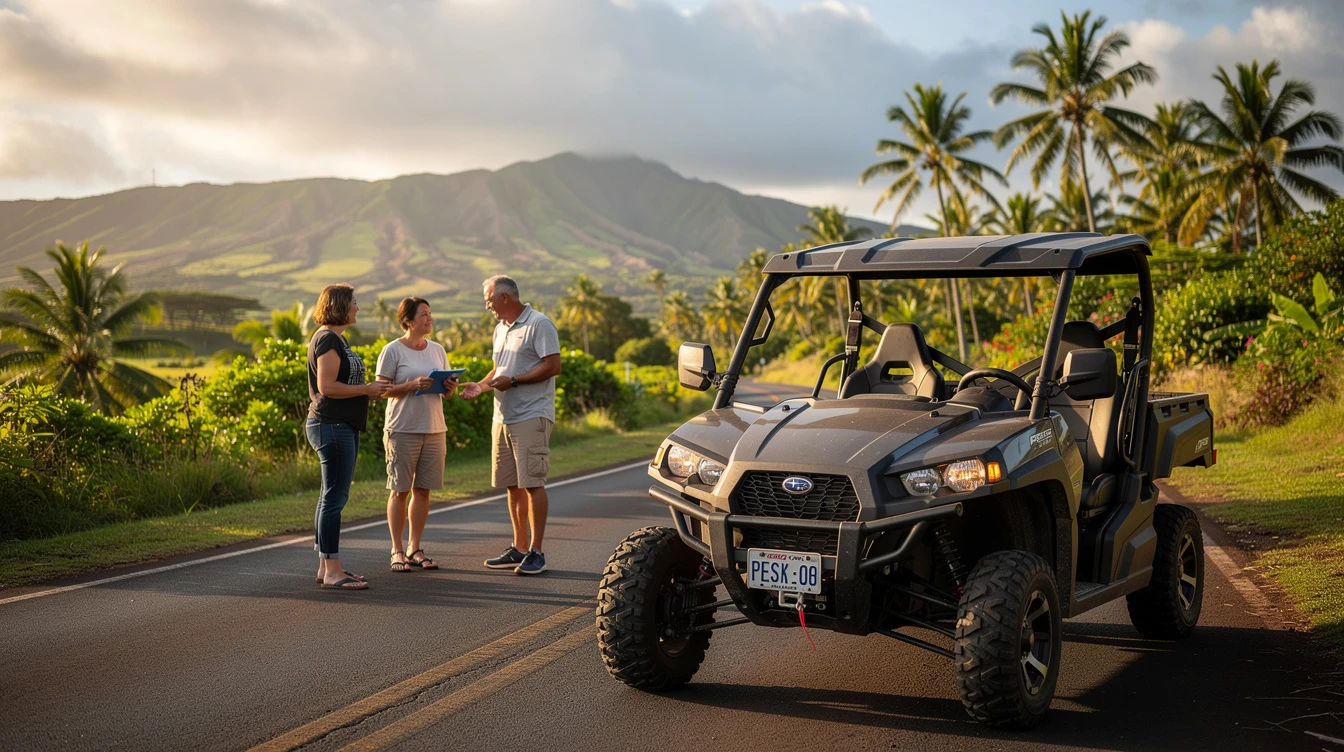
Hawaii's roads aren't just for standard vehicles anymore. UTVs are gaining traction with landowners, farmers, and outdoor enthusiasts who want their off-road machines street-legal. But Hawaii has specific rules about what you can and can't ride on public roads, and understanding those rules is critical before you drop money on modifications.
This guide breaks down Hawaii's street-legal UTV laws, registration requirements, and what it actually costs to get your UTV on the road legally.
Can You Register a UTV as Street-Legal in Hawaii?
Yes, but not every UTV qualifies. Hawaii doesn't automatically approve all off-road vehicles for street use. Your UTV needs to meet specific safety and equipment standards set by the state's Department of Transportation.
The key: Hawaii treats UTVs differently than motorcycles or standard cars. A stock UTV won't pass registration without modifications. You'll need safety equipment like mirrors, lights, horns, and seat belts. Some UTVs are easier to modify than others, and not all models meet Hawaii's strict standards.
The good news? Many newer UTVs come close to meeting requirements out of the box. Older or heavily modified vehicles may face steeper hurdles.
Hawaii UTV Street-Legal Requirements
Before you can register your UTV in Hawaii, it must have these components:
Ready to register your vehicle?
Join thousands of vehicle owners who use Street Legal Hookup to handle their registration quickly.
Get Started Today →- Functional headlights (low and high beam)
- Tail lights and brake lights
- Turn signals (all four corners)
- A working horn
- Mirrors (left and right side, at least 5" x 7")
- Seat belts for all occupants
- A windshield or protective glass
- Muffler system meeting noise standards
- VIN number that's clearly visible
- Grounding straps to prevent static discharge
Hawaii also requires all UTVs to pass an emissions test. If your UTV is fuel-injected and recent-model, this is usually straightforward. Carbureted or heavily modified engines may struggle.
You'll also need proof of ownership, a bill of sale, and an inspection certificate from an authorized Hawaii vehicle inspection station.
UTV Registration Costs in Hawaii
Don't expect registration to be cheap. Hawaii charges more than most states for vehicle registration, and UTV fees can vary based on dry weight and engine displacement.
Expect to pay:
- Initial registration: $50, $200+ depending on UTV weight and engine size
- Annual renewal: $30, $150+ (ongoing)
- Title transfer or new title: $50, $75
- Inspection fee: $25, $50
These costs add up quickly. Many UTV owners find that registering in a different state with lower fees makes financial sense, especially if you own the vehicle outright and don't have a Hawaii residence requirement.
Hawaii Registration vs. Out-of-State Options
Some UTV owners skip Hawaii registration entirely and use Montana or South Dakota registration instead. This is legal if you don't claim Hawaii residency and register the vehicle at an out-of-state address.
A Montana registration typically costs $100, $250 for initial setup, with annual renewals around $50, $100. You don't pay Hawaii sales tax, and Montana has fewer emissions requirements. Many landowners and part-time residents take this route.
Before choosing, ask yourself: Do you live in Hawaii full-time? Do you need the vehicle registered in-state? Will you use it primarily off-road or on public streets? Your answers determine which option makes sense.
How to Get Your UTV Street-Legal in Hawaii
Step 1: Modify Your UTV to Meet Requirements
Install all required lights, mirrors, seat belts, and safety equipment. This typically costs $800, $2,000 depending on your UTV's current condition. Some shops specialize in street-legal conversions. Get detailed quotes before committing.
Step 2: Pass an Official Inspection
Schedule an inspection at a Hawaii Department of Transportation approved inspection station. Bring your UTV, proof of ownership, and bill of sale. The inspector will verify that all equipment meets state standards and works correctly.
Step 3: Obtain Your Title
If your UTV doesn't have a title, you'll need to apply for one. This involves submitting ownership documentation and may require a bond if the title history is unclear. Processing typically takes 2, 4 weeks.
Step 4: Register with the Hawaii DMV
Visit your local DMV office or county vehicle registration office with your inspection certificate, title, proof of residency, and proof of insurance. Pay your registration fee and receive your registration card and plates.
Why Street-Legal UTV Conversion Takes Planning
Don't assume your UTV will pass Hawaii's inspection on the first try. Equipment failures, wiring issues, and missing safety features are common reasons for rejection. Budget extra time for repairs if you fail the first inspection.
Some manufacturers make UTV models that are easier to convert than others. Polaris Rangers and Can-Am side-by-sides tend to adjust better to street-legal requirements than smaller UTVs. Yamaha Rhino models vary widely depending on year and modification history.
The bottom line: Plan for 4, 8 weeks from start to finished registration if your UTV is already mostly compliant. If you're starting from a stock off-road machine, add another 2, 4 weeks for modifications.
When to Consider Out-of-State Registration
If you're not a Hawaii resident, don't need in-state plates, or simply want lower costs, registering your UTV in Montana or South Dakota makes sense. Many UTV owners save 50, 70% on annual registration fees this way.
This works best if you:
- Own land or have a property address outside Hawaii
- Don't plan to register the UTV in Hawaii's name
- Want to avoid Hawaii's strict emissions testing
- Use your UTV primarily for ranch or private property work
Out-of-state registration doesn't exempt you from Hawaii traffic laws. You still can't drive an unregistered vehicle on public roads, regardless of where you register it. But the registration itself will be handled in another state.
Common UTV Montana registration Mistakes in Hawaii
Avoid these pitfalls:
- Skipping the inspection: Some owners try to register without passing a formal inspection. Hawaii won't issue plates without an official inspection certificate. Don't skip this step.
- Wrong mirror size: Mirrors must be at least 5" x 7". Smaller aftermarket mirrors won't pass. Verify before you install them.
- Incomplete lighting: Hawaii requires full electrical compliance. One burned bulb or missing turn signal can cause failure. Test everything before inspection.
- No proof of ownership: Bring a clear bill of sale or title. If your ownership history is fuzzy, a bonded title takes longer but works.
- Assuming modifications carry over: If you've modified your UTV for off-road performance, some upgrades may not meet street-legal standards. Test your muffler system, seat belt strength, and lighting before inspection.
Why Choose Street Legal Hookup for Your Hawaii UTV
Street Legal Hookup specializes in off-road vehicles like UTVs that most registration services won't touch. We understand Hawaii's specific requirements because we've guided hundreds of UTV owners through the process.
We handle:
- Guidance on UTV modification requirements for Hawaii
- Title issues and bonded title applications
- Out-of-state registration alternatives (Montana, South Dakota)
- Registration renewals and plate replacement
- Fleet registration for multiple UTVs
Unlike generic DMV services, we speak the language of off-road vehicle owners. No jargon. No runaround. Just straight answers about what your UTV needs to get street-legal in Hawaii.
FAQs: Street-Legal UTV Registration in Hawaii
How long does it take to register a UTV in Hawaii?
If your UTV is already modified and passes inspection, count on 2, 3 weeks from inspection to finished registration. If you need modifications first, add 4, 6 weeks. Title processing can add another 2, 4 weeks if you don't have a clear title.
Can I register a UTV with a rebuilt or salvage title in Hawaii?
Yes, but it requires additional documentation. You'll need proof of repairs and a statement from an inspector confirming the vehicle is safe. A bonded title may also be necessary if the title history is unclear.
Do I need insurance to register my UTV in Hawaii?
Yes. Hawaii requires proof of insurance before registration. Most standard auto policies don't cover UTVs, so you'll need a powersports or off-road vehicle policy.
Can I use my UTV on private property without registration?
Yes. If you own land or have permission from the landowner, you can operate an unregistered UTV off-road. Once you drive on public roads, registration becomes required.
What if my UTV fails inspection?
The inspector will tell you exactly what failed and why. Make the necessary repairs and schedule a reinspection, typically within 2, 4 weeks. Most vehicles pass on the second attempt.
Ready to Get Your UTV Street-Legal in Hawaii?
Don't waste time guessing. Street Legal Hookup has helped UTV owners across Hawaii work through registration requirements and avoid costly mistakes. Whether you need guidance on modifications, title work, or exploring out-of-state registration options, we've got you covered.