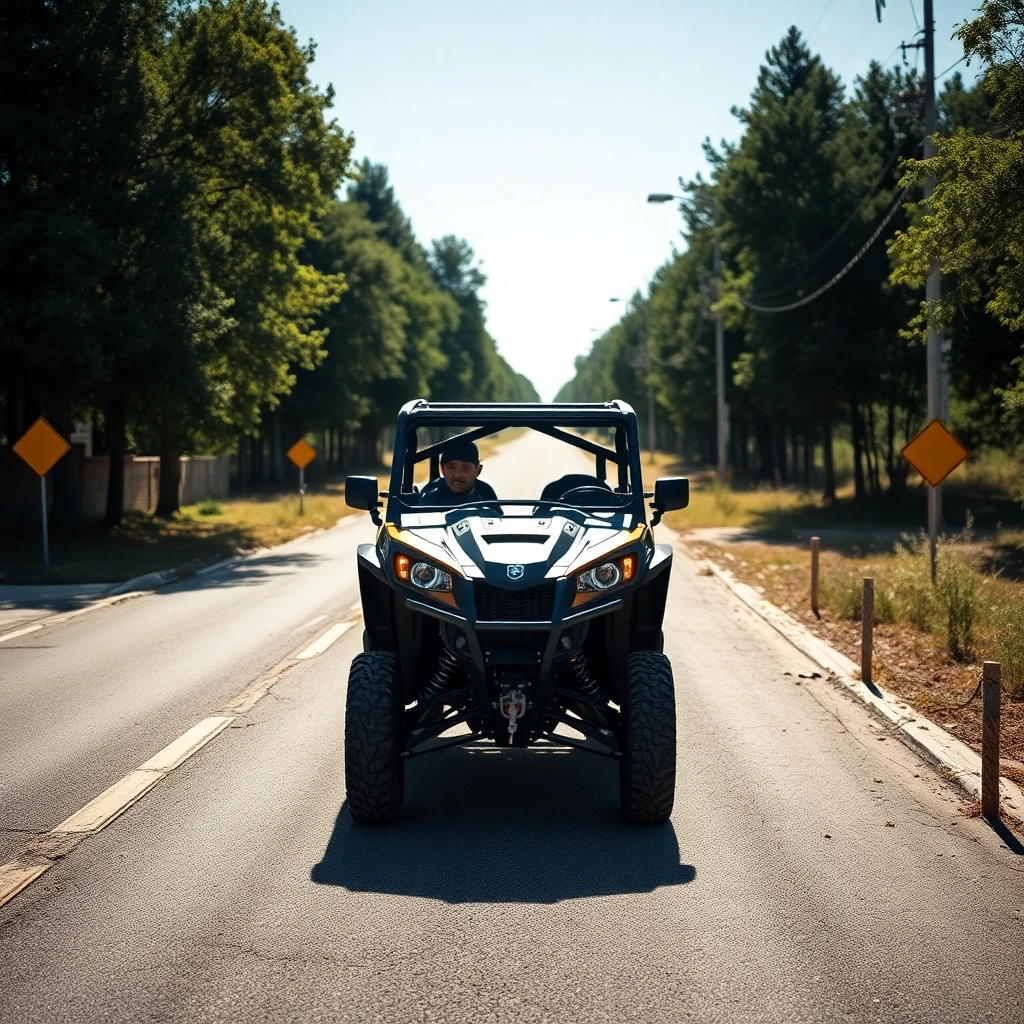
Street legal off road vehicle requirements trip up more riders and drivers than almost any other registration topic. The rules vary by state, vehicle type, and how the vehicle was originally titled. Get it wrong and you are riding or driving on borrowed time. Get it right and you can take your dirt bike, ATV, UTV, or dual-sport from the trail to the road without any drama.
This guide breaks down exactly what equipment is typically required, how titling works for off-road units, and what registration path makes the most sense depending on where you live and what you ride.
Whether you picked up a used KTM, a Can-Am, a Polaris RZR, or something more exotic, the process follows a recognizable pattern once you know what to look for.
What Street Legal Off Road Vehicle Requirements Actually Cover
The phrase covers a wide range of rules depending on who is asking. At the federal level, the National Highway Traffic Safety Administration sets baseline vehicle safety standards. At the state level, departments of motor vehicles and transportation agencies add their own equipment and registration requirements on top of that. You can check the NHTSA VIN Lookup to confirm whether your vehicle has any outstanding safety recalls before starting the conversion process.
Most states break off-road vehicles into categories such as OHV (off-highway vehicle), ATV, UTV or SxS, and dirt bike or dual-sport motorcycle. Each category may have different equipment lists and different registration pathways to reach street-legal status.
Why the Original Title Classification Matters
If your vehicle was originally titled as an off-road-only unit, most states require a formal inspection or equipment certification before they will issue a street-legal title or registration. A vehicle that came from the factory with a dual-sport certification is in a very different position than a pure trail machine that was never intended for road use.
If your vehicle has a salvage or rebuilt title in addition to off-road status, the process gets more involved. Street Legal Hookup handles both situations. See how we work through salvage ATV title and registration in Montana for a detailed look at that path: Salvage ATV Title Registration Montana.
Federal vs. State Requirements
Federal standards set the floor for things like lighting, brakes, and emission controls on vehicles sold for street use. State requirements build on that floor. Some states are permissive and allow ATVs and UTVs on public roads with relatively modest equipment additions. Others are restrictive and make conversion difficult or prohibit it outright for certain vehicle types. Always check your state DMV rules in addition to the general requirements listed here.
Core Equipment Required for Street Legal Off Road Vehicles
Regardless of state, the street legal off road vehicle requirements for equipment follow a consistent pattern. Missing any one of these is enough to fail an inspection or get turned away at the DMV window.
Ready to register your vehicle?
Join thousands of vehicle owners who use Street Legal Hookup to handle their registration quickly.
Get started today. →Lighting and Visibility
Lighting is the most common area where off-road vehicles fall short. A street-legal conversion typically requires all of the following:
- Headlight (low and high beam) with DOT-compliant output
- Taillight and brake light
- Turn signals, front and rear, left and right
- Reflectors, front and rear
- Horn audible at a minimum distance (typically 200 feet)
Many dirt bikes and ATVs come with a headlight from the factory, but that headlight may not meet DOT standards. A dedicated DOT-compliant lighting kit is usually the first purchase in any conversion.
Tires, Brakes, and Mirrors
Off-road tires with aggressive knobby tread may not meet state requirements for street use. Most states require DOT-rated tires. The tire sidewall will carry a DOT designation if it is eligible. Beyond tires:
- Brakes must meet street-use standards, typically requiring a front brake on motorcycles and a foot-operated or hand-operated brake on ATVs and UTVs
- At least one mirror is required in most states, with many requiring two rearview mirrors
- A windscreen or windshield is required on UTVs in several states
Safety and Emissions Equipment
Depending on the state and model year, you may also need:
- Spark arrestor for exhaust
- EPA-compliant exhaust system (especially on newer models)
- Seat belts in enclosed UTVs and SxS vehicles
- Rollover protection on UTVs
Montana does not require emissions testing for registered vehicles, which is one reason Montana registration is popular for off-road conversions. The Montana Vehicle Title and Registration page has the official fee schedule and procedural details straight from the state.
Registration and Title Pathways for Street Legal Off Road Vehicles
Getting the equipment right is only half the battle. You also need a title and registration that reflects street-legal status. This is where most people hit a wall, especially if the vehicle came with an off-road-only title, a bill of sale only, or a salvage designation.
Converting an Off-Road Title to Street Legal
The conversion process typically involves:
- Installing all required street-legal equipment
- Scheduling a state inspection or equipment verification
- Submitting the inspection certificate along with your title, application, and fees to the DMV
- Receiving an updated title that reflects street-legal status
In states that allow it, the title will change from an OHV or off-road designation to a standard motorcycle, ATV, or motor vehicle title. A detailed look at how this works is available in the guide Off Road Title to Street Legal: The Complete Guide, which walks through the full titling process step by step.
Montana LLC Registration as an Alternative Path
Some owners use Montana LLC registration to title and plate an off-road vehicle without going through their home state's conversion process. Montana has no sales tax, no emissions testing, and a well-established process for titling vehicles through a Montana LLC. This approach works for dirt bikes, ATVs, UTVs, and dual-sports.
Street Legal Hookup is backed by a state-licensed Montana processor, which means you get direct access to the same pipeline used by professional fleet and specialty vehicle registrants, not a middleman running your paperwork through someone else. For more on how this works with project vehicles, see Project Car Registration Montana.
South Dakota as Another Option
South Dakota is another friendly state for vehicle registration. Low fees, straightforward titling, and a process that works well for out-of-state owners who establish residency. The South Dakota Division of Motor Vehicles handles vehicle titles and registrations with a reputation for efficiency.
| Vehicle Type | Typical Equipment Required | Common Title Path | Montana Registration Eligible |
|---|---|---|---|
| Dirt Bike | DOT headlight, tail/brake light, turn signals, mirror, horn, DOT tires | OHV-to-motorcycle conversion or Montana LLC | Yes |
| ATV | Headlight, tail/brake light, turn signals, mirrors, horn, DOT tires | State inspection + title amendment or Montana LLC | Yes |
| UTV / SxS | Full lighting, mirrors, DOT tires, seat belts, rollover bar, windshield (state-dependent) | State inspection or Montana LLC | Yes |
| Dual-Sport Motorcycle | Factory or aftermarket DOT kit, mirrors, horn | Standard motorcycle registration in most states | Yes |
| Trail Buggy / Sand Rail | Full lighting, brakes, mirrors, safety use, DOT tires | Custom/special construction title or Montana LLC | Yes |
State-by-State Variation and What It Means for You
No two states handle street legal off road vehicle requirements identically. Some, like Arizona, Colorado, and Montana, have relatively open policies toward road-registered ATVs and UTVs. Others, like California and New York, impose strict requirements that make full conversion difficult or impractical for most consumers.
States With More Open Policies
In permissive states, the process is typically a self-certification or a simple equipment inspection, followed by a standard title amendment. Fees are modest and the turnaround is faster. Montana is a standout because it combines a permissive registration environment with no sales tax and no emissions testing. For anyone registering an off-road vehicle they plan to ride on public roads, that combination is hard to beat.
States With Stricter Requirements
Restrictive states may require the vehicle to meet full Federal Motor Vehicle Safety Standards (FMVSS), which is a very high bar for factory off-road units. In these states, many riders choose to register through Montana or South Dakota rather than attempt a conversion that may not be technically achievable for their specific machine. That is a well-established and state-legal approach when done correctly through a licensed processor.
Motorcycles vs. ATVs vs. UTVs: Different Rules Apply
Even within a single state, the rules differ by vehicle type. A dual-sport motorcycle that came from the dealer with a standard title has a much easier path than a side-by-side with a manufacturer-issued OHV title. UTVs face the most complex requirements in most states due to their enclosed cab, speed capability, and occupant capacity. Always research the specific rules for your exact vehicle classification before investing in equipment or paperwork.
If you are working through a motorcycle conversion specifically, the Salvage Motorcycle Title Montana resource covers how to handle title issues for bikes that have additional complications beyond simple off-road status.
Frequently Asked Questions About Street Legal Off Road Vehicle Requirements
What equipment do I need to make my dirt bike street legal?
In most states, a dirt bike needs a DOT-approved headlight with high and low beam, a taillight, brake light, turn signals front and rear, at least one mirror, a horn, and DOT-rated tires. Some states also require a license plate light and a working odometer. The exact list varies by state, so check your DMV's published requirements for motorcycle or OHV conversion before buying parts.
Can you make any ATV street legal?
In most states, yes, with the right equipment and a title conversion. The more important question is whether the process makes sense for your specific ATV. Some machines are built to accept DOT lighting kits easily. Others require significant fabrication work. In states where conversion is difficult, registering through a Montana LLC is a practical alternative that many ATV owners use successfully.
Is a UTV street legal by default in any states?
A small number of states allow UTVs on certain public roads, typically rural or low-speed roads, under specific county or municipal rules. In most states, a factory-titled UTV is not automatically street legal. It requires equipment additions and a title conversion. Side-by-sides are increasingly popular, and state legislatures have been updating rules in recent years, so check current state law rather than relying on older guidance.
What is a Montana LLC registration and how does it work for off-road vehicles?
A Montana LLC registration involves forming a limited liability company in Montana, titling the vehicle under that LLC, and registering it in Montana. Montana has no sales tax on vehicles, no emissions testing, and no inspections required for registration. The LLC owns the vehicle, and the registered owner is the LLC. This is a well-established and widely used approach for off-road vehicles, exotics, RVs, and other specialty vehicles. Street Legal Hookup is backed by a state-licensed Montana processor and handles the full process.
Do I need insurance to make my off-road vehicle street legal?
Yes, in virtually every state. Once your vehicle carries street-Montana registration, you need liability insurance that meets your state's minimum coverage requirements. The specific minimums vary, but most states require bodily injury and property damage liability at a minimum. Proof of insurance is typically required at the time of registration and during any roadside encounter with law enforcement.
How long does the street legal conversion process take?
Timeline depends heavily on the state and the complexity of the vehicle's title situation. In straightforward cases with a clean title and all equipment already installed, some states process the conversion in a few weeks. If there are title issues, salvage designations, or missing documentation, expect a longer timeline. Working through a licensed processor like Street Legal Hookup typically speeds up the paperwork side significantly. Montana LLC registrations, when submitted with complete documentation, often process faster than in-state DMV conversions in restrictive states.
Can I register a salvage-titled off-road vehicle as street legal?
Yes, in many cases, though it requires additional steps. A salvage title conversion typically requires a rebuilt title inspection before any street-Montana registration can be issued. The specific process depends on the state where you are registering. Montana and South Dakota both have workable paths for salvage vehicles. Street Legal Hookup has direct experience with these harder cases. More detail is available in Salvage ATV Title Registration Montana.
Get Your Off Road Vehicle Street Legal the Right Way
Meeting street legal off road vehicle requirements is a real process with real steps. Equipment, titling, insurance, and registration all have to align before you can legally ride or drive on public roads. Shortcuts create liability. Doing it right creates freedom.
Street Legal Hookup works with riders and drivers across every vehicle type, from dirt bikes and ATVs to UTVs, exotics, imports, RVs, and everything in between. Our team is backed by a state-licensed Montana processor, which means your registration goes through a direct, experienced pipeline, not a web form that ends up in the same DMV pile as everyone else.
Verified customer reviews are growing, and the reason is simple: we handle the cases most services skip. Hard titles, salvage designations, out-of-state complications, and off-road-to-street conversions are where we do our best work. If you are ready to get your off-road vehicle properly titled, plated, and on the road, the process starts here.