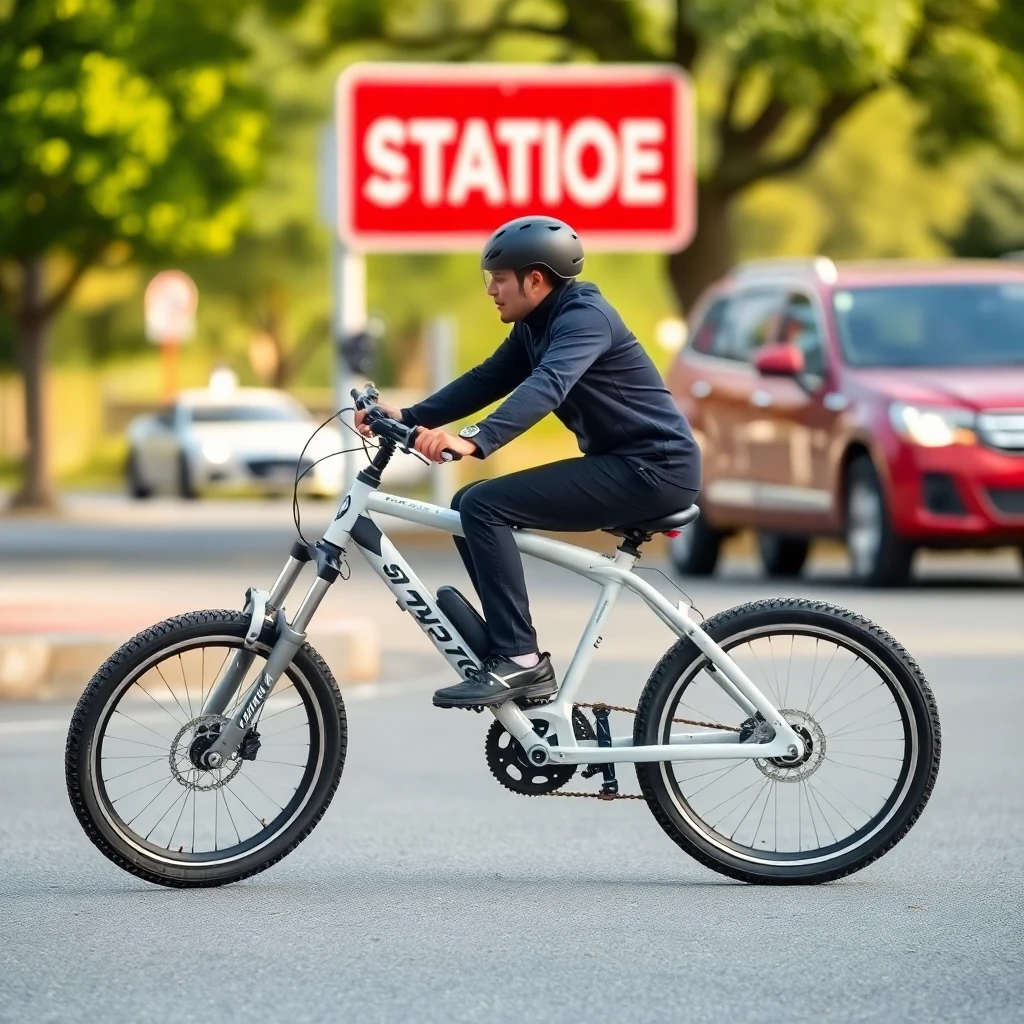
Street legal electric bike laws by state are all over the map, and that confusion costs riders. One state treats your e-bike like a bicycle. The next treats it like a motor vehicle. Get it wrong and you are riding unregistered, uninsured, or both.
This guide breaks down the three-class federal framework, how individual states apply it, what equipment your e-bike actually needs to be street-legal, and where registration gets required. Whether you are on a Class 1 pedal-assist commuter or a high-speed Class 3 performance build, knowing the rules before you ride is non-negotiable.
Street Legal Hookup handles vehicle registration and titling across the full powersports spectrum, backed by a state-licensed Montana processor. If your e-bike crosses into motor vehicle territory, we can help you sort it out fast.
How the Federal E-Bike Classification System Shapes Street Legal Electric Bike Laws
The federal three-class system, pushed forward by the bicycle industry and adopted by most states, gives riders and lawmakers a shared framework. But federal guidance does not override state law. Each state chooses whether to adopt the classes, modify them, or ignore them entirely.
What Are the Three E-Bike Classes?
- Class 1: Pedal-assist only, no throttle, motor cuts out at 20 mph. Treated like a traditional bicycle in nearly every state that uses this system.
- Class 2: Throttle-assisted up to 20 mph. Motor can engage without pedaling. Slightly more restricted than Class 1 in some states.
- Class 3: Pedal-assist up to 28 mph, no throttle (in most state definitions). Typically requires a helmet, may be restricted from certain paths, and in some states triggers registration or licensing requirements.
Do All States Use This Three-Class System?
More than 40 states have adopted some version of the three-class framework. States including California, Colorado, Florida, and Texas have formal statutes referencing Classes 1, 2, and 3. A handful of states, including Alaska and a few southeastern states, still regulate e-bikes under broader motor vehicle or moped statutes without specific class definitions.
If your state has not adopted the class system, your e-bike may default to moped or motorcycle status under older statutes, which can mean registration, plates, and a valid driver's license are required. Always check your state's current motor vehicle code, not just what the bike manufacturer says.
Speed and Power Thresholds That Matter
Most states cap street-legal e-bikes at 750 watts of motor power and 28 mph under power. Any bike exceeding those thresholds typically falls into moped, motorcycle, or even electric motorcycle classification. At that point, you are dealing with street legal off road vehicle requirements territory in some states, or full motor vehicle registration requirements in others.
State-by-State Overview: Key Street Legal Electric Bike Rules
No two states are identical, but patterns exist. Below is a breakdown of how major states treat e-bike riders on public roads and paths.
Ready to register your vehicle?
Join thousands of vehicle owners who use Street Legal Hookup to handle their registration quickly.
Get started today. →States With the Most Permissive E-Bike Laws
California, Colorado, and Washington are among the friendliest states for street-legal electric bike riders. California law (Vehicle Code 312.5) treats Class 1 and 2 e-bikes identically to traditional bicycles on public roads and multi-use paths. No registration, no license, no insurance required. Class 3 requires the rider to be 16 or older and wear a helmet.
Colorado mirrors this approach closely, with Class 1 and 2 bikes allowed anywhere a standard bicycle is permitted. Colorado Class 3 bikes require helmets for riders under 18 and are restricted from certain unpaved trails.
States Where Registration or Licensing May Be Required
States including Alabama, Alaska, and New Mexico may classify some or all e-bikes as mopeds or motorized bicycles under older statutes. In those cases, riders may need:
- A valid driver's license or moped endorsement
- Vehicle registration and a license plate
- Proof of insurance
- Annual registration renewal
Some states have updated their laws partially, creating a hybrid situation where lower-speed e-bikes are exempt but higher-speed Class 3 models still fall under motor vehicle rules. If you are unsure, contacting your state's DMV directly is the fastest path to a clear answer.
States With Helmet and Age Restrictions
Even in states that treat e-bikes like bicycles for registration purposes, helmet and age laws often apply specifically to electric riders. Common rules include:
- Mandatory helmets for all Class 3 riders (California, Colorado, Washington)
- Minimum age of 16 for Class 3 operation (California, New York)
- Mandatory helmets for all riders under 18, regardless of class (most states)
E-Bike Laws Comparison Table by State
| State | Class System Adopted | Registration Required | Helmet Required (Adults) | Max Speed (Under Power) | License Required |
|---|---|---|---|---|---|
| California | Yes (Classes 1-3) | No | Class 3 only | 28 mph (Class 3) | No |
| Colorado | Yes (Classes 1-3) | No | Under 18 only | 28 mph (Class 3) | No |
| Texas | Yes (Classes 1-3) | No | Under 18 only | 28 mph (Class 3) | No |
| Florida | Yes (Classes 1-3) | No | Under 16 only | 28 mph (Class 3) | No |
| New York | Yes (Classes 1-3) | No | Under 18 (Class 3: all) | 25 mph (Class 3) | No (16+ for Class 3) |
| Washington | Yes (Classes 1-3) | No | Yes (all classes) | 28 mph (Class 3) | No |
| Alabama | Partial / Moped rules | Possibly (moped class) | Yes | 20 mph | Moped license |
| Alaska | No | Possibly | Under 16 | Varies | Varies |
| Montana | Partial | No (under 20 mph) | No mandate (adults) | 20 mph | No |
| South Dakota | Partial | No | Under 18 | 20 mph | No |
Note: Laws change frequently. Verify current rules with your state's DMV or motor vehicle division before riding.
Equipment Requirements to Keep Your Electric Bike Street Legal
Even in states where e-bikes are treated like bicycles, riding on public roads brings equipment requirements. These are not optional. Riding at night without lights or missing required reflectors can result in citations, regardless of class.
Standard Equipment Most States Require
- Front white light: Visible from at least 500 feet at night
- Rear red reflector or light: Visible from 600 feet
- Side reflectors on pedals or wheels (varies by state)
- Bell or audible device in some states (New York, Washington)
- Functioning brakes on both wheels
For riders who have already done the work of converting a vehicle for road use, the equipment checklist will feel familiar. If you have worked through street legal dirt bike headlight horn mirror requirements, the e-bike list is shorter and simpler.
When Your E-Bike Needs Insurance
Pure bicycle-class e-bikes (Class 1 and 2 in states with the three-class system) typically do not require insurance. But if your state classifies your bike as a moped or motor vehicle, liability insurance becomes mandatory. Even where not required by law, personal liability coverage through a homeowner's or renter's policy may cover e-bike use. Check your policy carefully before assuming you are covered.
If you are riding a high-performance e-bike that exceeds state speed or power thresholds, you are crossing into street legal dirt bike insurance requirements territory. The same coverage logic applies.
Where You Can Ride: Road Access Rules by Class
- Class 1: Almost universally allowed on roads, bike lanes, and multi-use paths where bicycles are permitted
- Class 2: Same as Class 1 in most states, with some trail restrictions
- Class 3: Typically restricted from unpaved paths and certain bicycle-only lanes. Road and bike lane access is usually maintained
- Above Class 3 (750W+, 28+ mph): Typically requires full motor vehicle registration and is restricted from all bike lanes and paths
Montana and South Dakota: What Electric Bike Riders Should Know
Montana and South Dakota are two of the most registration-friendly states in the country for powersports and specialty vehicles. For e-bikes, both states keep the rules practical and low-friction.
Montana E-Bike Registration Rules
Montana defines motorized bicycles as those with motors under 50cc equivalent (or electric motors below certain wattage thresholds) and a maximum speed under 30 mph on flat ground. Bikes meeting that definition do not require standard motor vehicle registration. Higher-speed or higher-power e-bikes may fall under motorcycle or moped classifications, which do require registration through the Montana Motor Vehicle Division.
For e-bikes that need registration, Montana's low fees and lack of sales tax make it an attractive option. Montana's zero-tax registration framework, often discussed in the context of zero-tax registration services and montana tags, can apply to electric motorcycles and higher-class e-bikes registered through an LLC structure.
South Dakota E-Bike Registration Rules
South Dakota treats e-bikes similarly. Standard pedal-assist e-bikes under 20 mph are typically exempt from motor vehicle registration. The South Dakota Division of Motor Vehicles has jurisdiction over any e-bike classified as a moped or motorcycle under state law. South Dakota's straightforward registration process and low annual fees make it a practical option for riders whose bikes fall into gray-area classifications.
When Your Electric Bike Crosses Into Motor Vehicle Territory
Some e-bikes are genuinely in a gray zone. High-powered commuter bikes, electric cargo bikes, and performance builds regularly exceed state thresholds. When that happens, registration, titling, and insurance all become part of the picture.
Signs Your E-Bike May Need Motor Vehicle Registration
- Motor output exceeds 750 watts (1 HP)
- Top speed exceeds 28 mph under power alone
- The bike has no functional pedals (throttle-only operation)
- Your state classifies it as a moped or motorized bicycle under existing statutes
- You were told by a dealer or previous owner it requires a title
If your e-bike came with a title or Manufacturer's Certificate of Origin (MCO), that is a strong signal the manufacturer classified it as a motor vehicle. Registering it as a bicycle in that case creates real liability exposure.
How Street Legal Hookup Can Help
When an e-bike crosses into motor vehicle territory, most DMV offices are not prepared to help. Street Legal Hookup has handled the hard cases: out-of-state titles, bonded titles, and vehicles that do not fit neatly into any DMV checkbox. Our state-licensed Montana processor works through the paperwork so you do not have to guess your way through it.
Riders working through registration on other non-standard builds will find the same expertise applies. Check out our breakdown of powersports vehicle registration out of state for a broader look at how we handle non-standard registrations.
Frequently Asked Questions: Street Legal Electric Bike Laws by State
Do I need to register an electric bike in most states?
In most states, no. Class 1 and Class 2 e-bikes under 750 watts and 20 mph are treated like standard bicycles and do not require registration, a license plate, or a driver's license. Class 3 bikes (up to 28 mph) follow the same rule in most states, but some states impose additional requirements. Any e-bike exceeding the 750-watt or 28 mph threshold typically requires motor vehicle registration. Always check with your state's DMV for current rules before riding.
Can I ride an electric bike on the road in every state?
Road access varies. In states that have adopted the three-class system, Class 1 and 2 e-bikes are allowed anywhere a standard bicycle is permitted, including bike lanes and most multi-use paths. Class 3 bikes may be restricted from certain paths but can typically use public roads. In states without the class system, rules vary significantly. Some older statutes restrict motorized bikes from bicycle infrastructure entirely, requiring road-only operation with full motor vehicle equipment.
Do I need a driver's license to ride an electric bike?
In most states that use the three-class framework, no driver's license is required for Class 1 or 2 e-bikes. Class 3 bikes may require the rider to be a minimum age (typically 16), but a license is usually not required. In states that classify e-bikes as mopeds, a moped license or standard driver's license is typically required. If you are riding a high-powered build that exceeds state thresholds, assume a license and registration are required until you confirm otherwise.
Are there age restrictions for riding an electric bike?
Yes, in many states. Class 3 e-bikes in California and New York require riders to be at least 16 years old. Most states require riders under 18 to wear a helmet regardless of class. Some states set a minimum age of 14 or 16 for any e-bike operation on public roads. Check your state's specific statute, especially if a minor will be riding. Violations can result in fines for both the rider and the parent or guardian who permitted the ride.
What happens if my electric bike exceeds the legal power or speed limits?
If your e-bike's motor exceeds 750 watts or it can exceed 28 mph under power, it typically no longer is eligible as a bicycle under state law. It may be classified as a moped, motorcycle, or electric motorcycle, depending on your state. That classification brings registration, titling, insurance, and potentially a license requirement into play. Riding a non-compliant bike as if it were a bicycle creates serious liability if you are in an accident or stopped by law enforcement.
Can I get a Montana registration for my electric bike?
If your e-bike meets Montana's definition of a motor vehicle (typically meaning it requires a title or exceeds the motorized bicycle threshold), yes, Montana registration is an option. Montana's no-sales-tax framework, often discussed in the context of montana tags and zero-tax registration services, applies to titled motor vehicles, including electric motorcycles and higher-class e-bikes. A licensed Montana processor can determine whether your specific build is eligible and handle the paperwork from any state. Contact Street Legal Hookup to find out where your bike stands.
Is insurance required for electric bikes?
In states that treat Class 1 and 2 e-bikes as bicycles, insurance is not legally required. However, if your state classifies your bike as a moped or motor vehicle, liability insurance is mandatory in the same way it is for any registered vehicle. Even where not required, e-bike-specific insurance is available and worth considering, especially for higher-value builds. Theft, liability, and damage coverage are all available through specialty insurers. If your bike requires registration, assume insurance is also required.
Get Your Electric Bike Sorted, Ride Street Legal
Street legal electric bike laws by state are moving targets. New legislation, updated class definitions, and shifting local ordinances mean what was fine last year may not be fine today. The cost of getting it wrong, citations, impounded bikes, or liability exposure after an accident, is not worth the risk.
Street Legal Hookup is built for riders who want answers fast and paperwork done right. We are backed by a state-licensed Montana processor with verified customer reviews growing every day. Whether your e-bike needs full motor vehicle registration, a Montana title, or you just need to confirm where it stands under your state's rules, we handle it directly.
If you are working through registration on other powersports builds alongside your e-bike, our street legal atv states guide covers the full picture for off-road vehicles on public roads. For riders dealing with title gaps on two-wheeled builds, see our breakdown of street legal motorcycle without title options.
Get started today and ride with confidence.