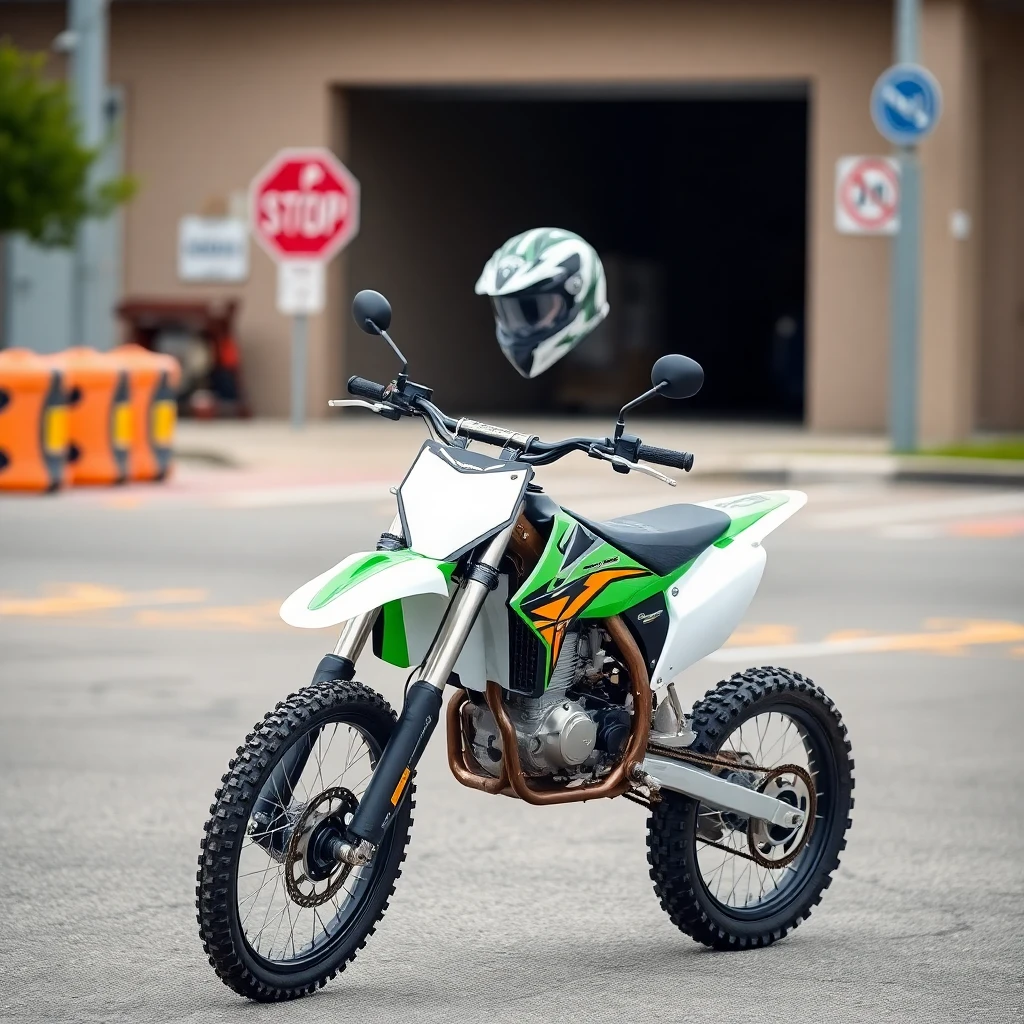
A street legal dirt bike kit is the fastest way to take a machine built for trails and make it road-ready. If you have a dirt bike collecting dust between trail days, converting it for street use opens up a lot more freedom. Ride to the trailhead, hit the road between sections, or just use it as daily transportation in states where the conversion is permitted.
This guide covers what a street legal dirt bike kit actually includes, which components are required by most states, how the registration process works after conversion, and where Montana-based registration fits into the picture. Whether you ride a KTM, Kawasaki, Honda, Yamaha, or any other off-road platform, the process follows similar rules nationwide.
Read through before buying parts or filing any paperwork. Getting the kit right the first time saves you from repeated inspections and registration headaches.
What a Street Legal Dirt Bike Kit Actually Includes
Most kits marketed as street legal dirt bike kits bundle the core lighting and signaling components into one box. The exact contents vary by seller and bike platform, but the standard kit typically covers the most common state requirements.
Core Components Found in Most Kits
- Headlight with high and low beam (DOT-approved)
- Tail light and brake light combined unit
- Turn signals, front and rear (amber or red depending on state)
- Horn, at least 90 decibels
- Mirrors, typically one or two depending on state law
- Speedometer with odometer in some kits
- Wiring use to tie everything into the bike's electrical system
Some kits also include a license plate bracket and a small battery or power relay to run the lighting system. Higher-end kits include a DOT-stamped headlight lens and a brake light switch wired to both the hand lever and foot pedal.
What the Kit Does Not Cover
A street legal dirt bike kit handles the electrical and signaling side. It does not address tires, brakes, or exhaust noise limits. Many off-road bikes run knobby tires that are not DOT-rated, and some states require DOT-stamped tires for street registration. An aftermarket exhaust may also exceed state or federal noise limits, which can be a problem at inspection time.
Before purchasing a kit, check whether your bike already has a working charging system. Many off-road-only dirt bikes run a total-loss electrical setup with no alternator. If your bike cannot generate enough power to run lights continuously, you will need an additional power source or a full stator replacement before the kit does anything useful.
State Requirements for Street Legal Conversion
Each state sets its own rules for what a motorcycle needs to Eligible for street registration. Most states follow a similar pattern, but the details vary enough that you need to check your specific state before ordering parts. For a deeper breakdown of how individual states handle dirt bike conversion rules, the post How to Make Your Dirt Bike Street Legal in 2026 covers the state-by-state picture in detail.
Ready to register your vehicle?
Join thousands of vehicle owners who use Street Legal Hookup to handle their registration quickly.
Get started today. →Common Requirements Across Most States
- DOT-approved headlight with high/low beam
- DOT-approved tail light and brake light
- Working turn signals (some states waive this for older bikes)
- Rearview mirror on at least the left side
- Horn audible at 200 feet
- DOT-rated tires
- Working speedometer
- EPA-compliant or state-emissions-compliant exhaust (varies)
States With More Lenient Conversion Rules
Some states have specific off-highway vehicle to street registration pathways that make the process much more accessible. Arizona, Colorado, Idaho, and Utah have historically allowed OHV-to-street conversions with relatively straightforward inspection processes. Other states like California impose strict emissions standards that can make a full conversion difficult or cost-prohibitive without an OEM-certified engine.
If your home state has a restrictive conversion process, Montana-based registration through an LLC is a commonly used alternative. Montana has no emissions testing requirement, which removes one of the biggest barriers for older or modified dirt bikes.
What Happens at a State Inspection
In states that require a physical inspection before issuing a motorcycle title or endorsement, an officer or licensed inspector will check that all required equipment is present and functional. They will look at lighting, mirrors, tires, brakes, and VIN documentation. Bring your kit installation receipts and any supporting documentation from the kit manufacturer to show the components are DOT-rated.
How to Register a Converted Dirt Bike
Installing the kit is step one. Getting the title and registration in hand is step two. The registration process depends on whether your bike already has a title and whether your state recognizes OHV-to-street conversions.
If Your Bike Has an Off-Road Title
Many factory dirt bikes are sold with a manufacturer certificate of origin that designates them as off-highway vehicles. This means the bike was never titled as a street motorcycle. Converting that to a street-use title requires either a state conversion process or an alternative registration pathway.
If the bike came with no title at all, or if the title was lost, you will need to work through a bonded title or alternative documentation process before registration is possible. The salvage motorcycle title montana page covers situations where standard title documentation is missing or complicated.
Montana LLC Registration as an Alternative
Montana is one of the most used states for vehicle registration outside your home state, specifically because it has no sales tax, no emissions testing, and a straightforward LLC-based registration process. Riders who cannot convert their bike through their home state, or who want to avoid paying sales tax on a high-value purchase, commonly use a Montana LLC to register the vehicle.
The Montana LLC owns the vehicle, not you personally. The LLC is formed in Montana, the bike is titled and registered there, and Montana plates are issued. This is a well-established process backed by Montana state law. Street Legal Hookup works directly with a state-licensed Montana processor, which means you get processor-direct reliability rather than going through a reseller layer.
For more on the registration fee structure, the Montana vehicle registration fees and costs page breaks down what to expect across different vehicle types.
South Dakota as a Second Option
South Dakota offers another strong alternative for riders looking for low-cost, low-hassle registration. SD requires physical presence to establish residency, but the registration fees are low and the process is direct. For riders who travel or live part-time in multiple states, South Dakota residency-based registration is worth knowing about.
Street Legal Dirt Bike Kit: Comparison by Component Type
The table below compares what different kit tiers typically include, so you can match your budget and your state requirements before buying.
| Kit Tier | Typical Price Range | Includes | Best For |
|---|---|---|---|
| Basic Kit | $60 to $120 | Headlight, tail light, horn, mirrors, turn signals, wiring use | States with minimal inspection requirements |
| Mid-Range Kit | $120 to $250 | All basic items plus DOT-rated lens, speedometer, brake light switch | Most standard conversion states |
| Full Conversion Kit | $250 to $500+ | All mid-range items plus stator upgrade, battery, license plate light, dual mirrors | Strict inspection states and dual-sport builds |
| Custom Build | Varies | Hand-selected components, custom wiring, performance headlight | Riders who want specific parts rather than a bundled kit |
Common Mistakes When Installing a Street Legal Kit
Getting the parts is the easy part. Installation errors and missing documentation are what usually delay registration or cause inspection failures. Here are the most common problems riders run into.
Using Non-DOT Lighting Components
Some budget kits include lighting units that do not carry a DOT marking. This matters at inspection time. If the inspector checks the headlight lens and there is no DOT stamp, the bike fails regardless of whether the light actually works. Always verify that the headlight and tail light in your kit carry the DOT marking before installing anything.
Skipping the Electrical Load Calculation
Adding lights, a horn, and signals pulls current from a system that may not have been designed to supply it. Overloading a stock charging system causes flickering lights, a dead battery, and potential damage to the stator. Before wiring anything, check your bike's charging output against the total wattage of the kit components.
Not Documenting the Conversion
When you apply for a street motorcycle title on a bike that came with an OHV or no title designation, documentation matters. Keep your kit purchase receipts, take photos of installed components, and note the DOT part numbers. Some states require a self-certification letter or a notarized statement from the owner confirming the conversion meets state standards.
If you run into title complications during the process, the title transfer DMV FAQ covers common questions about title documentation and what to do when paperwork does not line up cleanly.
Riders who want to build out their knowledge on riding safely after conversion can find practical guidance at Motorcycle Safety: Essential Tips for Every Rider, which covers the skill side of transitioning from off-road to street riding.
Frequently Asked Questions About Street Legal Dirt Bike Kits
What is included in a street legal dirt bike kit?
A standard street legal dirt bike kit includes a DOT-rated headlight with high and low beam, a tail and brake light, front and rear turn signals, a horn, rearview mirrors, and a wiring use. Higher-tier kits add a speedometer, license plate bracket, brake light switch, and sometimes a stator or battery upgrade. Not all kits include DOT-stamped components, so verify before purchasing if your state requires DOT-certified lighting.
Can any dirt bike be converted to street legal?
Most four-stroke dirt bikes can be converted if the engine is EPA-compliant and the bike has enough electrical capacity to run street lighting. Two-stroke dirt bikes face more significant hurdles in most states due to emissions standards. In states with strict emissions rules, a two-stroke conversion may not be possible through a standard title process, though Montana-based registration through an LLC removes the emissions testing requirement.
How much does a street legal dirt bike conversion cost?
A basic kit runs $60 to $120. A mid-range kit with DOT-rated components and a speedometer typically costs $120 to $250. Full conversion kits with a stator upgrade and all required hardware can run $250 to $500 or more. Add in registration fees, and a complete street-ready build with proper paperwork typically costs between $400 and $1,000 depending on the bike, state, and registration method used.
Do I need to pass an inspection after installing a street legal kit?
In most states, yes. States that allow OHV-to-street conversion typically require a physical vehicle inspection to confirm all required equipment is installed and functional. The inspector will check lighting, mirrors, tires, brakes, and VIN. Some states also require a written self-certification. Montana does not require an emissions inspection, which is one reason Montana registration is commonly used for converted bikes.
Does Montana registration work for a converted dirt bike?
Yes, in most cases. Montana allows vehicles to be registered through an LLC without a physical inspection or emissions test. The bike needs a valid VIN and supporting title documentation. A Montana-registered converted dirt bike carries Montana plates and is titled in the name of the LLC. This is a well-established process, and Street Legal Hookup works directly with a state-licensed processor to handle it. Note that your home state may have its own rules about operating Montana-plated vehicles, so check your local laws.
What is a dual sport bike and how does it differ from a converted dirt bike?
A dual sport is a motorcycle manufactured from the factory to meet both off-road and on-road requirements. It ships with DOT tires, a charging system capable of running street lighting, and emissions compliance built in. A converted dirt bike starts as an off-road-only machine and has street components added after the fact. Dual sports are generally easier to register because they have OEM documentation confirming street compliance. A converted bike requires more documentation work to prove it meets the same standards.
Can I use my converted dirt bike in all 50 states with Montana plates?
Montana registration is valid registration, and Montana-plated vehicles can legally be driven in all 50 states. Some states have laws targeting residents who register vehicles in other states specifically to avoid local taxes or fees, so your home state situation matters. For a direct look at how Montana registration holds up across state lines, the Montana registration valid in all 50 states overview addresses this directly.
Get Your Converted Dirt Bike Registered Right
Installing a street legal dirt bike kit is the mechanical half of the process. The title and registration side is where most riders get stuck. Street Legal Hookup handles the paperwork, the LLC formation if needed, and the Montana registration process from start to finish. Verified customer reviews back up the service, and the reputation is growing for a reason: the process works, and hard cases get handled.
If your bike has a complicated title situation, a salvage designation, or no title at all, that is not a reason to walk away. For related context on off-road vehicles with title complications, the salvage ATV title registration montana guide covers what that process looks like and what documentation is typically required.
Get the kit installed. Get the paperwork done. Ride where you want.
A street legal dirt bike kit gives you the hardware. Street Legal Hookup handles the title and registration side so your converted bike is plated, documented, and ready to ride on any road, in any state. Backed by a state-licensed Montana processor and a growing base of verified customer reviews, this is the direct path from trail-only to registered, no DMV line required.