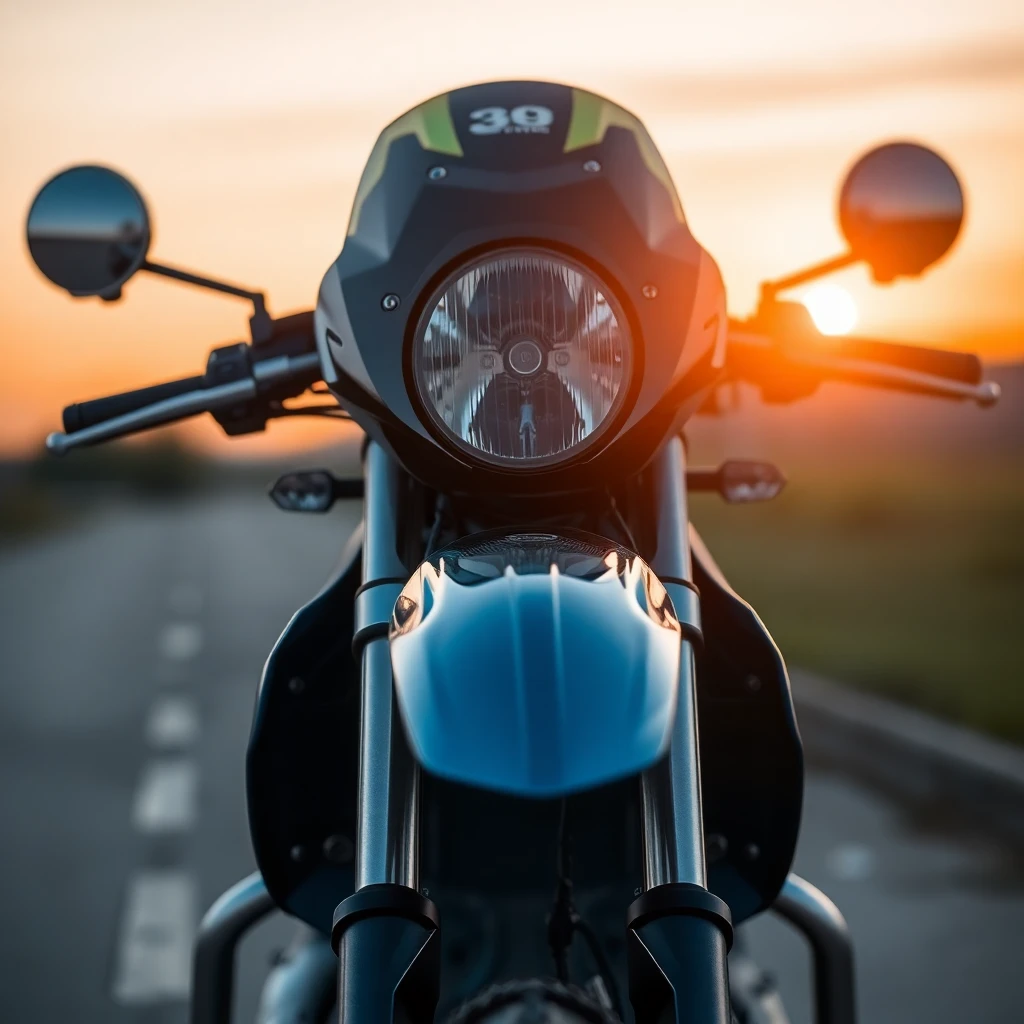
If you want to ride your dirt bike on public roads, the equipment on your bike matters as much as the title in your hand. Street legal dirt bike headlight, horn, and mirror requirements vary by state, but the core checklist is consistent enough that you can build toward compliance no matter where you live. This guide breaks down exactly what you need, what inspectors look for, and how to get your bike registered once the hardware is sorted.
Most off-road bikes leave the factory without street-legal lighting, mirrors, or a horn. Converting one means bolting on the right parts, passing a state inspection in most cases, and then getting a proper title and plates. Get the equipment wrong and you will fail inspection. Get the paperwork wrong and you are stuck with a bike that runs but cannot be plated. This article covers both sides.
Whether you are converting a KTM 500 EXC, a Kawasaki KLX, a Honda CRF, or any dual-sport platform, the same fundamental rules apply. Read through the full checklist, check your state's specific rules, and then get your registration handled before you hit the road.
Why Street Legal Dirt Bike Equipment Requirements Exist
States require specific equipment on any motorcycle operating on public roads because other drivers and pedestrians need to see you, hear you, and predict your movements. A dirt bike running trails does not need to worry about oncoming traffic at night. A converted dual-sport running a state highway absolutely does.
The federal baseline comes from the National Highway Traffic Safety Administration, which sets minimum standards for lighting and reflective equipment on motorcycles sold for road use. You can check NHTSA's VIN decoder to confirm whether your specific bike was ever DOT-certified from the factory. Most pure off-road bikes were not, which means you will be adding equipment rather than verifying it.
State DMVs then layer their own requirements on top of the federal floor. Some states add turn signals, a speedometer, or specific mirror placement rules. Others keep it simple. The equipment list below covers what is required in the vast majority of states.
What Happens If You Skip the Equipment Check
Riding a plated bike with missing or non-compliant equipment can result in fix-it tickets, failed registration renewals, or being pulled off the road entirely. In states with mandatory safety inspections, a non-compliant bike will not pass, which means no plates. Getting the equipment right the first time saves you a trip back to the shop and a delay on your registration.
Off-Road Titles vs. Street Titles
Many dirt bikes carry an off-road or OHV title from the factory. That title class does not allow road registration in most states, even if you bolt on every required part. You typically need to convert the title to a street-class motorcycle title before plates are issued. That process involves a state inspection, proof of equipment compliance, and often a title transfer through your DMV. If your bike has a salvage history, the process is more involved. See our full breakdown at salvage motorcycle title montana for details on those cases.
The Core Street Legal Dirt Bike Equipment Checklist
Before any inspector signs off on your conversion, your bike needs to hit every item on the checklist below. Some items have spec requirements, not just presence requirements, meaning a dim flashlight zip-tied to your bars will not pass. The equipment must meet DOT or SAE standards where specified.
Ready to register your vehicle?
Join thousands of vehicle owners who use Street Legal Hookup to handle their registration quickly.
Get started today. →Headlight Requirements
Your headlight must project both a low beam and a high beam. A single-mode light that only runs one intensity will fail in most states. The light must be DOT-compliant, which means it carries a DOT marking on the lens or housing. Aftermarket headlights sold for street-legal conversions typically include this marking. Minimum candlepower output is not always listed in state statutes, but inspectors can and do test brightness. A 35-watt minimum is a common industry benchmark for dual-sport headlight kits.
The headlight must also be wired to run whenever the bike is running in most states, not on a manual switch. Check your state's statute on automatic headlight operation before finishing your wiring use. The light must be mounted to the front of the bike, positioned to be visible from 500 feet in normal conditions.
Horn Requirements
A horn is required on any motorcycle operated on public roads in every U.S. state. The horn must be audible from at least 200 feet under normal conditions. Electric horns designed for motorcycles are the standard solution. Squeeze bulb horns, air horns not wired to the electrical system, and novelty horns typically do not pass inspection.
The horn must be mounted to the bike and operable from the riding position without removing your hand from the handlebars for an extended period. Most conversion kits route the horn button to the left handlebar cluster, which is the cleanliest install and the one inspectors expect to see.
Mirror Requirements
Mirrors are where states diverge the most. Most states require at least one rearview mirror. Several require two, one on each side. California, for example, requires one mirror. New York requires two. Before ordering your mirror kit, confirm your state's minimum count.
Mirrors must provide a clear, unobstructed view to the rear. They must be adjustable and must not fold or vibrate to a useless angle under normal riding conditions. Handlebar-end mirrors and fairing-mount mirrors are both acceptable in most states as long as they meet visibility standards. Stick-on convex mirrors designed for bicycle handlebars do not meet the standard.
Additional Equipment Most States Require
Headlights, horns, and mirrors are the three most commonly searched requirements, but they are rarely the full list. A complete street-legal conversion typically includes several additional components. Missing any of these will fail your inspection even if your lighting and mirrors are perfect.
Turn Signals
The majority of states require front and rear turn signals. A small number of states allow hand signals as a substitute, but in practice, most inspectors and law enforcement expect physical blinkers. DOT-approved LED turn signal pods are the most compact and reliable option for dirt bike conversions. They must flash at a rate between 60 and 120 flashes per minute per federal standards.
Tail Light and Brake Light
A combined tail and brake light is required on the rear of the bike. The brake light must activate when either the front or rear brake is applied. Most factory dirt bikes have no brake light circuit at all, so this requires adding a brake light switch to both the front lever and the rear pedal, or at minimum the rear pedal depending on your state. The tail light must be visible from 500 feet to the rear.
Speedometer and Other Equipment
Many states require a speedometer on any street-registered motorcycle. Off-road bikes often have no speedometer at all. Aftermarket digital speedometers that run off wheel speed sensors or GPS signals are available for under $50 and satisfy this requirement cleanly. Other items that may be required depending on your state include a muffler meeting noise standards, foot pegs for the rider, and adequate tire tread depth. Review your state's motorcycle inspection checklist specifically, not just the generic vehicle checklist.
For more on what safety habits go along with a properly equipped bike, the team at MTMC Foundation covers motorcycle safety tips for every rider in a guide worth reading before you take your newly plated bike on the road.
Street Legal Dirt Bike Equipment Requirements by State Type
While every state has its own specific statute, most fall into one of three general profiles dirt bike street conversion requirements. The table below gives you a working framework. Always confirm against your state's current DMV or motor vehicle code before finalizing your build.
| Requirement | Minimum States (Lenient) | Standard States (Most Common) | Strict States |
|---|---|---|---|
| Headlight (Hi/Lo Beam) | Required | Required, DOT marked | Required, DOT marked, auto-on |
| Horn (200 ft audible) | Required | Required | Required |
| Mirrors | 1 mirror minimum | 1-2 mirrors | 2 mirrors required |
| Turn Signals | Hand signals allowed | Physical blinkers required | DOT-approved blinkers, front and rear |
| Brake Light | Rear brake activated | Front and rear activated | Both brakes, separate switches required |
| Speedometer | Not always required | Required in most states | Required, must be ac |
| Exhaust/Noise | Basic muffler | DB limit enforced | State noise test required |
Getting Your Dirt Bike Registered After the Conversion
Bolting on the right parts is step one. Getting plates is step two, and it is where a lot of riders hit a wall. The registration path for a converted dirt bike depends heavily on what title you started with and what state you are registering in.
The Standard State Registration Path
If you live in a state that allows dirt bike title conversions, the typical process involves scheduling a safety inspection at a licensed inspection station, passing with all required equipment present and functional, then submitting your inspection certificate, current title, proof of insurance, and registration fee to your DMV. Processing times vary from same-day to several weeks depending on your state's backlog.
Some states require a VIN verification in addition to the safety inspection. This is a separate step where an officer or DMV employee physically confirms the VIN on the bike matches the title. If your bike has had any frame or engine swaps, this step can create complications.
The Montana Registration Option
Montana is a well-known alternative for riders who want plates without the friction of their home state's conversion process. Montana has no sales tax on vehicle registration, no emissions testing, and no safety inspection requirement at the state level. Registration is handled through a Montana LLC, which owns the vehicle. The bike gets Montana plates, and the owner operates it through the LLC structure.
This is not a workaround. It is a fully street-Montana registration path that has been used by hundreds of thousands of riders, RV owners, exotic car collectors, and fleet operators. Street Legal Hookup is backed by a state-licensed Montana processor, which means you get processor-direct reliability rather than dealing with a middleman who outsources the work anyway.
If your dirt bike has a project history or a non-standard title situation, the Montana path is often cleaner than fighting your home state's conversion requirements. For bikes with off-road or salvage titles, see our related breakdown at salvage ATV title registration montana for how that process works on similar off-road platforms.
For riders coming from a project build background, project car registration montana walks through the Montana registration process for non-standard vehicles in detail, and much of that guidance applies directly to converted dirt bikes.
What Montana Registration Does Not Replace
Montana plates get your bike registered and plated legally. They do not replace your state's equipment requirements if your state has a separate operating law for what is allowed on public roads. In other words, you still need the headlight, horn, and mirrors on the bike to ride it legally in your home state, even with Montana plates. The registration and the equipment compliance are two separate issues. The plates solve the title and registration side. The hardware solves the road-legal side.
Frequently Asked Questions
Do I need both a high beam and low beam on my street legal dirt bike?
Yes, in nearly all states a street-legal motorcycle headlight must provide both a high beam and a low beam. A single-intensity light does not meet the standard. Most DOT-approved dual-sport headlight kits include both modes wired to a handlebar switch. If your conversion kit only has one brightness setting, replace it before your inspection. The DOT marking on the headlight housing or lens confirms the light was manufactured to meet federal standards.
How loud does the horn need to be on a street legal dirt bike?
The standard in most states is audible at 200 feet under normal traffic conditions. Electric motorcycle horns rated at 90 decibels or higher at 10 feet comfortably meet this requirement. Avoid novelty horns, bulb horns, or any horn not wired to the bike's electrical system. The horn button must be accessible from the riding position. Most conversion kits mount the button to the left handlebar cluster next to the turn signal switch, which is the cleanest and most inspection-friendly approach.
How many mirrors does a street legal dirt bike need?
It depends on your state. A majority of states require at least one rearview mirror. Several states, including New York and a handful of others, require two mirrors. Before buying your mirror kit, confirm your specific state's requirement. Mirrors must provide a clear, unobstructed view to the rear and must remain stable under normal riding conditions. Handlebar-end mirrors are popular on dual-sport conversions because they fold out of the way off-road and use quickly for street use.
Can I register a dirt bike in Montana even if my home state requires equipment inspections?
Yes. Montana registration gives your bike a title and plates regardless of your home state's inspection process. However, operating your bike on public roads in your home state still requires compliance with that state's equipment laws. Montana registration addresses the ownership and registration side. Whether your bike has the required headlight, horn, and mirrors for road operation in your state is a separate question answered by your state's vehicle code. Most riders handle both, getting Montana plates and building the bike to their state's operating standard.
Do turn signals count as part of the street legal conversion requirements?
In most states, yes. Turn signals are required on motorcycles registered for road use in the majority of U.S. states. A smaller number of states still allow hand signals as a legal substitute, but this is increasingly uncommon and some states explicitly require physical blinkers. DOT-approved LED turn signal pods are the standard solution for dirt bike conversions. They are compact, bright, and available in kits designed specifically for dual-sport and enduro frames. Front and rear signals are typically both required.
What if my dirt bike has a salvage or off-road only title, can it still be made street legal?
In many cases, yes, but the path is more complex. Bikes with salvage titles typically require a rebuilt title inspection before street registration is issued. Bikes with OHV or off-road only titles often require a title class conversion at the state level. Montana is a practical option for bikes in title trouble because Montana's registration process is more accessible for non-standard vehicles. Street Legal Hookup has experience with the hard cases. See our detailed guide at salvage motorcycle title montana for the full breakdown on that specific situation.
Is a speedometer required to make a dirt bike street legal?
In most states, yes. Pure off-road bikes typically have no speedometer at all, so this is a common gap in conversion builds. Aftermarket motorcycle speedometers that run on wheel speed sensors or GPS are available for under $50 and install cleanly on most dual-sport frames. Some states do not explicitly require a speedometer in their motorcycle inspection checklist, but it is worth confirming your state's current requirement before skipping this item. If in doubt, install one. The cost is low and it closes a potential inspection failure point.
Get Your Dirt Bike Plated and Riding
Meeting the street legal dirt bike headlight, horn, and mirror requirements is the hardware side of the conversion. Getting plates is the paperwork side. Both matter, and both need to be done right. Street Legal Hookup works with riders across every vehicle type, from fresh dual-sport conversions to bikes with complicated title histories, backed by a state-licensed Montana processor that handles the registration work directly.
Verified customer reviews are growing daily, and the process is built for people who want it done without the DMV runaround. If you have a converted bike sitting in the garage waiting on plates, or a new build nearly ready to hit the road, get started now.
For riders who have gone through similar processes with other vehicle types, our guide on salvage ATV title registration montana covers parallel territory for off-road platforms. And if you are building or registering something outside the standard path, the project car registration montana resource explains how Montana handles non-standard registrations across the board.