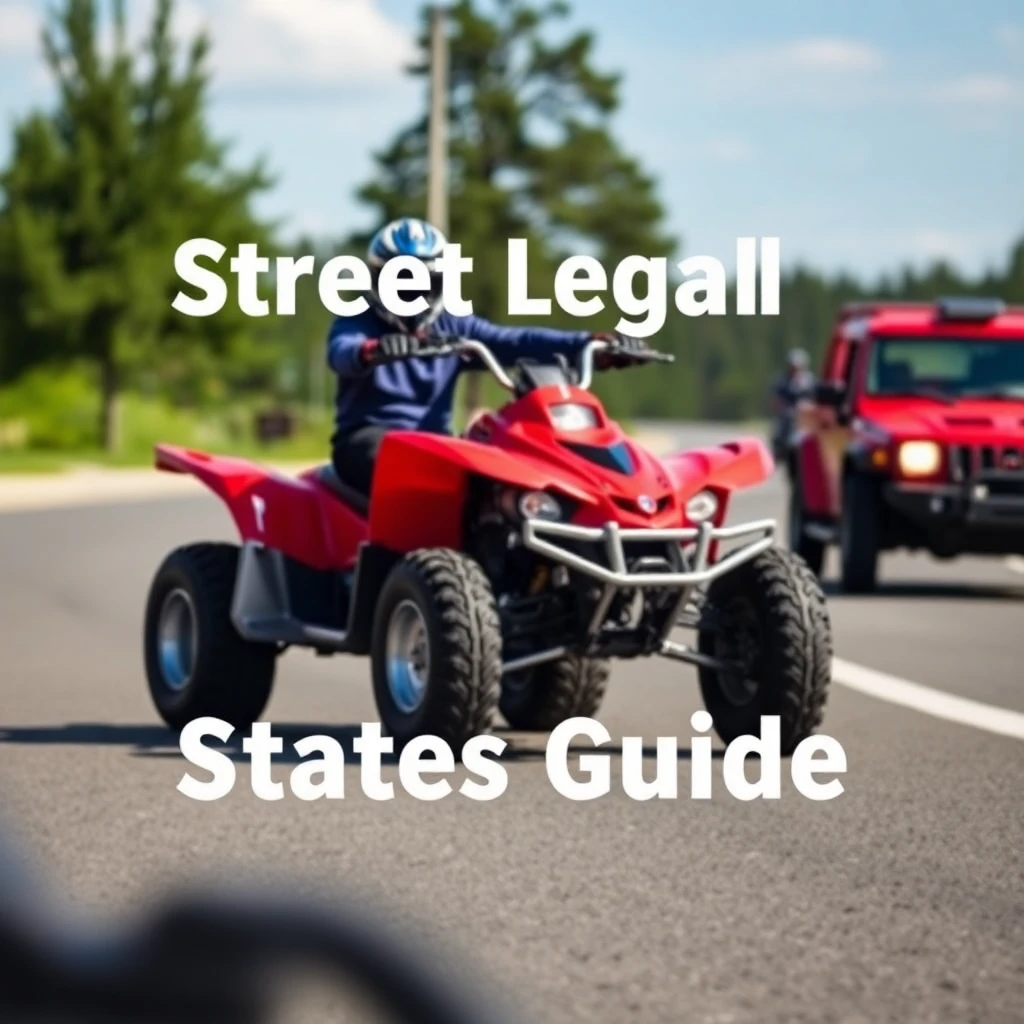
If you own an ATV and want to ride it beyond the trail, you need a clear answer on where it is actually allowed. This street legal ATV states guide breaks down which states permit ATVs on public roads, what equipment your machine needs, and how registration works so you can ride without worrying about getting pulled over or ticketed.
ATV laws vary dramatically from state to state. Some states have opened county roads and rural highways to registered ATVs. Others allow it only in designated communities or under specific local ordinances. A handful block it almost entirely. Knowing the difference before you ride matters.
This guide covers state-by-state rules, required safety equipment, registration requirements, and the Montana registration path that many ATV owners use to avoid sales tax and cut through the paperwork. Read through, then get your machine plated the right way.
Which States Allow Street Legal ATVs on Public Roads
Most states fall into one of three categories: states with statewide road-access laws, states that leave it to county or municipal ordinances, and states that prohibit it outright. The majority of ATV-friendly access happens at the county level, which means two neighboring counties in the same state can have completely different rules.
States with the most open ATV road access
A handful of states have passed statewide laws that allow properly equipped ATVs on public roads with minimal friction. These include:
- Montana: ATVs may operate on county roads and some state roads. Registration is required. Montana is also a top choice for ATV registration due to no sales tax and no emissions testing requirements per Montana Vehicle Title and Registration.
- South Dakota: Strong statewide framework for ATV road use with registration through the South Dakota Division of Motor Vehicles.
- Minnesota: Allows ATV use on many county roads, ditches, and state forest roads.
- Wisconsin: ATVs and UTVs can use county highways where local ordinances permit.
- Michigan: Has an ORV system that allows registered vehicles on many public roads.
- Idaho: County roads and some state highways are open to properly registered ATVs.
- Utah: Strong OHV road access laws, especially in rural counties.
- North Dakota: Allows ATV operation on public roads with registration and safety equipment.
- West Virginia: Growing access through OHV corridor programs and county roads.
States with county-by-county or limited access
Many states leave the decision to counties or municipalities. In these states, you may be able to ride on some roads legally while a county over, you cannot. States in this category include Texas, Colorado, Kansas, Nebraska, Missouri, Ohio, and Kentucky. Always check with the county sheriff or local ordinance database before riding.
States with the most restrictive ATV road rules
California, Florida, New York, and New Jersey have some of the tightest restrictions on ATV road use. In most of these states, ATVs are not permitted on public roads unless crossing at a designated point. Some limited agricultural or utility exceptions apply. Even in these states, proper registration remains critical for trail riding, transport, and crossing rules.
What Equipment Makes an ATV Street Legal
Even in states that allow ATVs on roads, your machine has to meet a baseline equipment standard before you can ride it legally on public pavement. Requirements vary by state, but most share a common core list.
Ready to register your vehicle?
Join thousands of vehicle owners who use Street Legal Hookup to handle their registration quickly.
Get started today. →Standard equipment requirements across most permissive states
- Headlight (working, forward-facing)
- Tail light and brake light
- Turn signals (required in many but not all states)
- Mirrors (at least one rearview mirror, often two)
- Horn
- Speed capability of at least 25-35 mph depending on the road type
- DOT-approved tires (required in some states)
- Spark arrestor (required for riding near forested areas in most western states)
Helmet and rider safety requirements
Most states that allow ATVs on roads require a helmet for all riders. Some states impose age-specific helmet laws. Eye protection requirements are common as well. Riders should also carry proof of registration and in most states, liability insurance. Check your state DMV or consult a processor before assuming your setup meets the local standard.
Inspections and certifications
Some states require a physical inspection before issuing road-use plates for an ATV. Montana does not require emissions testing or safety inspections for ATV registration, which is one reason it remains a popular registration state for riders nationwide. If your home state requires an inspection you cannot pass, Montana registration through an LLC is a commonly used path worth looking into.
| State | Road Access Level | Helmet Required | Insurance Required | Emissions Test |
|---|---|---|---|---|
| Montana | County roads, some state roads | Under 18 required | Recommended | No |
| South Dakota | Statewide framework | Under 18 required | Yes | No |
| Minnesota | County roads, ditches | All ages | Yes | No |
| Wisconsin | County ordinance dependent | Under 18 required | Yes | No |
| Utah | Rural counties, state roads | Under 18 required | Yes | No |
| California | Highly restricted | All ages | Yes | Yes |
| Texas | County dependent | Under 21 required | Yes | Varies |
| Idaho | County roads open | Under 18 required | Recommended | No |
How ATV Registration Works Across State Lines
Registration rules for ATVs are not as standardized as car registration. Some states treat ATVs like motor vehicles and require full titling with a street plate. Others issue OHV stickers or off-road permits that do not authorize road use at all. Knowing which category your state falls into is the first step.
OHV sticker vs. street plate: what is the difference
An OHV sticker or off-highway vehicle permit typically only covers designated trails and OHV parks. It does not give you permission to ride on any public road. A street plate, issued after your ATV meets road equipment requirements, is what actually authorizes road use in states where that is allowed. Many ATV owners hold both, one for trails and one for road crossings or rural road access.
Title requirements for ATV registration
Most states require a clear title to register an ATV for road use. If you bought a used machine without a title, or if the title has issues like a salvage brand, you may need to go through a title recovery process first. Street Legal Hookup handles those situations regularly. For more detail on how that process works, see our post on salvage ATV title registration in Montana, which covers how to get a clean registration even when the paperwork is complicated.
Montana registration for ATVs nationwide
Montana is one of the most rider-friendly registration states in the country. No sales tax on the purchase, no emissions testing, and no safety inspection. Owners in high-tax states often register their ATVs through a Montana LLC to avoid paying state sales tax at the point of purchase. This is a well-established approach that works across the full spectrum of off-road vehicles. Street Legal Hookup is backed by a state-licensed Montana processor, so you are working processor-direct rather than through a middleman. Registration fees and LLC requirements are available through the Montana Motor Vehicle Division.
ATV Street Legal Conversion: What the Process Looks Like
Getting an ATV plated for road use involves more than just showing up at the DMV. The process varies by state but typically follows a predictable sequence. Understanding each step ahead of time prevents delays and rejected applications.
Step-by-step breakdown for most states
- Confirm your state or county allows ATV road use for your specific road type.
- Check the equipment list for your state and install any missing items (lights, mirrors, signals).
- Get a clear title in your name. If the title is missing or has issues, start there first.
- Obtain any required inspection certificate if your state mandates it.
- File for a street plate through your state DMV or use Montana registration if your home state does not offer a practical path.
- Carry proof of registration, insurance (where required), and ID when riding on public roads.
What to do when your home state blocks registration
Some states make ATV road registration either impossible or impractical due to emissions requirements, inspection mandates, or outright prohibition of ATVs on roads. Montana LLC registration is the most commonly used alternative in those cases. Your ATV gets titled and registered to a Montana LLC, which gives you Montana plates and bypasses your home state's restrictions entirely. This is not a gray area approach, it is a structured, processor-managed process used by thousands of ATV, UTV, and motorcycle owners nationwide. Our post on project car registration in Montana covers the broader Montana LLC approach in detail.
Frequently Asked Questions About Street Legal ATV Rules by State
Can I make any ATV street legal, or only certain models?
Most states with ATV road access laws do not restrict by model or brand, but they do set minimum equipment and performance standards. Your ATV typically needs to be capable of speeds that match the posted road limit and must carry the required safety equipment. Older models may need aftermarket lights or mirrors to Eligible. Check your specific state's OHV or motor vehicle statute for a complete equipment list before spending money on modifications.
Do I need insurance to ride my ATV on public roads?
In most states that allow ATVs on public roads, liability insurance is required, not optional. The coverage minimums vary, but they generally mirror what is required for motorcycles. A few states only recommend insurance rather than mandate it, but riding uninsured on a public road puts you at serious financial risk if there is an accident. Always confirm insurance requirements with your state DMV or county authority before riding.
Is a driver's license required to operate a street legal ATV?
In nearly every state that allows ATV road use, a valid driver's license is required for operation on public roads. Age minimums apply as well. Off-road riding on private land or designated trails may not require a license in many states, but the moment you take your ATV onto a public road, standard licensing rules kick in. Some states require an additional motorcycle endorsement or OHV operator certification for road-legal ATV operation.
What happens if I ride an ATV on a road in a state where it is not allowed?
You can face fines, vehicle impoundment, and potential points on your driving record. In some states, operating an unregistered or prohibited vehicle on a public road is treated as a misdemeanor. Beyond the legal exposure, riding without the proper equipment also creates significant safety and liability risk. The short answer: check first, ride second. Ignorance of local ATV road laws is not a defense officers or courts will accept.
Can I register my ATV in Montana if I live in another state?
Yes. Montana allows non-residents to form an LLC and register vehicles through that entity. The vehicle gets Montana plates, which are valid for road use in all 50 states. There is no sales tax on the purchase, no emissions testing, and no physical inspection requirement. Street Legal Hookup works directly with a state-licensed Montana processor to handle this for ATV owners nationwide. For details on how Montana registration works across state lines, see how Montana registration is valid in all 50 states.
What is the difference between an ATV and a UTV for street legal purposes?
Most state laws treat ATVs (all-terrain vehicles, typically single-rider with handlebars) and UTVs (utility task vehicles, side-by-sides with a cab) as separate vehicle classes. UTVs often have an easier path to street-legal status because they come from the factory with more road-ready features like seatbelts, roll cages, and four-point contact. However, requirements vary significantly by state. Always verify which classification applies to your specific machine, as filing under the wrong category can delay or invalidate your registration.
Does Montana registration mean I can ride my ATV on any road in any state?
Montana registration gives you valid plates recognized in all 50 states, but it does not override each state's rules about where ATVs are permitted to operate. If a state prohibits ATVs on public roads, Montana plates do not change that. What Montana registration does is give you a clean, street-legal title and registration that authorities recognize as valid. Where and how you can operate the vehicle is still governed by the state you are riding in.
Get Your ATV Registered the Right Way
This street legal ATV states guide covers the core framework, but the rules change regularly and vary down to the county level. The consistent thread across all of it: proper registration and title documentation are non-negotiable. Whether you are riding county roads in Montana, trail systems in Wisconsin, or trying to get plates on a machine your home state will not touch, the path forward starts with clean paperwork.
Street Legal Hookup handles ATV registration, title recovery, and Montana LLC registration for riders across the country. Backed by a state-licensed Montana processor, verified customer reviews growing daily, and no-nonsense service for everything from trail machines to full-size UTVs. If your ATV has a complicated title situation, check out our resource on salvage ATV title registration in Montana to see how we handle the hard cases most services avoid.
Ready to get moving? Get your ATV registered correctly, get the plates it deserves, and get back to riding.