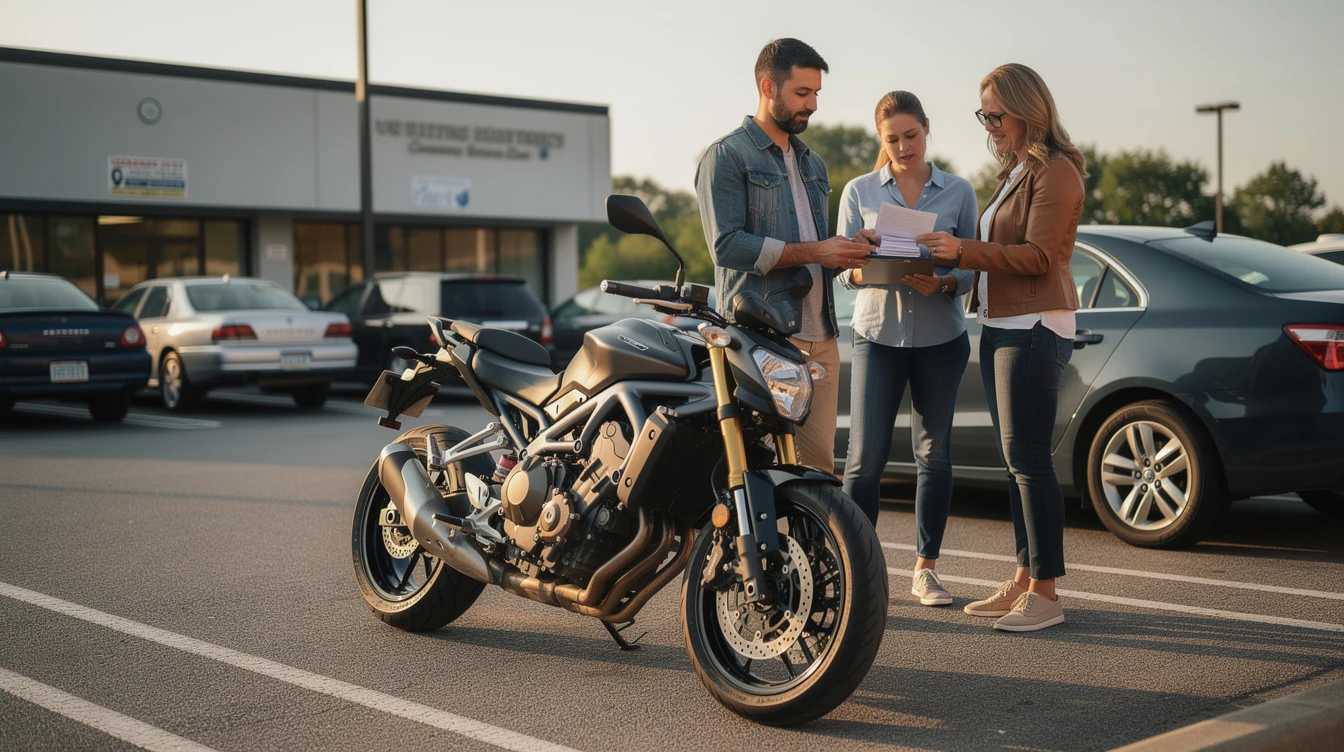
Why Motorcycle Registration Matters
You can't ride your motorcycle on public roads without registration. It's the foundation of street-legal ownership. Registration proves you own the bike, covers liability if something goes wrong, and keeps you out of legal trouble with law enforcement.
The catch? Every state handles motorcycle registration differently. Fees vary. Title transfer requirements differ. Timeline expectations shift. Getting this wrong costs time and money.
This guide walks you through what you need to know for your state, plus how to handle the process quickly.
What's Included in Motorcycle Registration
- Registration card, proof you've registered the bike with your state's motor vehicle department
- License plate, the physical plate that goes on your motorcycle (most states require them)
- Title documentation, proof of ownership, transferable to the next owner
- Fee payment record, proof you've paid the annual or multi-year registration fee
Registration Fees Vary Significantly by State
Montana stands out. No sales tax on motorcycles, no emissions testing, and significantly lower registration renewal fees compared to California, Texas, or New York. A Montana motorcycle registration typically costs $35 to $105 annually, depending on engine size and motorcycle type.
Ready to register your vehicle?
Join thousands of vehicle owners who use Street Legal Hookup to handle their registration quickly.
Get Started Today →Compare that to California, where registration can run $200 to $400+ annually, or Texas, where title transfer and registration combined often exceed $150 to $250.
South Dakota offers another cost-effective option for riders seeking to minimize fees while maintaining full legal street-legal status.
How Title Transfer and Registration Work Together
You need a clear title to register a motorcycle. If you're buying a used bike, you'll work through a title transfer first. This is where state requirements get specific.
Some states require in-person verification at a local DMV or county office. Others accept mail-in title transfers with certified documents. A few states use bonded title processes if paperwork is missing or unclear.
Once the title transfers to your name, registration follows. Most states process registration within 1 to 3 weeks. You'll need proof of ownership, proof of insurance, and a completed application form.
Registration Requirements by State Type
Montana Motorcycle Registration
Montana registration is straightforward and cost-effective. You'll need a completed application form, proof of insurance, and the title or bill of sale. No emissions testing. No sales tax. Registration renews every two years or annually, depending on your preference. Most riders choose a Montana vehicle title through the DOJ Motor Vehicle Division.
California Registration
California requires proof of smog compliance for motorcycles over a certain age. You'll need your title, completed application, insurance proof, and a valid ID. Registration fees are higher, and processing can take 4 to 6 weeks. Use an official DMV office or approved vendor to handle your application.
Texas Title Transfer and Registration
Texas requires an Application for Title and/or Registration form, your title documentation, proof of insurance, and an ID. If you're transferring a title from out of state, you'll complete a slightly different process. Registration typically costs $52 to $90 annually, plus title transfer fees if applicable. The state processes applications within 2 to 3 weeks.
South Dakota Registration
South Dakota offers simple, affordable motorcycle registration with minimal bureaucracy. You'll provide your title, proof of insurance, and a completed application. The state process typically takes 1 to 2 weeks, and South Dakota's Division of Motor Vehicles handles all applications.
Step-by-Step: How to Register Your Motorcycle
Step 1: Gather Your Documents
Before you contact your state's DMV or motor vehicle division, collect these items: your current title or bill of sale, proof of motorcycle insurance, a completed registration application (available from your state's DMV website), and a valid ID. If you're transferring a title from another state, get a bill of lading or title document from the previous state.
Step 2: Complete the Registration Application
Download or request the appropriate form from your state's motor vehicle department. Fill in your name, address, motorcycle VIN, engine size, and other required details. Double-check for accuracy, especially the VIN. A typo here delays processing.
Step 3: Submit Your Application
You can typically submit your application in person at a local county treasurer office, DMV, or online through your state's motor vehicle portal. Some states accept mail-in applications with certified documents and a check for fees. Confirm your state's preferred method before submitting.
Step 4: Pay Your Registration Fee
Registration fees vary by state and motorcycle type. Pay when you submit your application. If processing online, you'll use a credit or debit card. For mail-in or in-person submissions, include a check or pay at the counter.
Step 5: Receive Your Registration Card and License Plate
Once approved, your state mails your registration card and license plate. Most states mail these within 2 to 4 weeks. Some states issue temporary registration cards for immediate street-legal use while the physical plate is in production.
What About Title Transfers? A Closer Look
Title transfer is separate from registration, though they're often confused. When you buy a used motorcycle, the seller's name is on the title. You must transfer that title to your name before you legally own and register the bike.
The process typically takes these steps: get a signed title document from the seller, fill out your state's title transfer application, submit both documents plus proof of insurance and ID, and pay the title transfer fee. Your state's motor vehicle division then issues a new title in your name.
Out-of-state title transfers work similarly, though some states require additional verification. If a title is missing, many states offer bonded title options, where you post a bond and wait a set period before claiming full ownership.
Why Choose Street Legal Hookup for Motorcycle Registration Help
We Handle the Details You Don't Want To
Figuring out which documents go where, understanding state-specific fees, and timing your submission correctly takes effort. We've processed thousands of registrations and know exactly what each state needs. You get expert guidance without the DMV runaround.
Montana and South Dakota Specialists
We focus on Montana and South Dakota registrations because both states offer significant savings on fees, taxes, and documentation compared to other states. If you're looking to reduce registration costs while staying fully street-legal, we know the best approach for your bike.
Fast, Transparent Pricing
No hidden fees. No surprise charges. We explain exactly what your state requires, what each step costs, and how long processing takes. You'll know the full price before we start.
Nationwide Coverage
While we specialize in Montana and South Dakota, we help riders register motorcycles in all 50 states. Whether you're in California, Texas, or anywhere in between, we'll guide you through your state's specific registration process.
Common Motorcycle Registration Questions
How Long Does Motorcycle Registration Take?
Most states process motorcycle registration within 2 to 4 weeks of receiving a complete application. Montana and South Dakota typically process faster, sometimes within 1 to 2 weeks. Expedited processing may be available for an additional fee in some states.
Can I Ride Without a Registration Card?
No. You must have proof of registration when you're on the road. Most states require you to carry your registration card. Some states issue temporary cards immediately upon application submission, allowing you to ride while the physical plate is being made.
What If My Motorcycle Title Is Missing?
Contact your state's motor vehicle division about bonded title options. You'll typically post a bond equal to the bike's value, wait for a set period (often 3 to 5 years), and then claim full ownership. This process costs more and takes longer but allows you to register a motorcycle with a missing title.
Do I Need Insurance Before Registering?
Yes. All states require proof of motorcycle insurance to register your bike. You must carry liability coverage at minimum. Get insurance quotes and a policy in place before submitting your registration application.
How Often Do I Renew My Motorcycle Registration?
Renewal frequency depends on your state. Most states require annual renewal. Some states, like Montana, offer two-year renewals. Check your registration card or your state's motor vehicle website to confirm your renewal date.
Get Your Motorcycle Registered Quickly and Correctly
Registration doesn't have to be complicated. With the right guidance and documents, you'll be street-legal and riding in weeks, not months. If you're unsure about your state's specific requirements or want expert help with the paperwork, we're here to make the process simple.
Get started today.