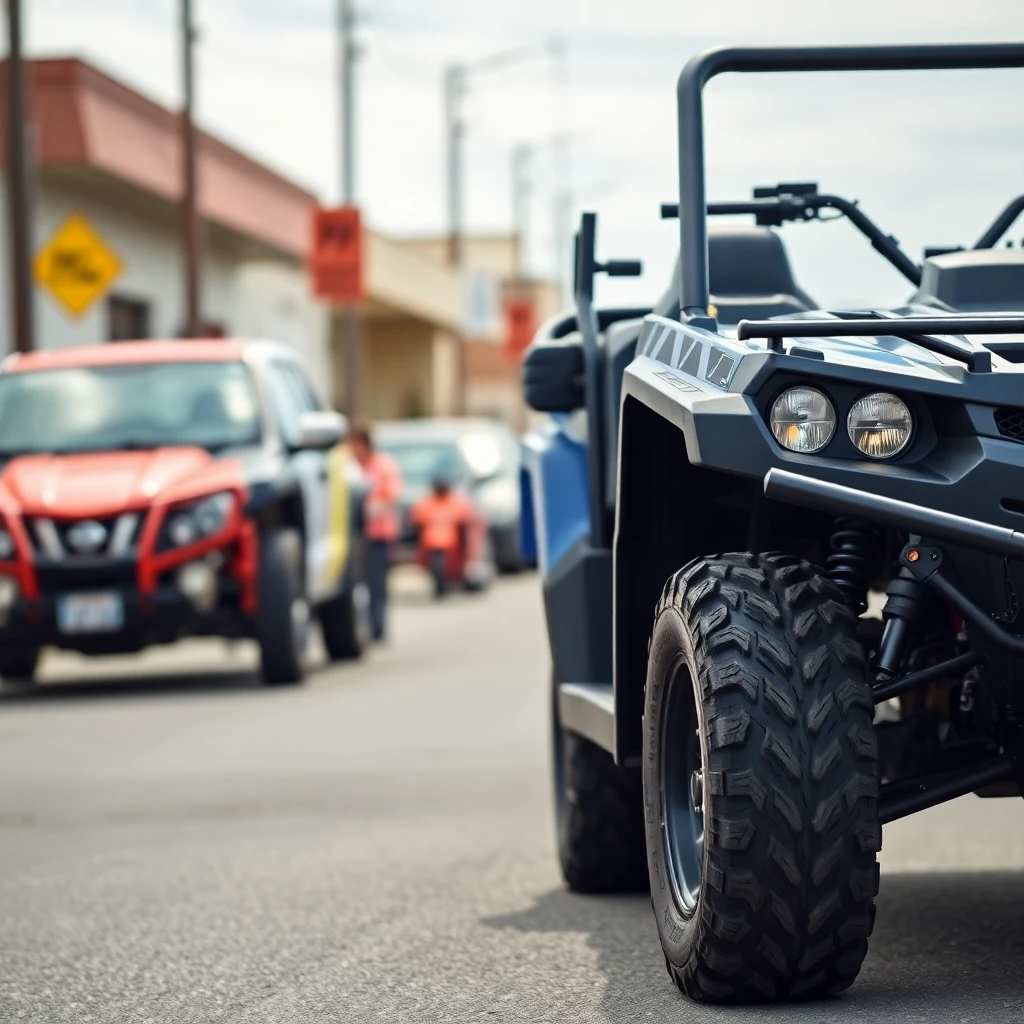
Figuring out how to make a side by side street legal is one of the most common questions UTV owners ask after they realize their machine is capable of running on public roads. The good news: it is absolutely possible in most states. The process requires specific equipment, a proper title, and registration that authorizes street use.
This guide covers every piece of equipment typically required, how state rules differ, what registration pathway works for most owners, and how Street Legal Hookup handles the paperwork side so you can focus on riding.
Ready to get your UTV on the road? Start below.
What Does It Actually Mean to Make a Side by Side Street Legal?
A street-legal side by side is one that meets your state's minimum equipment and registration requirements for operation on public roads. This is not just about bolting on lights. It means your machine is titled, registered, and equipped to operate alongside other traffic without creating liability or legal exposure.
Most states fall into one of two categories. Either they have a defined Low-Speed Vehicle or Off-Highway Vehicle statute that allows UTVs on certain roads, or they require full motorcycle or motor vehicle classification with corresponding equipment. A small number of states do not allow UTV street use at all, regardless of modifications.
Street Legal vs. Off-Road Title: What's the Difference?
An off-road title shows ownership but does not authorize public road use. A street-Montana registration or motor vehicle registration is what physically allows you to operate on public streets. Some states issue a separate street-legal endorsement. Others simply require you to register the machine as a motor vehicle with the correct equipment in place.
For a deeper look at how this plays out across different states, read our street legal atv states guide, which breaks down which states allow street UTV operation and under what conditions.
Why Your Current Off-Road Registration Is Not Enough
Operating a UTV on a public road with only an off-road registration exposes you to fines, impoundment, and insurance denial if something goes wrong. Law enforcement in most states can cite you even if your machine is fully equipped. The registration class matters, not just the equipment list.
Required Equipment to Make a Side by Side Street Legal
The equipment list is fairly consistent across states that allow UTV street use. A few states add requirements, but the core list below applies almost universally. Skipping any one item typically means failing inspection or getting turned away at registration.
Ready to register your vehicle?
Join thousands of vehicle owners who use Street Legal Hookup to handle their registration quickly.
Get started today. →Lighting and Visibility
- Headlights, front and rear, with both high and low beam on the headlights
- Taillights and brake lights
- Turn signals, front and rear, on both sides
- Reflectors, typically red at the rear
- A working horn audible from at least 200 feet
Factory UTVs rarely include all of these. Most owners source a UTV street-legal kit that bundles the lighting use, signals, and horn into one install. See our detailed breakdown of utv street legal kit what is required for a complete equipment checklist and install tips.
Safety Equipment
- A DOT-approved windshield or eye protection requirement depending on state
- Mirrors, typically one left side exterior mirror and one interior mirror
- Seatbelts for all seating positions
- A roll cage or ROPS (rollover protection structure), which most UTVs already have from the factory
Mechanical and Emissions Requirements
- DOT-compliant tires with adequate tread depth
- A functioning parking brake
- A speedometer visible from the operator position
- In some states, an odometer or mileage tracking device
- Emissions compliance, which varies widely. Montana registration sidesteps this entirely since the state does not require emissions testing
State-by-State Rules: How They Affect Your Conversion
No single federal standard covers UTV street use. Each state sets its own rules, and they vary significantly. Some states allow UTVs on roads up to 55 mph. Others limit operation to roads under 35 mph. A few restrict use to agricultural zones or unpaved county roads only.
States With Defined UTV Street Legal Pathways
States like Arizona, Utah, Idaho, Kansas, Minnesota, and Montana have specific statutes addressing UTVs and off-highway vehicles on public roads. These states typically require the equipment list above plus registration as an OHV or motor vehicle. Speed limits and road class restrictions vary by state.
States With Restrictions or No Clear Pathway
States like California, New York, and Illinois have more restrictive rules. In California, a UTV cannot be registered for general street use. Some owners in restrictive states use Montana registration to title the vehicle and then operate based on their home state's applicable road rules, though you should consult your state's DMV for clarity on what road use is permitted locally.
Our street legal off road vehicle requirements article covers how these state differences apply to UTVs, ATVs, and other powersports vehicles in more detail.
Montana Registration as a National Strategy
Montana is a zero-sales-tax state with no emissions testing and no inspections required for registration. Owners nationwide use Montana LLC-based registration to title and register UTVs without paying sales tax in their home state. This is a fully street-level registration, not just an off-road title, and it is recognized across all 50 states. Street Legal Hookup is backed by a state-licensed Montana processor, which means you are getting processor-direct reliability, not a middleman guessing at paperwork.
| Requirement | Typical State Standard | Montana Registration |
|---|---|---|
| Sales Tax | Up to 10%+ depending on state | None |
| Emissions Testing | Required in many states | Not required |
| Vehicle Inspection | Required in some states | Not required |
| Street-Legal Equipment Required | Yes, per state law | Yes, per road use requirements |
| Title Issued | State title | Montana title, valid nationwide |
| Annual Renewal | Varies by state | Simple Montana renewal process |
The Registration Process: Step by Step
Once your side by side has the right equipment installed, the registration side is the next obstacle. This is where most owners lose time waiting in DMV lines, submitting incomplete paperwork, or dealing with title issues on machines that were never titled for street use.
Step 1: Confirm Your Title Status
If your UTV has an off-road-only title, you will need to apply for a street-legal title or motor vehicle title in your state, or register through Montana. If you have no title at all, that is a separate problem. Our street legal atv registration page covers how to handle ATV and UTV registration regardless of title status.
Step 2: Get the Equipment Installed and Documented
Keep receipts for every part installed. Some states require a signed statement or inspection confirming street-legal equipment is present. Photos of the installed equipment at the time of registration can also protect you if questions arise later.
Step 3: Submit Your Registration Application
If you are going through your home state DMV, this means submitting the correct form, your existing title, proof of insurance, and any inspection certificates. If you are using Montana registration through Street Legal Hookup, you submit your documents to us and we handle the Montana LLC formation, title application, and plate issuance from there. Verified customer reviews confirm the process is direct and fast, with nearly all cases completed without issue.
Step 4: Get Insured
Street-Montana registration on a UTV typically requires a separate powersports or motor vehicle insurance policy. Standard homeowner or ATV recreation policies usually do not cover road use. Contact your insurer before you register and make sure your policy covers road operation specifically.
For a broader look at insurance requirements for off-road vehicles operating on public roads, see our street legal dirt bike insurance requirements article. Many of the same principles apply to UTVs.
Common Problems and How to Handle Them
Most issues that come up during a UTV street-legal conversion fall into a few predictable categories. Knowing them ahead of time saves a lot of frustration.
No Title or Off-Road-Only Title
If your UTV came with a Manufacturer's Statement of Origin (MSO) that was never converted to a title, or if it has only an off-road title, you will need to either go through your state's title conversion process or use a Montana registration pathway. Street Legal Hookup handles both scenarios. More detail on how the title process works for vehicles without standard titles is available at HMMWV Registration's no-title registration guide, which covers how Montana handles registrations when standard title documentation is missing or incomplete.
Equipment That Does Not Pass Inspection
Aftermarket kits vary significantly in quality. DOT-rated lighting and DOT-compliant tires are not optional in most states. Buy from suppliers who list DOT compliance explicitly. A kit that does not meet DOT standards will fail inspection and require a second round of purchases and installation.
Insurance Denial on a Modified UTV
Some insurers will not cover a stock off-road UTV on the street even with a street-Montana registration. Disclose all modifications when getting quotes. Specialty powersports insurers typically have more flexible underwriting for modified UTVs than standard auto carriers.
Frequently Asked Questions
Can any side by side be made street legal?
Most modern UTVs can be converted with the right equipment. However, certain states do not allow UTVs on public roads regardless of modifications. The machine itself needs to be capable of safe road speeds, typically 25 mph or more, and it needs to support the installation of DOT-compliant lighting, mirrors, and other equipment. Check your specific state's OHV statutes before purchasing conversion parts.
How much does it cost to make a side by side street legal?
Equipment costs typically run between $300 and $800 for a quality street-legal kit including lighting, signals, mirrors, and horn. Registration fees vary by state. Montana registration through Street Legal Hookup includes LLC formation and the registration process at a flat rate with no hidden fees. Add insurance costs on top of that, which vary by machine and coverage level.
Do I need a driver's license to drive a street-legal UTV?
In most states, yes. A valid driver's license is required to operate a registered motor vehicle on public roads. Some states have age restrictions for UTV road use as well. A few states allow operation on certain roads with only an OHV permit, but those are exceptions. Check your state's specific rules before assuming you can operate without a license.
What speed limit can a street-legal UTV operate at?
This depends entirely on state law. Some states limit UTVs to roads with a 35 mph speed limit or lower. Others allow operation on roads up to 55 mph. A few states have no specific speed limit restriction and treat the UTV like any other registered motor vehicle. Montana registration does not limit road speed, but your home state's road rules still apply when you are physically operating there.
Is Montana registration street legal in all 50 states?
Yes. A Montana title and registration is recognized as a valid motor vehicle registration in every U.S. state. You drive on Montana plates and the registration is valid nationwide. Road use rules in your home state still apply to how and where you can operate the vehicle, but the registration itself is accepted everywhere. See how Montana registration is valid in all 50 states for more detail on how this works in practice.
Can I get a street-legal UTV registration if my machine has a salvage title?
Yes, in many cases. Street Legal Hookup works with salvage titles on UTVs and off-road machines that other services turn away. The process is more involved and may require additional documentation, but it is workable. See our salvage ATV title registration montana guide for specifics on how the process works for salvage-titled machines.
Do I need to do anything differently if my UTV was purchased without a title?
Yes. A machine without a title needs to go through a title recovery or bonded title process before it can be registered for street use. Montana has a straightforward process for this. Our dirt bike registration without title guide covers how no-title registration works, and the same principles apply to UTVs purchased without title documentation.
How long does the street-Montana registration process take?
Through Street Legal Hookup, most Montana UTV registrations are processed and completed within a few weeks. Complex cases involving title recovery or unusual documentation may take longer. Your home state DMV timelines vary widely and are typically longer than the Montana pathway.
Get Your Side by Side on the Road
Making a side by side street legal comes down to two things: the right equipment on the machine, and the right registration in hand. The equipment side is a one-time investment. The registration side is where most owners waste time dealing with state DMV processes that are slow, inconsistent, or simply not designed for off-road vehicles.
Street Legal Hookup works through the registration side directly. Backed by a state-licensed Montana processor, we handle the LLC formation, title application, and plate issuance without you standing in a single DMV line. Montana's zero-tax, no-emissions, no-inspection registration is a real option for UTV owners nationwide, and our growing list of verified customer reviews shows it works.
If you are serious about learning how to make a side by side street legal and actually getting it done, start with Street Legal Hookup. You get processor-direct service, a flat rate, and a registration that is valid everywhere you ride.