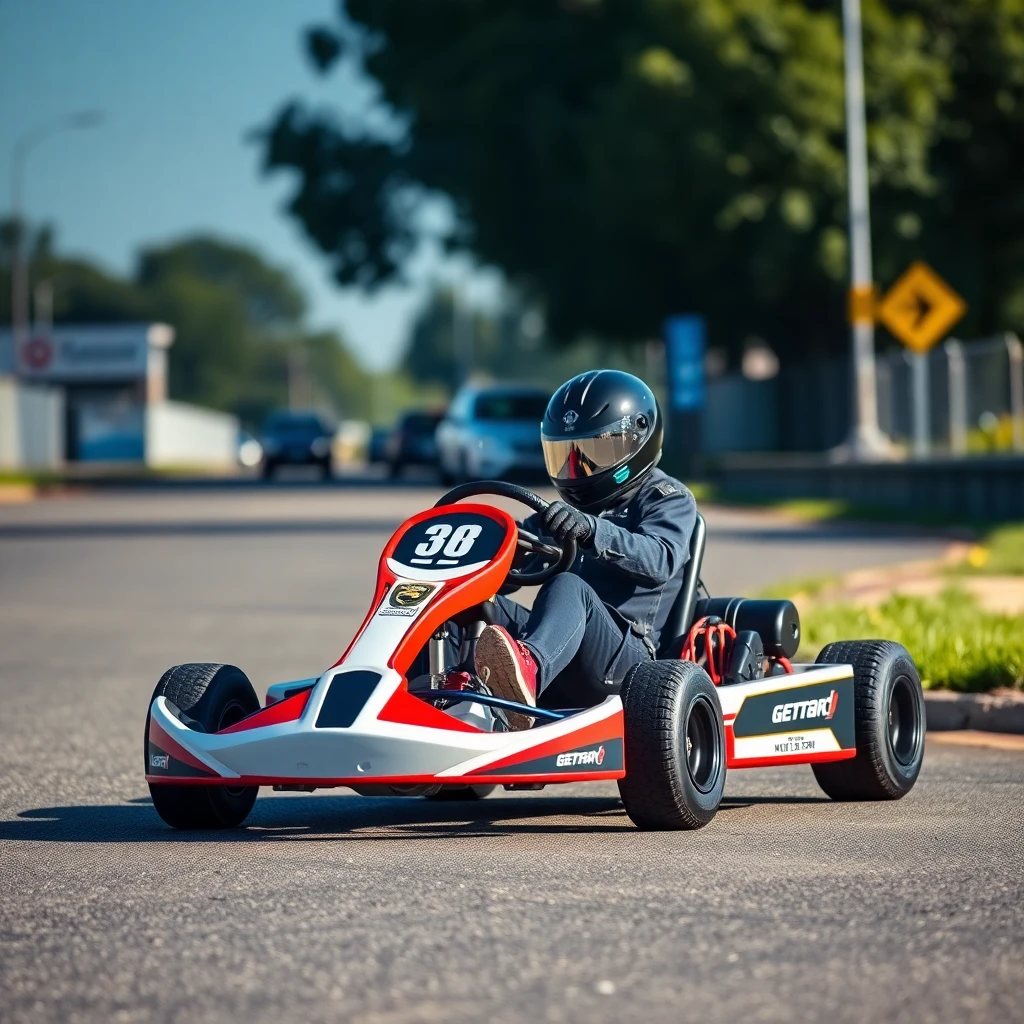
Go kart street legal requirements are one of the most searched topics in the powersport world, and for good reason. You bought or built a kart, you want to drive it, and you need to know exactly what stands between you and the road. This guide breaks down what most states require, where registration fits in, and how Montana can solve the title problem that stops most kart owners cold.
The short version: making a go kart street-legal is possible in most states, but the path is not the same everywhere. You will need safety equipment, a title in most cases, proof of insurance, and a state registration. Each of those pieces has details worth knowing before you spend money on the wrong parts.
Read through this fully before you file anything. The wrong first step can create a paper trail that makes titling harder, not easier.
What Go Kart Street Legal Requirements Actually Cover
Most people focus on the physical equipment, and that is a fair starting point. But go kart street legal requirements cover four separate categories: safety equipment, vehicle classification, title and registration, and insurance. You need all four checked off before your kart is road-ready.
Safety Equipment Every State Expects
The core equipment list is fairly consistent across most states:
- Headlights and taillights
- Turn signals (front and rear)
- Brake lights
- Horn
- Rearview mirror
- Windshield or eye protection
- Seatbelt or restraint system
- Speedometer (required in many states)
- DOT-rated tires
Some states also require a VIN plate or manufacturer identification tag, which creates the biggest challenge for custom-built or imported karts that came without one. If your kart has no VIN, you will almost certainly need to go through a title recovery or assigned VIN process before anything else happens.
How States Classify Go Karts
This is where things get complicated. States do not agree on what a go kart is. Depending on your state and your kart's specs, it might be classified as:
- A low-speed vehicle (LSV)
- A motorcycle or autocycle
- A neighborhood electric vehicle (NEV) if electric-powered
- A special purpose vehicle or off-highway vehicle (OHV)
- An unclassified custom vehicle
The classification determines which equipment rules apply, what license plate category it gets, and whether you need a regular driver's license or a special endorsement. Check your state's DMV website directly, because this is one area where guessing costs money.
Speed Limits and Road Restrictions
Even a fully equipped and titled go kart faces road restrictions in many states. Common limits include:
- Maximum speed of 25 or 35 mph (LSV classification)
- Prohibited from highways or roads above a certain speed limit
- Restricted to daylight-only operation in some jurisdictions
If your kart runs faster than 35 mph, the LSV route may not apply. You may need to pursue a custom vehicle or motorcycle classification instead, which typically means more equipment and a more involved inspection process.
Title and Registration: The Part Most People Skip
Equipment gets all the attention, but the title is the actual barrier for most go kart owners. Without a title, you cannot register the vehicle. Without registration, you cannot legally operate it on public roads regardless of how much safety gear you bolt on.
Ready to register your vehicle?
Join thousands of vehicle owners who use Street Legal Hookup to handle their registration quickly.
Get started today. →Where Do Go Karts Get Titles?
Factory-produced go karts sold for off-road use typically do not come with a Manufacturers Certificate of Origin (MCO) that would allow a standard title application. Custom builds are in the same situation. That means most kart owners are working with a vehicle that has no title history at all.
Some states offer a process for assigning a VIN and titling a custom or assembled vehicle. Others make it difficult enough that owners look for alternative paths. Montana is one of those alternative paths, and it is one of the most used in the country for vehicles that fall outside normal titling categories.
If your situation involves a custom-built machine with no paperwork, the process covered in project car registration in Montana applies directly. That guide covers how Montana handles vehicles built or assembled without standard title documentation, which is exactly the situation most kart owners face.
Montana LLC Registration for Go Karts
Montana has no sales tax, no emissions testing, and no annual inspections on registered vehicles. Those three facts make it a popular registration state for vehicles that are difficult to title elsewhere. For go karts, the Montana LLC path works like this:
- Form a Montana LLC (Street Legal Hookup handles this processor-direct)
- Register the go kart under the LLC
- Receive Montana plates and registration documents
- Use that registration as the ownership baseline for other purposes
Montana registration is valid in all 50 states for ownership and titling purposes. If you are in a state that wants proof of title before issuing local plates, Montana registration is typically accepted as that proof. The off-road title to street-legal guide at HMMWV Registration explains the broader path from an off-road registration to street-legal status, which mirrors what go kart owners face when converting a kart for road use.
Bonded Titles as an Alternative
If you prefer to title through your home state, a bonded title is another option for vehicles without standard documentation. You purchase a surety bond equal to the vehicle's assessed value, submit it with your application, and the state issues a bonded title. After a holding period (typically three to five years), the bond clears and you hold a clean title.
Bonded title availability and requirements vary by state. Some states have eliminated them in favor of other processes. Check with your state DMV before pursuing this route.
State-by-State Differences: A Quick Reference
No two states handle go kart street legal requirements the same way. The table below gives a general sense of where states land, though you should always verify current rules with your state DMV before spending money on equipment or registration.
| State Category | Approach to Go Karts | Notes |
|---|---|---|
| Permissive States (e.g., Texas, Florida, Arizona) | Allow LSV or custom vehicle registration with equipment compliance | Specific equipment list required; speed restrictions apply |
| Moderate States (e.g., Colorado, Nevada, Michigan) | Allow registration but require inspection or VIN assignment | May require state-assigned VIN for custom builds |
| Restrictive States (e.g., California, New York) | Very limited pathways for go kart street-legal status | Emissions and safety standards are strict; most karts do not Eligible |
| No Explicit Classification (many states) | Go karts treated as unclassified or off-highway vehicles | May require custom vehicle petition or Montana registration path |
Texas and Florida are frequently cited as more accessible for kart registration. California and New York are the hardest. If you are in a state with no clear pathway, Montana registration gives you the ownership documentation needed to work through your home state's process.
Insurance Requirements for Street-Legal Go Karts
Every state that allows go karts on public roads requires liability insurance at minimum. The challenge is finding a carrier willing to write a policy on a non-standard vehicle.
What Coverage You Typically Need
Standard requirements mirror what any low-speed vehicle needs:
- Bodily injury liability
- Property damage liability
- Uninsured motorist (required in some states)
Collision and complete are optional but worth considering if your kart has significant value. Some specialty carriers write policies specifically for powersport and non-standard vehicles. Your regular auto insurer may decline the vehicle, so plan to shop specifically.
How Registration Affects Insurance
Insurers want to see a title or registration before they write a policy. This is another reason the title question has to come first. Once you have Montana plates or a home-state title, obtaining insurance becomes straightforward. Without documentation, most carriers will not write coverage at all.
For owners running motorcycles, ATVs, or UTVs alongside their go kart, the registration patterns are similar. The salvage ATV title registration in Montana guide covers how documentation gets established for non-standard off-road vehicles, which carries over directly to the go kart insurance situation.
Building a Street-Legal Go Kart: Equipment Costs and What to Expect
Converting a racing or off-road kart to street-legal spec is a real project. Here is a realistic breakdown of what most owners spend on equipment and registration combined.
Equipment Cost Estimates
- LED headlight kit: $40 to $150
- Turn signal and brake light kit: $30 to $100
- Horn: $10 to $30
- Rearview mirror: $15 to $50
- DOT tire set: $80 to $300 depending on size
- Speedometer: $30 to $100
- Windshield or eye protection mount: $50 to $200
- Seatbelt or use upgrade: $40 to $150
Total equipment budget for most builds runs between $300 and $1,000 depending on kart size and how much is already in place. Budget toward the higher end if the kart is starting from a bare-frame racing setup.
Registration and Title Costs
Montana LLC formation and registration through Street Legal Hookup is priced clearly with no hidden fees. You pay for the LLC formation, the registration filing, and the annual renewal if applicable. Montana registration fees for most non-standard vehicles are low compared to states like California or Florida, which is part of why the state is a popular choice for vehicles outside the standard category.
For a complete fee reference, the official Montana Vehicle Title and Registration Fees page breaks down the state's fee schedule by vehicle type. This is the most current source for what Montana charges before any service fees are added.
Frequently Asked Questions About Go Kart Street Legal Requirements
Can you make any go kart street legal?
Not every go kart can be made street-legal in every state. Racing karts with no lighting, no VIN, and no safety equipment face a longer path than a purpose-built street kart. The biggest factors are whether your state has a registration pathway for the vehicle type and whether you can obtain a title. States without a clear classification may require you to pursue Montana registration or a custom vehicle designation before your home state will issue plates. Custom builds are registerable in most cases, but the process takes more steps than a standard vehicle.
Do go karts need a title to be street legal?
In most states, yes. Registration requires a title or equivalent documentation. If your kart has no title, you typically have three options: apply for a bonded title through your home state, pursue a state-assigned VIN process if your state offers one, or register through a Montana LLC and use that registration as your ownership documentation. The Montana path is commonly used for exactly this reason. Street Legal Hookup handles the Montana LLC and registration process processor-direct, which means fewer delays and no middlemen.
What safety equipment is required to drive a go kart on the street?
Requirements vary by state and vehicle classification, but the standard list includes headlights, taillights, brake lights, turn signals, a horn, a rearview mirror, DOT-rated tires, and a speedometer. Some states also require a windshield or eye protection, a seatbelt or use, and a license plate light. Low-speed vehicle classifications add speed restrictions, typically 25 or 35 mph maximums. Always check your specific state's requirements before purchasing equipment, since the list differs enough between states to matter.
Can you register a go kart in Montana?
Yes. Montana registers vehicles that other states classify as non-standard or off-road, including go karts, through the Montana LLC registration process. You form an LLC in Montana, register the vehicle under that LLC, and receive Montana plates and registration documentation. Montana has no sales tax, no emissions testing, and no annual inspections, which makes it practical for owners of non-standard vehicles. The registration is valid and recognized in all 50 states for ownership and titling purposes.
Do you need a driver's license to drive a go kart on the street?
Yes, in every state that permits go karts on public roads. The license class required depends on how the vehicle is classified. Low-speed vehicles typically require a standard driver's license. If your kart is classified as a motorcycle or autocycle, you may need a motorcycle endorsement. Check your state's vehicle classification and the corresponding license requirement before operating on public roads.
What states allow go karts on public roads?
Texas, Florida, Arizona, and several other states have established pathways for low-speed vehicles or custom vehicles that include go karts. California, New York, and a handful of other states have strict standards that most go karts cannot meet. Many states fall somewhere in the middle with processes that require inspection, a state-assigned VIN, or a custom vehicle petition. If your state has no clear pathway, Montana registration is the most commonly used alternative for establishing ownership documentation and working through the home-state process from there.
Is a go kart street-legal conversion worth it?
That depends on how you plan to use it. If you want to ride to a track, run short errands, or operate on low-speed neighborhood roads, the investment makes sense for many owners. Equipment costs run $300 to $1,000 and registration is manageable through Montana if your home state creates obstacles. If you are running a high-speed racing kart and want highway access, the conversion is much harder and may not be possible within normal vehicle classifications. Know your use case before you start spending.
Get Your Go Kart on the Road the Right Way
Go kart street legal requirements cover more ground than most owners expect when they first start researching. Equipment is the visible part, but title, registration, classification, and insurance all have to line up before you legally hit the road.
Street Legal Hookup works with the full range of non-standard vehicles, including go karts, custom builds, and anything that does not fit neatly into a state DMV's standard categories. Backed by a state-licensed Montana processor, the service handles LLC formation, registration, and documentation without the runaround you get from generic online services.
Verified customer reviews are growing every week from owners who came in with exactly your situation and left with plates and paperwork. The process is direct, the pricing is clear, and the path from off-road machine to street-legal vehicle is something Street Legal Hookup has handled many times before.
If you are also dealing with a salvage title, a missing title, or an import that needs documentation before it can be registered, the same processor-direct process applies. Check out the salvage motorcycle title Montana guide for a look at how the harder title cases get resolved, and the import car registration Montana page if your kart came from outside the US.
Go kart street legal requirements are real, but they are workable. Get started today and find out exactly what your registration path looks like.